This Reimagining Wants to Hurt You
Cape Fear
MOVIE REVIEW
Cape Fear
 -
- 

Genre: Psychological Thriller, Horror, Crime, Drama
Year Released: 2026
Runtime: 10 Episodes (review of first eight episodes)
Director(s): Morten Tyldum, S.J. Clarkson, Amanda Marsalis, Reed Morano
Writer(s): Nick Antosca
Cast: Javier Bardem, Amy Adams, Patrick Wilson, Lily Collias, Joe Anders, Malia Pyles, CCH Pounder, Jamie Hector
Where to Watch: releasing on Apple TV on June 5, 2026
RAVING REVIEW: The easiest mistake this version of CAPE FEAR could’ve made would’ve been leaning into nostalgia. Recreating the infamous moments, taking the shortcut of familiarity, or, worse, treating the series as a scene-by-scene remake, or even trusting the legacy to do most of the heavy lifting. Instead, the series drags the material through the dirt, catches it on fire, and lets it come out the other side somewhere far more somber and far more vile. This isn’t a prestige-thriller remix of a recognizable title. It’s psychological horror with its hands wrapped tightly around the audience’s throat for nearly every second.
After watching the first eight episodes, what stands out most is how relentlessly oppressive the atmosphere becomes. CAPE FEAR doesn’t offer relief. It wants viewers trapped inside anxiety, humiliation, paranoia, and instability right alongside the Bowden family. The series understands that real psychological terror isn’t built around violence alone. It’s built around erosion. Erosion of trust, privacy, confidence, relationships, safety, routine, identity. Every episode feels like another layer of emotional skin getting peeled back (you know when you know when your cuticle gets caught on something and peels back? Yeah, just like that, over and over, and I loved it!).
Javier Bardem’s Max Cady is one of the most unsettling antagonists in recent memory because the performance avoids obvious overplayed theatricality most of the time. Bardem plays him with a chilling patience, like somebody studying prey rather than hunting. There’s intelligence behind every interaction. Calculation. He rarely feels impulsive. That restraint makes the character far more dangerous because the audience begins to understand that nearly every moment has been engineered intentionally.
The series also refuses to romanticize darkness. CAPE FEAR is vicious in ways many modern thrillers shy away from. It digs directly into emotional abuse, manipulation, intimidation, shame, and the kind of psychological warfare designed to dismantle people from the inside out. There are sequences across these first eight episodes that are genuinely hard to sit through, not because they’re exploitative, but because the writing and performances make the emotional damage feel suffocatingly intimate.
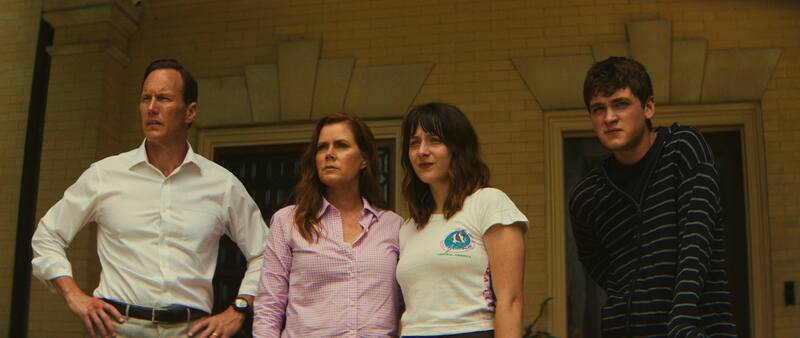
Amy Adams gives one of her strongest performances in years as Anna Bowden, largely because the series allows her to exist beyond the traditional “terrorized wife” framework. Anna isn’t passive. She’s observant, enraged, emotionally exhausted, and increasingly aware that the danger surrounding her family didn’t begin the moment Max Cady walked back into their lives. Adams plays her like somebody slowly realizing how fragile the illusion of stability actually was to begin with.
Patrick Wilson may be doing the deepest exploration in the series. Tom Bowden spends much of CAPE FEAR trying to maintain control over situations already collapsing around him, and Wilson captures the gradual unraveling beautifully. His performance grows more desperate with every episode, especially as guilt, ego, fear, and self-preservation collide in increasingly ugly ways. The series constantly asks whether Tom is trying to protect his family or protect the version of himself he wants everybody else to believe exists.
Nick Antosca’s writing deserves enormous credit for understanding that horror doesn’t always need escalation through body counts or constant twists. CAPE FEAR works through emotion instead. Conversations become unbearable. Silences become threatening. Public spaces feel invasive. Home stops feeling safe. The series weaponizes discomfort better than most contemporary horror because it never allows characters or viewers to regain footing for very long.
What impressed me most was how confidently the show commits to its darkness. There’s no balancing act between gritty thriller and crowd-pleasing. CAPE FEAR is bleak. It’s angry. At times, it almost feels cruel in the way it forces characters to sit in fear and degradation. Yet that commitment is exactly why the series works so well. The material would’ve collapsed immediately if the creators softened the story or treated the psychological torment like anything else.
The show leans heavily into dread without becoming empty “prestige gloom.” The directing constantly frames people as if they’re already trapped. Mirrors, reflections, obstructed sightlines, invasive close-ups, empty negative space, all of it contributes to a feeling that something terrible is always pressing. Even moments of temporary calm feel contaminated before they begin.
There are a few performances in the supporting cast that occasionally drift a little too close to melodrama, especially compared to the grounded emotion of the surroundings. Certain scenes flirt with theatricality in ways that slightly disrupt the otherwise suffocating realism the series builds so carefully. Although that issue barely leaves a dent in the overall impact. Eight episodes in, CAPE FEAR feels dangerously close to perfection. This is one of the rare modern reimaginings that justifies its existence by adopting a harsher perspective rather than simply modernizing something we’re already familiar with. The show takes the core ideas of the original story and pushes them into a far more psychologically invasive.
What makes the experience linger is how believable the fear becomes. Max Cady doesn’t just threaten violence. He destroys emotional balance itself. The series understands that once somebody invades your sense of safety, every relationship around you starts mutating under the pressure. CAPE FEAR captures that collapse with frightening precision.
And honestly, the fact that I still have the final two episodes left only makes the experience more impressive. Eight episodes in, the series already feels emotionally exhausting in the best possible way, because it commits so hard to the psychological devastation that you can feel the tension sitting in your chest long after the episodes end. It takes the psychological torment surrounding this story and pushes it past discomfort into something suffocating.
Please visit https://linktr.ee/overlyhonestr for more reviews.
You can follow me on Letterboxd, Instagram, Twitter, and YouTube. My social media accounts can also be found on most platforms by searching for 'Overly Honest Reviews'.
I’m always happy to hear from my readers; please don't hesitate to say hello or send me any questions about movies.
[photo courtesy of APPLE TV+, AMBLIN TELEVISION, EAT THE CAT, UNIVERSAL CONTENT PRODUCTIONS (UCP), UNIVERSAL PICTURES]
DISCLAIMER:
At Overly Honest Movie Reviews, we value honesty and transparency. Occasionally, we receive complimentary items for review, including DVDs, Blu-rays, CDs, Vinyl Records, Books, and more. We assure you that these arrangements do not influence our reviews, as we are committed to providing unbiased and sincere evaluations. We aim to help you make informed entertainment choices regardless of our relationship with distributors or producers.
Amazon Affiliate Links:
Additionally, this site contains Amazon affiliate links. If you purchase through these links, we may receive a commission. This affiliate arrangement does not affect our commitment to honest reviews and helps support our site. We appreciate your trust and support as you navigate these links.
