Observation Over Interpretation
Diana & Minerva
MOVIE REVIEWS
Diana & Minerva
 -
- 

Genre: Experimental
Year Released: 2026
Runtime: 11m
Director(s): Francesca Occhionero
Writer(s): William De Natale
Cast: Chloe Crawford, Patricia Bermúdez
Where to Watch: shown at the 2026 Slamdance Film Festival
RAVING REVIEW: What does it mean to document a relationship when the camera can’t fix what’s already fractured? DIANA & MINERVA begins from a place of observation rather than explanation, following two women whose bond is defined less by grand gestures than by endurance. The film doesn’t reach for metaphor or symbolic framing to elevate its story. Instead, it stays rooted in the everyday realities of care, tension, and dependency, allowing intimacy to emerge through repetition, routine, and moments of unspoken strain. What unfolds isn’t a mythic portrait or a romanticized study of devotion, but a patient record of two lives moving forward together because separating would cost more than staying.
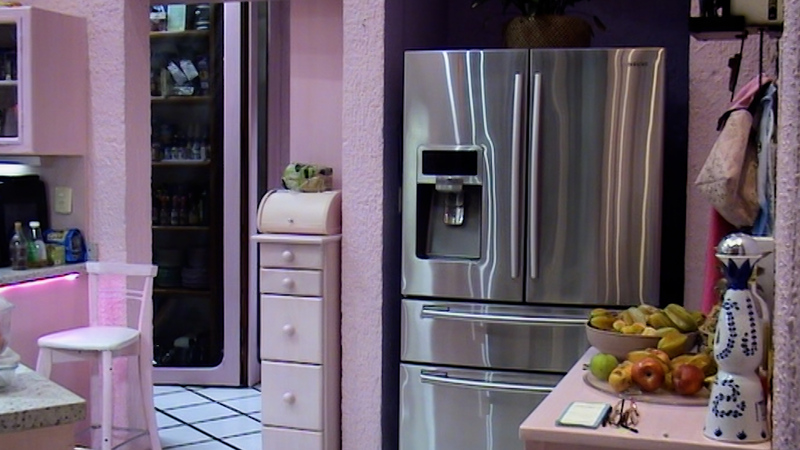
Directed by Francesca Occhionero, this eleven-minute experimental short unfolds almost entirely inside a pink 1980s kitchen in Mexico. Breakfast preparation becomes a ritual. Repetition becomes measure. The film’s premise is simple: two women, named Diana and Minerva, occupy the same domestic space while communicating through fragmented voicemails. From that foundation, the film builds something far more elusive than story.
There is no traditional arc here, and the film never pretends otherwise. Image and sound are the primary carriers of meaning, not dialogue or structure. Painted collages of pre-Columbian sculpture interrupt the footage, not as commentary but as emotional punctuation. These visual intrusions feel less like symbols and more like echoes, fragments of history pressing against the present moment without demanding decoding. Occhionero’s control is evident in what she withholds. DIANA & MINERVA refuse exposition, refuse orientation, and refuse to guide the viewer toward a unified interpretation. The result is a film that prioritizes feeling over comprehension. You don’t follow it so much as live within it.
Chloe Crawford and Patricia Bermúdez anchor the film with performances built almost entirely from restraint. Their presence is felt through movement, posture, and tone rather than overt interaction. The voice messages that drift through the film blur pain, anxiety, and unease, but never resolve into statements. They exist as emotional data points rather than arguments.
The space itself does heavy lifting. The kitchen becomes a space where femininity, labor, memory, and myth intersect. Food preparation feels ceremonial, but also repetitive. Comfort and claustrophobia coexist. The color palette and décor are not ornamental choices; they actively shape the film’s emotional temperature. This approach won’t work for everyone. Viewers looking for clarity or payoff will likely disengage. The film demands patience and rewards attentiveness, but it doesn’t negotiate itself with the audience. That confidence is both a strength and a risk.
What gives DIANA & MINERVA specificity is their careful observation without framing it as a sacrifice. The cooking, cleaning, and preparation aren’t romanticized, nor are they framed as burdens that demand recognition. They simply exist, repeated until they become inseparable from the relationship itself. This attention to domestic life quietly reframes intimacy as something maintained rather than felt. Love, if it exists here, isn’t expressed through tenderness or reassurance, but through endurance and routine. The film understands how care can slip into obligation without a clear transition, and how difficult it is to distinguish devotion from habit once that line blurs. The voicemails reinforce this ambiguity. They suggest distance, anxiety, and longing, but they never offer clarity about direction or intent. Instead of functioning as communication, they feel like emotional leakage, thoughts voiced too late or too indirectly to change anything. Occhionero resists shaping these elements into commentary, which is why they resonate. The film doesn’t tell us what these women owe each other, or whether staying is an act of love or fear. It allows both possibilities to coexist, mirroring the reality of relationships that persist less because they are healthy than because they are familiar. That restraint is crucial.
At eleven minutes, the runtime works in the film’s favor. Any longer and the abstraction might feel indulgent. As it stands, DIANA & MINERVA know exactly when to end, leaving behind an afterimage rather than a conclusion. What ultimately makes the film resonate is its commitment to ambiguity without emptiness. There’s intention behind every choice, even when that intention resists articulation. Occhionero understands that experimental work fails when it hides behind obscurity. Here, the obscurity is purposeful, shaped, and emotionally specific.
DIANA & MINERVA ultimately succeeds because it trusts the weight of what it shows rather than what it explains. The film doesn’t offer resolution, growth, or purification, and it doesn’t need to. Its power comes from attention, from watching the same gestures repeat until they begin to show emotional facts rather than actions. By the end, the relationship isn’t explained, but it’s understood. Occhionero isn’t asking the audience to decode meaning or extract a metaphor. She’s asking them to sit with proximity, dependency, and the cost of staying. The result is a short that lingers not because it declares itself, but because it refuses to let go.
Please visit https://linktr.ee/overlyhonestr for more reviews.
You can follow me on Letterboxd, Instagram, Twitter, and YouTube. My social media accounts can also be found on most platforms by searching for 'Overly Honest Reviews'.
I’m always happy to hear from my readers; please don't hesitate to say hello or send me any questions about movies.
[photo courtesy of -ORAMA.]
DISCLAIMER:
At Overly Honest Movie Reviews, we value honesty and transparency. Occasionally, we receive complimentary items for review, including DVDs, Blu-rays, CDs, Vinyl Records, Books, and more. We assure you that these arrangements do not influence our reviews, as we are committed to providing unbiased and sincere evaluations. We aim to help you make informed entertainment choices regardless of our relationship with distributors or producers.
Amazon Affiliate Links:
Additionally, this site contains Amazon affiliate links. If you purchase through these links, we may receive a commission. This affiliate arrangement does not affect our commitment to honest reviews and helps support our site. We appreciate your trust and support as you navigate these links.
