Chris Jones
Entertainment Editor
Chris Jones, from Washington, Illinois, is the Mail Entertainment Editor covering Movies, Television, Books, and Music topics. He is the owner, writer, and editor of Overly Honest Reviews.
The adults in this film keep leaving rooms moments before they might notice something they should. They’re away at sea, lost in their own desires, distracted by grief, dulled by addiction, or protected by positions that keep anyone from questioning them. Children disappear while the village continues along with its normal routine. Robert Sigl’s film understands that childhood can be frightening without the supernatural because children are often expected to survive situations that the adults around them have chosen not to see.
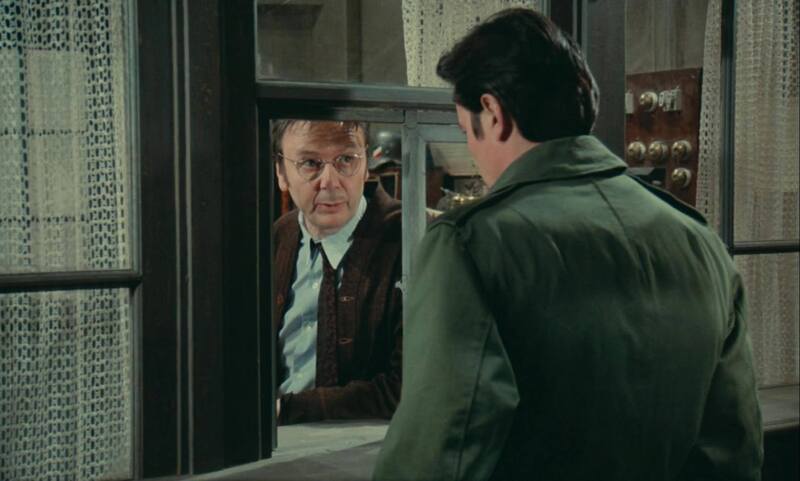
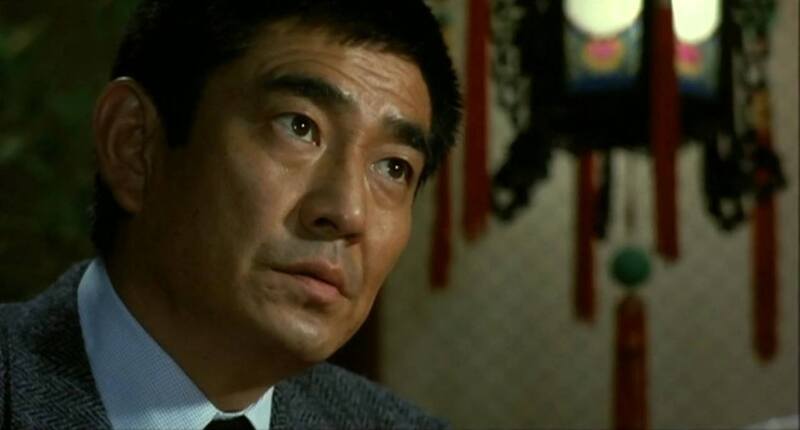
An indicator light keeps blinking beside a dying man, repeating its empty warning while his mind struggles to explain how he reached the floor of an underground parking garage. Romolo Guerrieri doesn’t treat the gunshot as the beginning of an investigation. It’s the endpoint of a life already distorted by jealousy, sexual frustration, and a man’s belief that every person around him exists in relation to his desires. THE DOUBLE moves backward from death, although its memories refuse to line up in a way to provide a dependable account of what happened.
One fighter stands, another falls, and the bell appears to be the answer to everything. Director/co-writer Shūji Terayama looks past that temporary certainty in THE BOXER, finding an entire society of damaged men whose victories disappear almost as quickly as the swelling around their eyes. The film follows the familiar outline of a retired champion training an unlikely contender, then covers that outline in grief, resentment, theatricality, and the knowledge that courage won’t repair every part of a life.
The setting is ridiculous, the fistfights in empty swimming pools, the crowd being oddly dressed, and Jean-Claude Van Damme entering the space with complete physical confidence. Sheldon Lettich understands that an underground-fighting movie needs more than a procession of bodies collapsing in the same warehouse. Each confrontation gets its own environment, mood, and small dose of spectacle, giving a familiar formula enough variety to keep moving.
A surprisingly cheerful dinosaur sock puppet explaining how human bodies become bird food is definitely one way to make sure people pay attention. BIRDCALL begins like a children’s educational program produced by a government that has already accepted the end of life as we know it, using the presentation and friendly instructions to describe an avian-spread disease with horrifying consequences. The contrast is funny for a moment, right before the implications settle in.
Sex has become so scarce, or in some cases even taboo, in mainstream movies that showing adults openly wanting it now feels strangely confrontational. Gregg Araki responds to that with I WANT YOUR SEX. This loud, latex-covered comedy treats desire as funny, dangerous, embarrassing, liberating, and occasionally capable of ruining everyone’s week. Ultimately, I do think there could have been a more edgy version of this film somewhere; it played with that line, but never quite jumped to the other side as much as it could have.
Eight years into their relationship, Alex and Joey seem to be living entirely different versions of the same life. He sees a romantic camping trip and the perfect place to propose. She sees another reminder of how little he understands her. A SAFE DISTANCE begins inside the thought of that disconnect, then strips away everything and leaves Alex to decide whether the life waiting back home is one she wants to return to.
Disco reached North London with fewer resources, more rain, and little hope of resembling the fantasy sold by the movies it wanted to recreate. THE MUSIC MACHINE responds by placing its glitter above unemployed young adults, cramped flats, cheap drinks, and people who view one dance competition as a possible route toward a different life. The result is neither a convincing musical drama nor an outright failure. It’s a frequently clumsy production whose limitations preserve something far more interesting than the story it was trying to tell.
The camera doesn’t observe Anthony’s transformation so much as become part of the experience alongside it. Metal scrapes, bodies twitch, voices become swallowed by noise, and the image repeatedly threatens to come apart before the character does. TETSUO: THE BULLET MAN is an exhausting 71 minutes by design, though Shinya Tsukamoto’s commitment to sensory punishment becomes both its greatest strength and its most persistent obstacle.
Gotham doesn’t become safer when Batman “begins.” It becomes stranger, as ordinary corruption gives way to criminals who understand that a memorable identity can be as powerful as a gun. BATMAN: CAPED CRUSADER enters its second season with the city adapting to its masked vigilante, while Bruce Wayne remains several steps behind everyone else in understanding what Batman is doing to him.
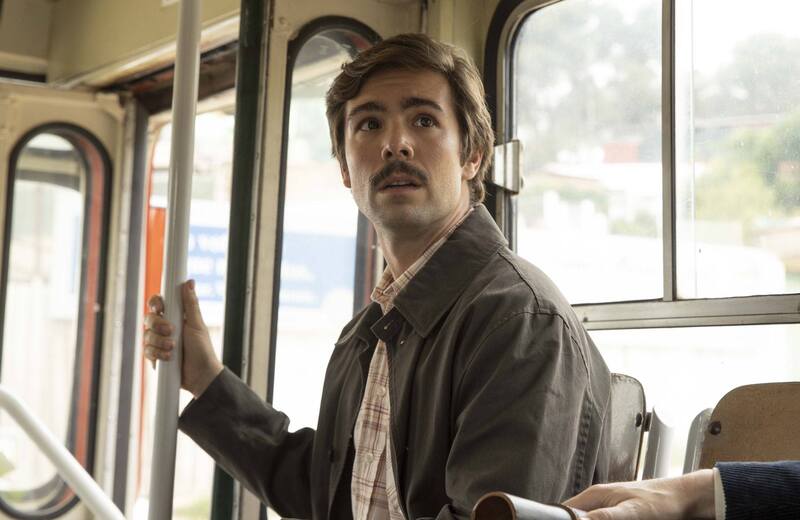
Most of the adults in YOUNG MOTHERS don’t press on with speeches about saving anyone. They prepare bottles, arrange appointments, ask difficult questions, and remain nearby when the answers fall apart. Their work rarely looks dramatic, but Jean-Pierre and Luc Dardenne understand that dependable care can feel almost radical to someone who has spent her life expecting abandonment.
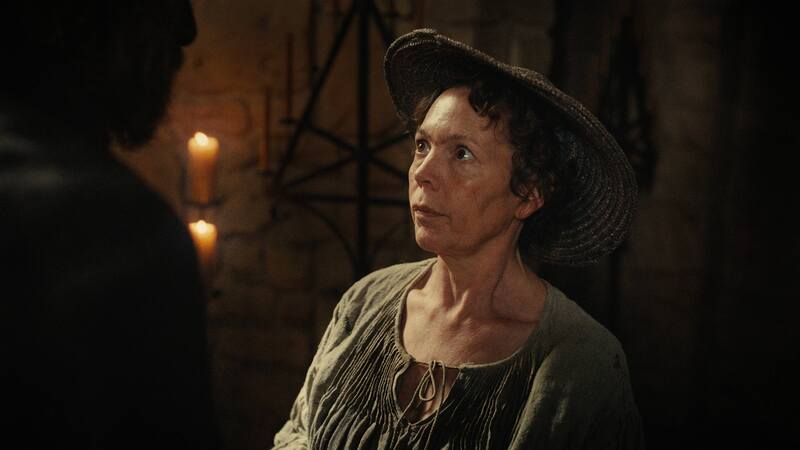
A necklace of grinning skulls hangs across Zou Qi’s chest, and every one of them is hungry. The image is strange, theatrical, faintly ridiculous, and genuinely threatening at the same time. That combination defines THE NINE DEMONS, a martial arts fantasy that keeps adding blood, colored lights, supernatural children, flying props, and elaborate combat until its modest production can barely contain it.
THREADS begins its march toward extinction in Iran. Watching it in July 2026, while America is actively bombing Iran, transforms what once appeared to be Cold War background noise into the most unnerving part of the film. Director Mick Jackson doesn’t initially announce that Iran will become the point from which civilization unravels. The crisis enters through car radios, television reports, newspaper headlines, and conversations that receive only partial attention. Ruth Beckett (Karen Meagher) and Jimmy Kemp (Reece Dinsdale) have more immediate concerns. Ruth is pregnant, their families need to meet, a wedding is expected, and neither of them appears prepared for the life taking shape around them.
The most difficult constitutional principles are rarely tested by people we find admirable. They’re tested by figures like Larry Flynt, provocateurs whose conduct can be repellent even when the rights they defend are essential. Miloš Forman’s 1996 biopic understands that contradiction and builds around it, asking whether freedom still means anything when its protections must extend to someone many would rather condemn. Where the film compromises is in making Flynt easier to digest and defend than the real man likely was, softening his cruelties so the principle can stand apart from the person. Thirty years later, that feels even more urgent. In an era increasingly comfortable with deciding that certain voices are too offensive, dangerous, or undeserving to protect, the film’s warning carries greater weight than it did upon release.
I knew the twist, but somehow, 50-plus years after its release, I was still surprised watching this for the first time. Everyone in SOYLENT GREEN looks exhausted, and one bad conflict away from collapse. Detective Robert Thorn (Charlton Heston) pushes through packed stairwells where unhoused residents sleep on landings, enters rooms that offer no relief from the heat, and treats running water as a luxury worth stealing. Director Richard Fleischer doesn’t need towering machines or elaborate futuristic skylines to establish that civilization has failed. He lets the sweat do it.