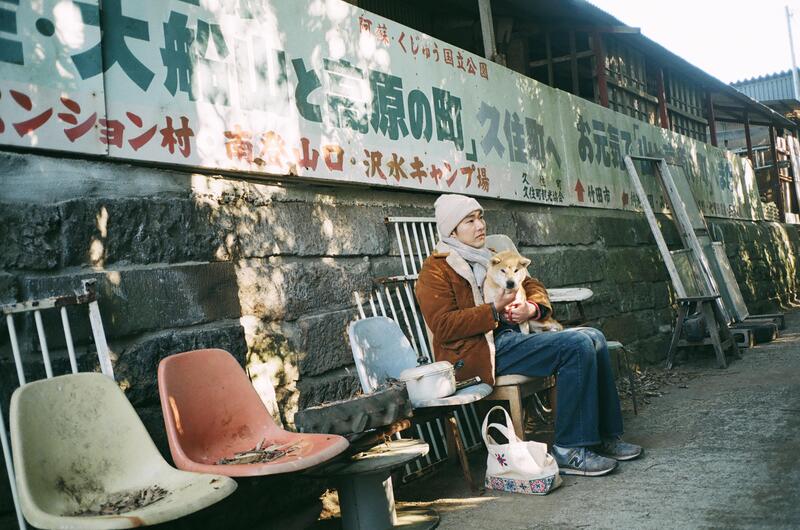
Family History Captured One Frame at a Time
Memorizu (メモリィズ)
MOVIE REVIEW
Memorizu (メモリィズ)
 -
- 

Genre: Drama
Year Released: 2026
Runtime: 1h 37m
Director(s): Miiku Sakanishi
Writer(s): Miiku Sakanishi
Cast: Tasuku Emoto, Moeka Hoshi, Issey Ogata, Yû Kashii, Masayo Umezawa
Where to Watch: shown at the 2026 Tribeca Festival
RAVING REVIEW: MEMORIZU handles life with the patience of somebody sorting through an old photo album. Not searching for revelations or life-changing discoveries, but pausing on small details that suddenly carry so much more years later. A glance. A room. The shape of the afternoon light coming through a window. The kind of moments most people barely register while living them, only realizing their value after time has already carried them away. Miiku Sakanishi’s debut feature understands that memory rarely functions through grand events. Most lives are built from accumulation. Tiny moments of ordinary existence that grow more meaningful once distance enters the picture.
After his father-in-law Makoto injures his leg, Yuta leaves Tokyo and travels to rural Kyushu to help manage the older man’s photography studio while he recovers. His wife and daughter remain behind in the city, and much of their communication happens through videos and photographs on their phones. MEMORIZU isn’t interested in plot mechanics or heightened dramatic turns. It’s interesting to observe how people preserve connections when separated by geography, routine, and time.
Tasuku Emoto gives an impressively restrained performance as Yuta, carrying the film with attentiveness rather than overt emotion. There’s a quality to the performance that makes even routine actions feel revealing. Yuta spends much of the film watching, recording, listening, or moving through spaces with a kind of uncertainty.
Yuta’s separation from his family never turns melodramatic, but you feel the absence lingering throughout the film. The videos exchanged between family members become lifelines precisely because they’re so casual. The recordings aren’t declarations of love or carefully staged moments. They’re fragments of everyday existence. A child talking. A passing observation. Someone documenting something insignificant simply because they felt like sharing it. MEMORIZU understands how modern tech has transformed memory into something constant while simultaneously making individual moments feel more disposable.
That contrast between permanence and impermanence runs throughout the entire film. Makoto’s photography studio represents one philosophy of image-making that’s deliberate, composed, and intentional in its acts of preservation. Smartphone videos represent another form of spontaneous documentation, with no guarantee that anybody will revisit them later. Sakanishi never treats one as superior to the other. Instead, the film examines how both approaches attempt to resist time in their own ways.
Issey Ogata is especially strong as Makoto. The character could’ve easily become a stereotypical older mentor figure, but Ogata gives him a complexity that makes the relationship feel authentic. There’s affection underneath his rigidity, frustration underneath his humor, and loneliness embedded within his routines. MEMORIZU handles intergenerational relationships with remarkable sensitivity because it never simplifies the contradictions families carry over time.
The same applies to Moeka Hoshi’s performance as Yuki, even though much of her presence exists through mediated communication. The distance between Yuta and his family creates a depth that the film keeps returning to without turning separation itself into conflict. Instead, MEMORIZU becomes fascinated with how technology simultaneously closes and emphasizes distance. Seeing someone through a screen can create intimacy while also reinforcing absence.
What impressed me most, though, was Sakanishi’s refusal to force a dramatic structure onto the material. Many contemporary dramas become anxious when dealing with quietness, eventually introducing unnecessary conflict or escalation out of fear that audiences will disengage. MEMORIZU resists that impulse almost entirely. It’s a film committed to ordinary experience, trusting truth more than narrative.
There are absolutely viewers who will find the pacing too fragile or the storytelling too observational. The film asks for patience and emotional attentiveness rather than offering dramatic payoff at regular intervals. Certain stretches intentionally drift through daily life with minimal urgency, prioritizing atmosphere and texture over plot. But honestly, that’s also what makes the film feel so sincere.
The film’s reflections on photography and recorded images also gain additional resonance once you understand Sakanishi’s connection to image-making through his late father’s influence. That relationship to preservation, documentation, and lingering presence quietly runs underneath the entire film without ever becoming self-indulgent. The film becomes less about any single event and more about the collection of shared existence itself. The film recognizes that people leave traces of themselves everywhere, in recordings, habits, routines, photographs, gestures, and memories others continue carrying long after moments have already disappeared. We take some photos, and some are taken of us. MEMORIZU finds beauty in both sides of that equation, crafting a deeply human meditation on family, memory, and the fragile desire to hold on to life before it quietly slips away.
Please visit https://linktr.ee/overlyhonestr for more reviews.
You can follow me on Letterboxd, Instagram, Twitter, and YouTube. My social media accounts can also be found on most platforms by searching for 'Overly Honest Reviews'.
I’m always happy to hear from my readers; please don't hesitate to say hello or send me any questions about movies.
DISCLAIMER:
At Overly Honest Movie Reviews, we value honesty and transparency. Occasionally, we receive complimentary items for review, including DVDs, Blu-rays, CDs, Vinyl Records, Books, and more. We assure you that these arrangements do not influence our reviews, as we are committed to providing unbiased and sincere evaluations. We aim to help you make informed entertainment choices regardless of our relationship with distributors or producers.
Amazon Affiliate Links:
Additionally, this site contains Amazon affiliate links. If you purchase through these links, we may receive a commission. This affiliate arrangement does not affect our commitment to honest reviews and helps support our site. We appreciate your trust and support as you navigate these links.
