The Story We Still Needed
Carrie
TV SERIES REVIEWS
Carrie
TV-14 - 

Genre: Horror, Drama, Mystery
Year Released: 2026
Runtime: 8 x 45m episodes
Directors: Mike Flanagan, Kate Siegel, Axelle Carolyn, Kyra Sedgwick, Hiromi Kamata
Writer: Mike Flanagan
Cast: Summer H. Howell, Samantha Sloyan, Siena Agudong, Alison Thornton, Joel Oulette, Josie Totah, Arthur Conti, Thalia Dudek, Amber Midthunder, Matthew Lillard
Where to Watch: premieres exclusively on Prime Video on October 7, 2026
RAVING REVIEW: I owe CARRIE (Mike Flanagan, Prime Video, and basically everyone involved) an apology. From the moment this series was announced, I was 110% convinced that it captured exactly what frustrates me so much about Hollywood's obsession with remaking things that don't need remaking, and I don't think I've ever been happier to discover how completely wrong I was.
Stephen King's story isn't some forgotten piece of horror waiting to be rediscovered. Brian De Palma's 1976 CARRIE remains one of the defining horror movies of its era, and even the 2013 version had a reason to exist. It introduced the material to another generation with a different Carrie White, with arguably one of the most unique “final girl” performances I can remember. When Prime Video announced an eight-episode series from Mike Flanagan, my first question wasn't whether it would be good. It was so much simpler than that. I just asked why?
Why tell this story again? Why stretch something we all know backward and forwards across eight episodes? What could be left to discover about a girl, her horrid mother, a cruel group of (true-to-life) classmates, and a prom night that has become one of the most recognizable sequences in horror history? This wasn't a story where I just knew the ending. CARRIE is so embedded in pop culture that I could practically tell you the story from memory.
Ten minutes into the first episode, I knew I had made a mistake. I was wrong to question this creation; this team had a plan and executed it with near perfection. That's an extraordinary accomplishment. CARRIE doesn't need half a season to demonstrate why this version of the story exists; Flanagan doesn’t desperately try to rearrange recognizable pieces simply to prove that his version is different. The series takes the story we already know and changes the angle we're looking at it from. That familiarity stops being a liability and becomes part of the experience. That's the key to the entire series. A lesser remake tries to make you forget the original. This one understands that you can't.
We all know Carrie White. We know Margaret White. We know the humiliation, the cruelty, the powers, and where all of it ends, and that's where this version begins in some ways. Flanagan isn't racing against the clock to tell us the same story. He uses it, letting our knowledge and understanding of what lies ahead hang over moments that might otherwise seem harmless. Every act of kindness carries more weight when you know how little kindness this girl gets.
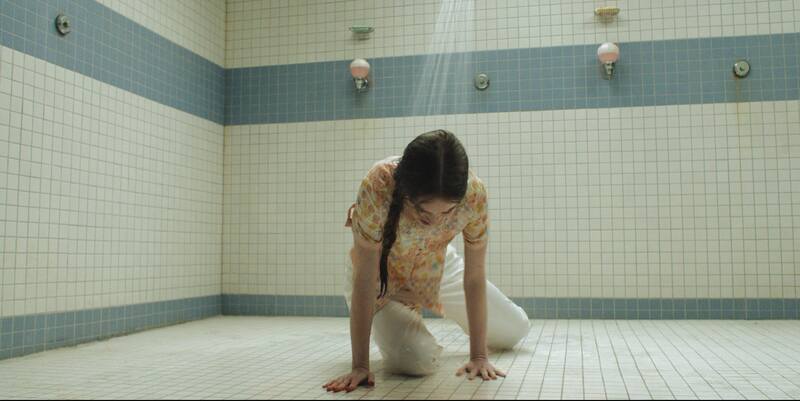
Summer H. Howell’s Carrie doesn’t just wait around to become the frightened girl covered in blood that decades of pop culture have taught us to expect. She's curious. She's awkward. She's occasionally hopeful in ways that become painful precisely because we know how dangerous hope will eventually become for her. She doesn’t rewrite who Carrie is, but does portray her in a way that we haven’t seen before.
Howell avoids one of the biggest traps waiting for anyone stepping into this role. She doesn't try to recreate the legendary version that Sissy Spacek made famous, nor does the series ask her to. This version of Carrie belongs to a different time and has been shaped by a different version of isolation. Yet, Howell preserves the vulnerability that makes the character so recognizable while finding something of her own inside it.
Casting across the series is exceptional. Samantha Sloyan's Margaret could easily have become an exercise in trying to outdo previous versions of one of horror's most infamous mothers. Sloyan finds something more disturbing than constant hysteria. There are moments when you can see the love Margaret believes she's giving her daughter, which makes the damage she causes considerably harder to dismiss as the behavior of a monster. That's one of the most important improvements the extended runtime gives this story. Eight episodes doesn’t just mean more time to tell this story; it means a deeper understanding of what this story means.
Characters who might have served a single purpose in a two-hour film are allowed to exist beyond that purpose here. Sue Snell, Tommy Ross, Chris Hargensen, Miss Desjardin, and the people surrounding Carrie become part of a world whose decisions gradually accumulate over time. Nobody needs to drop the bucket for their actions to matter. Cruelty rarely comes from one decision; it's usually a hundred smaller ones that everyone assumes someone else could have stopped.
That becomes even more effective when you move Carrie into the social-media era. Updating this story with smartphones could have been incredibly painful if the technology felt like someone in a writers' room checking a box marked "modern." CARRIE actually has a reason to be different now. The fundamental cruelty hasn't changed. Its reach has. The original humiliation could follow Carrie down a hallway. This one can follow her home.
That's where the new setting becomes more than an update. Teenagers have always been able to turn someone's worst nightmare into a schoolwide embarrassment. Now humiliation can have an audience before the victim even processes what happened. A moment in time can become permanent and endlessly repeatable. CARRIE was always a story about what happens when cruelty accumulates faster than compassion. The tech here just removed some of the remaining limits.
The supernatural stuff here benefits from that same patience. Carrie's telekinesis doesn't feel like the attraction waiting at the end of every episode, and the series doesn't always remind us that things will eventually get bloody. Her abilities develop alongside everything else happening to her, becoming another piece of adolescence for a girl who’s barely been allowed to understand adolescence.
That makes Carrie's relationship with Margaret even more important. Everything Carrie learns about herself is something her mother can’t keep from her, and every connection she makes outside their home weakens that ability to control what her daughter believes about the world. Independence becomes threatening long before telekinesis does.
One of the strongest arguments for CARRIE is just how deep this cast goes, to the point that I could spend another review talking about performances that deserve more attention. Amber Midthunder gives Miss Desjardin a warmth without taking away any of the frustration she carries, Siena Agudong makes Sue Snell’s guilt feel like something she has to carry with her and does so wonderfully, and Alison Thornton ensures Chris Hargensen is far more compelling than a straightforward high-school bully. Then there’s Matthew Lillard, who takes what could’ve been a fairly standard authority figure in Principal Grayle and gives him genuine presence. Lillard’s continuing relationship with horror has become everything, and CARRIE gives him another opportunity to show exactly why he belongs here.
I went into this expecting to spend eight episodes asking why we weren't just watching the original again. Instead, I found myself appreciating how often the series understood that recreating a famous scene isn't nearly as valuable as changing what that scene means when we finally arrive there. That's the difference between repetition and reinterpretation. The best remakes don't justify themselves by just changing things, changing a character's motivations, or moving a story into the present. They justify themselves by asking a question the previous version didn't. CARRIE already gave us one of horror's great tragic figures. This series focuses on the moments that might have gone another way.
It also makes the horror brewing beneath everything more painful because Howell gives us time to get to know Carrie before we're asked to fear what she can do. The series spends enough time showing how desperately she wants the ordinary things in life that those things begin to feel monumental. Friendship. Acceptance. A conversation without judgment. The chance to walk into a room without becoming the strangest person there. There are monsters throughout CARRIE, but the smartest thing this adaptation does is resist making it easy to know which ones are the worst.
That's why I was so wrong about this series. I thought another adaptation could only try to repeat a story whose best version already existed. Flanagan instead proves that knowing a story and understanding everything inside it aren't necessarily the same thing.
The first episode hooked me almost immediately, and from there the performances, intensity, and confidence of the adaptation kept dismantling nearly every objection I brought with me. I didn't reluctantly accept that another retelling of CARRIE could be good. I reached the end wondering how I had ever been so certain that it couldn't be necessary. There's a lesson somewhere in there about judging books by their covers, or maybe television series by their teasers.
Either way, consider this my apology. CARRIE takes a tale almost everyone knows, refuses to run from that, and somehow finds enough unexplored pain, humanity, and anger inside it to make hearing it again feel necessary. I never thought I'd say this when the series was announced, but CARRIE didn't need another remake. It needed this one.
Please visit https://linktr.ee/overlyhonestr for more reviews.
You can follow me on Letterboxd, Instagram, Twitter, and YouTube. You can also find my social media accounts on most platforms by searching for 'Overly Honest Reviews'.
I’m always happy to hear from my readers; please don't hesitate to say hello or send me any questions about movies.
[photo courtesy of PRIME VIDEO, AMAZON MGM STUDIOS, RED ROOM PICTURES]
DISCLAIMER:
At Overly Honest Movie Reviews, we value honesty and transparency. Occasionally, we receive complimentary items for review, including DVDs, Blu-rays, CDs, Vinyl Records, Books, and more. We assure you these arrangements do not influence our reviews, as we are committed to unbiased, sincere evaluations. We aim to help you make informed entertainment choices regardless of our relationship with distributors or producers.
Amazon Affiliate Links:
This site also contains Amazon affiliate links. If you purchase through these links, we may receive a commission. This affiliate arrangement does not affect our commitment to honest reviews and helps support our site. We appreciate your trust and support as you navigate these links.
