The Crown Isn't His to Control
The Remarried Empress (Jaehon hwanghu)
MOVIE REVIEW
The Remarried Empress (Jaehon hwanghu)
 -


Genre: Fantasy, Romance, Drama
Year: 2026
Runtime: 10 episodes
Director: Cho Su-won (Jo Soo-won)
Writers: Yeoh Geena, Hyun Choong-yeol
Cast: Shin Min-a, Ju Ji-hoon, Lee Jong-suk, Lee Se-young, Lee Bong-ryeon, Choi Dae-hoon, Park Ho-san, Jung Young-joo
Where to Watch: debuts with a four-episode premiere on November 4, 2026, with two new episodes premiering each Wednesday through November 25
RAVING REVIEW: Imagine helping your husband run an empire for years, only for him to decide he'd rather replace you with another woman. Apparently, keeping an entire kingdom functioning counts for little when the emperor finds someone new to obsess over. THE REMARRIED EMPRESS takes that situation and builds a Korean fantasy romance around marriage, betrayal, royal politics, and a woman who's had enough of letting her husband make decisions for both of them. Based on the popular web novel and WEBTOON, the series blends romance, manipulation, and political power in a story where divorce might be the smartest decision anyone makes.
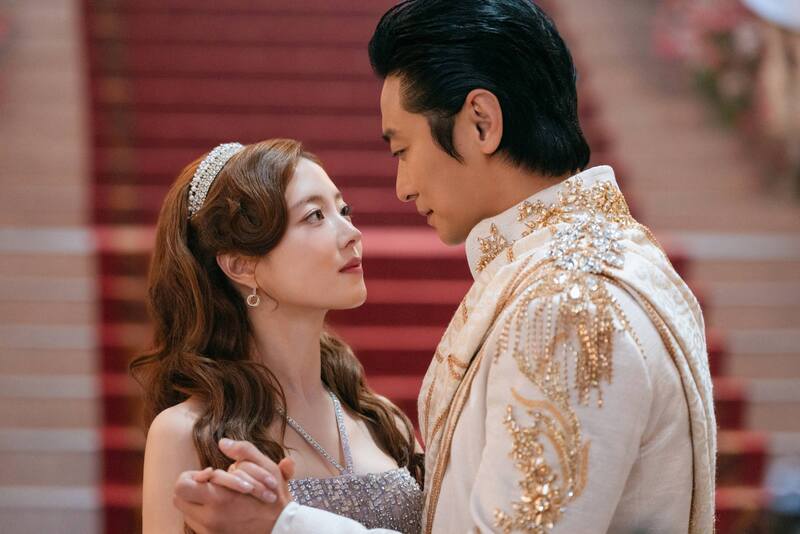
Shin Min-a stars as Navier Ellie Trovi, the empress of the Eastern Empire, who has dedicated her life to fulfilling her responsibilities. Married to Emperor Sovieshu (Ju Ji-hoon), Navier has worked with him to maintain their kingdom's stability and prosperity. Their relationship carries personal history and political obligation, making the emperor's growing interest in another woman far more complicated than the normal marital betrayal.
That woman is Rashta (Lee Se-young), a runaway servant whose circumstances change when Sovieshu becomes infatuated with her. His determination to bring Rashta into his life threatens both his marriage and the relationships within the imperial court. Navier isn't interested in spending the rest of her life begging for the affection of someone who's already decided to disregard her. When divorce becomes a possibility, she sets her own condition, permission to marry Crown Prince Heinrey (Lee Jong-suk) of the rival Western Kingdom.
A marriage falling apart is complicated enough without having entire kingdoms caught in the middle. These characters occupy positions where personal decisions carry enormous political consequences, and jealousy can affect people who have absolutely nothing to do with the relationship. Sovieshu wants the freedom to pursue another woman, but Navier's determination to build her own future threatens the control he assumes he'll always have over her.
Navier has spent years putting her responsibilities as empress ahead of almost everything else, including her own happiness. She's expected to remain composed, represent the empire, and maintain a marriage even as her husband makes it increasingly difficult. Her position gives her authority, but it doesn't necessarily give her control over her personal life. That contradiction makes her decision to pursue a future beyond Sovieshu far more satisfying than a conventional story about getting revenge on an unfaithful husband.
Shin Min-a brings considerable experience to a role that combines romance with the demands of royal politics. Navier's composure is an important part of her personality, but it doesn't define her as her marriage falls apart. Her circumstances create an interesting contrast between public responsibility and private frustration. She doesn't need to become cruel or reckless to challenge Sovieshu's decisions, and her determination to maintain some control over her future gives the story a stronger foundation than the usual romantic rivalry.
Ju Ji-hoon's Sovieshu provides the other half of that relationship, a ruler whose personal desires threaten to interfere with his responsibilities. His behavior raises questions about entitlement that go beyond betraying his wife. An emperor has access to influence and privileges unavailable to almost everyone around him, and his ability to shape other people's futures makes his romantic choices far more consequential than he might want to admit.
Sovieshu creates an impressive number of problems for someone who's supposed to be running an empire. His attraction to Rashta doesn't erase the history he shares with Navier, but he seems comfortable expecting everyone else to accommodate his decisions. As emperor, he rarely hears the word no, and that kind of authority becomes especially dangerous when he starts confusing personal desires with good judgment. Having the power to decide doesn't mean anyone else has to live with it.
Rashta makes the conflict more complicated than a wife competing with another woman for her husband's affection. Navier has spent her life surrounded by privilege, while Rashta knows what it means to have almost no control over her future. That doesn't make every choice Rashta makes acceptable, but it does give her pursuit of security a different meaning. The two women enter this conflict from completely different positions, even though Sovieshu's decisions threaten to determine both their fates.
That background matters when considering the competition developing between the women. A romantic drama can easily position the wife and mistress as opposing forces and encourage audiences to choose whichever character they prefer. THE REMARRIED EMPRESS has a premise that allows for a more complicated examination of the circumstances involved. Navier has every reason to resent the damage to her marriage, while Rashta's former lack of freedom gives her desire for security and influence a different significance.
Understanding Rashta's circumstances doesn't mean excusing every decision she makes, just as sympathizing with Navier doesn't require pretending the imperial system itself is fair. The situation is complicated by the enormous power imbalance between the people involved, something that shouldn't disappear simply because the story includes romantic rivalries. Sovieshu's position makes him responsible for much of the conflict, and reducing everything to a competition between two women would overlook the person whose decisions have helped create it.
Lee Se-young takes on a character whose situation places her in an especially difficult position. Rashta has escaped a life without freedom, only to find herself surrounded by people whose wealth and influence give them enormous advantages over her. Her relationship with Sovieshu offers security, but it also draws her into a world where affection, ambition, and political influence are difficult to separate. She's far more interesting as someone navigating those circumstances than as a simple obstacle between Navier and a happier future.
Then there's Heinrey, the Western Kingdom's crown prince, who introduces both the promise of romance and the possibility of an entirely different political arrangement. Lee Jong-suk takes on a character whose interest in Navier changes her circumstances, complicating a situation Sovieshu initially seems to believe he can control. The prospect of a rival kingdom becoming involved in the dissolution of an imperial marriage is an entertaining complication, with consequences that extend beyond who might be romantically interested in whom.
Heinrey also creates a rather entertaining problem for Sovieshu. An emperor who assumes he can replace his wife without losing control faces the possibility of watching her marry someone with political influence equal to his own. The romantic entanglements are obvious, but involving a rival kingdom raises the stakes considerably. Navier's future is no longer a private matter Sovieshu can manage on his own terms, and that makes Heinrey's interest in her far more consequential than an ordinary courtship.
The fantasy setting is central to the adaptation's identity. Unlike a conventional historical romance based on an actual monarchy, THE REMARRIED EMPRESS takes place in an invented world with its own kingdoms, social structures, and political traditions. That freedom lets the production blend recognizable elements of royal drama with the more imaginative qualities of its source material. Elaborate costumes, palace environments, and ceremonial traditions help distinguish the setting from contemporary romantic dramas, while the conflicts remain grounded in familiar human behavior.
These characters lack the luxury of keeping their personal conflicts private, especially when marriages and relationships can affect entire kingdoms. Every public appearance carries expectations, and maintaining the image of a stable royal household becomes increasingly difficult when the people involved have very different ideas about its future. The elaborate surroundings reinforce how much privilege these characters possess, while their personal conflicts expose how little control even powerful people can sometimes have over their relationships.
Lee Bong-ryeon appears as Eliza, alongside Choi Dae-hoon as McKenna and Park Ho-san as Viscount Lotteshu, helping populate a world that extends beyond its four principal characters. The involvement of advisers, servants, and influential aristocrats also makes the situation considerably messier. An imperial marriage affects far more than the people directly involved, especially when others have spent years building their positions around the existing arrangement. Navier and Sovieshu might be the ones facing divorce, but they're hardly the only people who care what happens next.
Sovieshu has spent so long assuming everyone will accommodate his wishes that he seems genuinely unprepared for Navier to make demands of her own. Her experience navigating royal politics means she's hardly powerless, even when her husband treats her that way. His inability to recognize that may prove far more troublesome than the divorce itself.
For audiences unfamiliar with the original WEBTOON, the premise is accessible without requiring extensive background knowledge. The emotional conflict is immediately understandable, even as the political consequences add complications. The story has the ingredients of an addictive romantic drama. An arrogant husband, a marriage in crisis, an unexpected alternative, and enough royal complications to make ordinary relationship problems look refreshingly uncomplicated.
THE REMARRIED EMPRESS takes a familiar story of romantic betrayal and gives it repercussions that extend far beyond one unhappy marriage. The political problems, competing ambitions, and differences in social standing make the relationships more interesting than a straightforward contest for affection. Sovieshu's inability to see how his decisions affect those around him creates a conflict that could grow far beyond what he intended. Despite the elaborate royal arrangements, the story begins with an ordinary human failing: a man who assumes the people closest to him will keep putting up with his behavior.
It's hard not to appreciate the sheer audacity of Navier's position. Sovieshu wants to discard his wife while pursuing someone else, apparently without considering that she might have plans that don't involve accommodating his selfishness. Instead of accepting the future he's chosen for her, she demands the right to decide what comes next. For a story built around emperors, princes, and the enormous machinery of royal power, the most satisfying idea is wonderfully simple. Being married to the emperor doesn't mean he gets to write the rest of your life.
Please visit https://linktr.ee/overlyhonestr for more reviews.
Follow me on Letterboxd, Instagram, Twitter, and YouTube. You can also find my social media accounts on most platforms by searching for 'Overly Honest Reviews'.
I’m always happy to hear from my readers; please don't hesitate to say hello or send me any movie questions.
[photo courtesy of DISNEY+, HULU]
DISCLAIMER:
At Overly Honest Movie Reviews, we value honesty and transparency. Occasionally, we receive complimentary items for review, including DVDs, Blu-rays, CDs, Vinyl Records, Books, and more. We assure you these arrangements do not influence our reviews, as we are committed to unbiased, sincere evaluations. We aim to help you make informed entertainment choices regardless of our relationship with distributors or producers.
Amazon Affiliate Links:
This site also contains Amazon affiliate links. If you purchase through these links, we may receive a commission. This affiliate arrangement does not affect our commitment to honest reviews and helps support our site. We appreciate your trust and support as you navigate these links.
