Not Every Battle Ends When You Come Home
American Solitaire
MOVIE REVIEW
American Solitaire
 -
- 


Genre: Drama
Year Released: 2026
Runtime: 1h 35m
Director(s): Aaron Davidman
Writer(s): Aaron Davidman
Cast: Joshua Close, Gilbert Owuor, Joanne Kelly
Where to Watch: limited theatrical release beginning April 17, 2026, in New York and Los Angeles, with additional markets to follow
RAVING REVIEW: AMERICAN SOLITAIRE positions itself as an intimate, character-driven exploration of what happens after the fog of war fades, and what’s left behind refuses to come to terms. Centered on a returning soldier trying to find his way back in civilian life, the film leans into the emotional and psychological aftermath of combat rather than the in-the-moment terror of it. This is a story that prioritizes internal conflict, asking what it means to rebuild a sense of self in a world that feels both familiar and like something you don’t recognize.
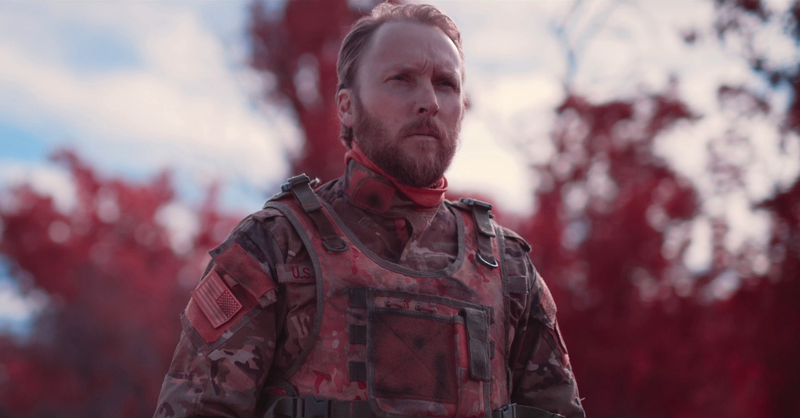
What stands out is the film’s focus on identity as something splintered rather than pieced together. Slinger (Joshua Close) isn’t simply struggling with reintegration in a logistical sense; he is trying to reconcile who he was trained to be with who he is expected to become. That tension fuels the story, creating a steady sense of unease that sits just beneath the surface. The film’s premise emphasizes a country that celebrates strength while lacking the language to address the damage left behind. That contradiction becomes central to the story's unfolding. This isn’t a new story, but it’s one of the best visual representations that I’ve seen of the core message.
Joshua Close carries the film, and everything about the role is a performance built on restraint. This isn’t a character who opens up about what he’s going through. Instead, the struggle is carried in smaller moments, in hesitation, in distance, in the inability to connect with anyone who doesn’t understand. That approach can be incredibly effective when it lands, allowing the audience to sit with the character rather than being told how to feel. It also puts a great deal of responsibility on the performer to maintain engagement without relying on overt emotional release.
The supporting cast appears to serve both as a reflection and as a contrast. Joanne Kelly’s presence introduces another perspective on recovery, suggesting that healing isn’t a uniform experience and that progress can look very different for different people. Gilbert Owuor’s role seems to represent the lingering pull of conflict, a reminder that some aspects of war don’t stay on the battlefield. Together, these characters expand the narrative's scope without pulling it away from its central focus.
The film’s engagement with larger cultural themes is where it finds much of its power. It doesn’t isolate the character’s experience from the environment around him. Instead, it places that exploration within a broader context where ideas of masculinity, responsibility, and protection are closely tied to deeply ingrained cultural norms. The story intersects with real-world conversations about trauma, reintegration, and the role of firearms in moments of crisis, particularly among veterans. That grounding gives the film a sense of urgency, even when the storytelling remains so focused and controlled.
There’s also a strong sense that the film is interested in transformation, not just on an individual level but also symbolically. The imagery of reshaping tools of violence into something constructive reflects a larger thematic push to redefine strength and purpose. It’s a concept that could easily feel heavy-handed, but when integrated this way, it can reinforce the film’s central ideas without overwhelming them.
AMERICAN SOLITAIRE may face some challenges in balancing its ambition with its narrative flow. Character studies that rely heavily on introspection can sometimes struggle to maintain that constant flow, especially when the conflict doesn’t translate into visible change.
There’s also the question of how directly the film engages with its subject matter. A story like this benefits from clarity of perspective, and while the intent to explore complexity is evident, that complexity needs to be shaped into something. When the film leans too far into observation without developing a clear throughline, it risks feeling diffuse. When it maintains the emphasis on the character’s emotional direction while allowing the broader themes to emerge naturally, it resonates in a way that really hits home.
What ultimately defines AMERICAN SOLITAIRE is its commitment to sitting with discomfort rather than resolving it. It’s not structured around handing the audience answers or perfect resolutions. Instead, it looks at the process of understanding and healing, recognizing that those things rarely happen in a straight line. By centering its story on a character caught between multiple versions of himself, the film creates a framework that allows for nuance without losing emotional grounding.
At its best, this is the kind of film that invites reflection without forcing a singular conclusion. It opens a conversation rather than closing one, using its character to explore larger questions about identity, responsibility, and what it actually means to move forward after experiencing something that fundamentally changes you.
Please visit https://linktr.ee/overlyhonestr for more reviews.
You can follow me on Letterboxd, Instagram, Twitter, and YouTube. My social media accounts can also be found on most platforms by searching for 'Overly Honest Reviews'.
I’m always happy to hear from my readers; please don't hesitate to say hello or send me any questions about movies.
[photo courtesy of COMPLEXITY PICTURES]
DISCLAIMER:
At Overly Honest Movie Reviews, we value honesty and transparency. Occasionally, we receive complimentary items for review, including DVDs, Blu-rays, CDs, Vinyl Records, Books, and more. We assure you that these arrangements do not influence our reviews, as we are committed to providing unbiased and sincere evaluations. We aim to help you make informed entertainment choices regardless of our relationship with distributors or producers.
Amazon Affiliate Links:
Additionally, this site contains Amazon affiliate links. If you purchase through these links, we may receive a commission. This affiliate arrangement does not affect our commitment to honest reviews and helps support our site. We appreciate your trust and support as you navigate these links.
