The Gang Before the Brand
Peaky Blinders: The Real Story
MOVIE REVIEWS
Peaky Blinders: The Real Story
 -
- 


Genre: Documentary
Year Released: 2026
Runtime: 1h 1m
Director(s): Robin Bextor
Where to Watch: on UK digital February 23, 2026
RAVING REVIEW: What happens when a television series grows so large that it begins to rewrite public memory, and not just entertain? PEAKY BLINDERS: THE REAL STORY focuses in part on offering an answer to that question, positioning itself less as an extension of a global franchise and more as a corrective lens, one that slows the momentum of cultural obsession long enough to ask what’s been gained, lost, and distorted along the way.
Directed by Robin Bextor, whose recent work has focused on separating pop mythology from lived history, the documentary will immediately resonate with its audience. It knows viewers are likely coming in with affection for the series, its iconography, and its swagger. Instead of scolding that affection or indulging it, the film threads a careful path between the two. It treats the television phenomenon as a legitimate cultural force while refusing to let its aesthetics overwrite the realities that inspired it.
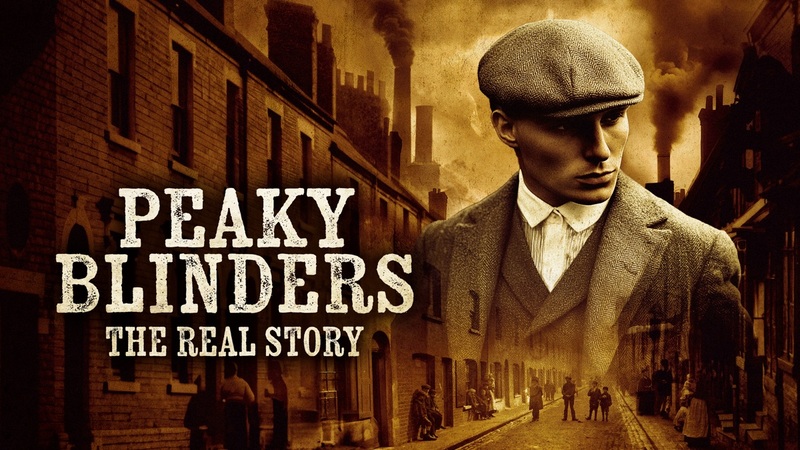
The documentary opens by grounding the Peaky Blinders not as cinematic antiheroes, but as products of a specific social moment in early twentieth-century Birmingham. Poverty, post-industrial displacement, class resentment, and survival are foregrounded before style ever enters the frame. This matters; it reframes the gang not as mythic criminals, but as working-class youth shaped by environment rather than destiny. The series may have given them worldwide recognition, but their actions on the street earned them infamy.
Much of the film’s influence comes from crime historian Carl Chinn, whose family connection to the gang lends both academic weight and personal proximity. Chinn is not positioned as some novelty expert. Instead, he functions as the documentary’s morality check, repeatedly pulling the narrative back toward lived experience whenever popular imagery threatens to take over. His commentary dismantles several of the most persistent myths associated with the gang, including the romanticized violence and exaggerated symbolism that have been absorbed into modern pop culture.
At the same time, PEAKY BLINDERS: THE REAL STORY never pretends that the television series didn’t accomplish something meaningful. Interviews with series creator Stephen Knight offer insight into how family stories, memory, and creative invention fused into a fictional world that resonated globally. Knight’s reflections avoid self-mythologizing, instead acknowledging the deliberate stylization that transformed historical events into serialized drama. The film makes clear that the show’s success wasn’t accidental, but carefully constructed through tone, music, casting, and visual identity.
One of the documentary’s strongest sections examines how Peaky Blinders evolved from a BBC period drama into a full-blown cultural brand. Hairstyles, fashion, music playlists, and even baby names are traced back to the series’ influence. Rather than treating this as just trivia, the film interrogates what it means when aesthetic rebellion becomes commercialized. When rebellion becomes marketable, what happens to its meaning?
The documentary adopts a clean, accessible structure that favors clarity over experimentation. Archival materials are used sparingly but effectively, never overwhelming the viewer with imagery for its own sake. Some viewers may wish for longer stretches focused exclusively on the real Birmingham gangs, rather than repeated returns to the series’ cultural impact. That said, the film’s restraint prevents it from becoming bloated or self-important.
If there’s a limitation worth noting, it’s that the documentary sometimes feels torn between two audiences: those seeking the historical excavation and those primarily interested in the series itself. While it largely balances both, there are moments where the analysis stops just short of its most uncomfortable conclusions. The realities of violence, exploitation, and class struggle are acknowledged, but not always pressed as in-depth as they could be. This feels less like avoidance and more like a conscious decision to remain accessible to the largest audience.
PEAKY BLINDERS: THE REAL STORY succeeds because it understands responsibility. It recognizes that once a piece of fiction becomes a cultural milestone, it carries weight beyond entertainment. This documentary doesn’t attempt to dismantle the series’ legacy, nor does it protect it just for the sake of nostalgia. Instead, it offers context, nuance, and correction, allowing admiration and accountability to coexist.
For longtime fans, the film deepens appreciation by clarifying where invention begins and history ends. For newcomers, it provides a grounded entry point that resists glamorization without denying cultural impact. For anyone interested in how modern media reshapes historical memory, it offers a thoughtful case study of how stories evolve once they leave their origins behind. By the time the documentary wraps up, the Peaky Blinders no longer feel like a singular myth or brand, but a layered intersection of hardship, storytelling, and modern consumption. That clarity, more than nostalgia or chaos, is what gives PEAKY BLINDERS: THE REAL STORY its value.
Please visit https://linktr.ee/overlyhonestr for more reviews.
You can follow me on Letterboxd, Instagram, Twitter, and YouTube. My social media accounts can also be found on most platforms by searching for 'Overly Honest Reviews'.
I’m always happy to hear from my readers; please don't hesitate to say hello or send me any questions about movies.
[photo courtesy of REEL2REEL FILMS]
DISCLAIMER:
At Overly Honest Movie Reviews, we value honesty and transparency. Occasionally, we receive complimentary items for review, including DVDs, Blu-rays, CDs, Vinyl Records, Books, and more. We assure you that these arrangements do not influence our reviews, as we are committed to providing unbiased and sincere evaluations. We aim to help you make informed entertainment choices regardless of our relationship with distributors or producers.
Amazon Affiliate Links:
Additionally, this site contains Amazon affiliate links. If you purchase through these links, we may receive a commission. This affiliate arrangement does not affect our commitment to honest reviews and helps support our site. We appreciate your trust and support as you navigate these links.
