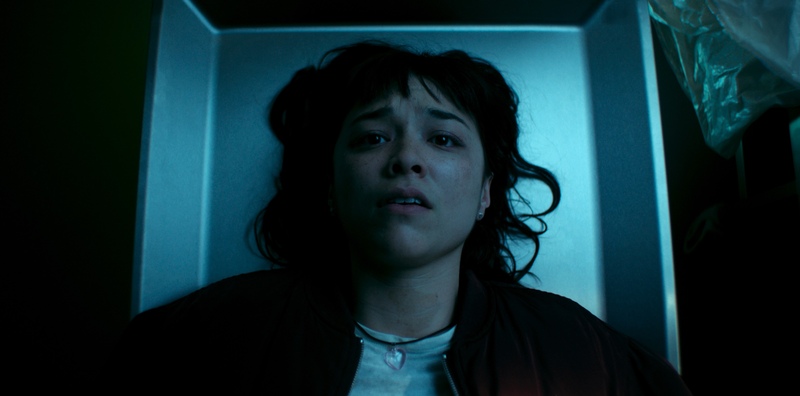
Body Dysmorphia Gets Turned Into a Ghost Story
Saccharine
MOVIE REVIEW
Saccharine
 -
- 


Genre: Body Horror, Drama, Psychological Horror
Year Released: 2026
Runtime: 1h 52m
Director(s): Natalie Erika James
Writer(s): Natalie Erika James
Cast: Midori Francis, Danielle Macdonald, Madeleine Madden, Annie Shapero, Robert Taylor
Where to Watch: opens in select theaters across the U.S. on May 22, 2026
RAVING REVIEW: SACCHARINE opens with the kind of sensory bombardment that tells you exactly where its head is at. Mouths chewing. Fingers digging into food. Bodies are observed like problems waiting to be solved. Writer/director Natalie Erika James doesn’t ease you into this world delicately because the film itself is about a mindset that never allows people to exist comfortably inside their own skin. Everything feels scrutinized, monitored, optimized, compared, and consumed. That discomfort becomes the movie’s strongest weapon.
Hana, played by Midori Francis, isn’t introduced as somebody spiraling dramatically out of control from the start. She’s exhausted. Unhappy with a lot of things. Existing inside the kind of psychological pressure cooker that modern body culture creates so efficiently that it barely even registers as abnormal anymore. Social media wellness, gym culture, dieting trends, self-improvement rhetoric, romantic insecurity, judgment, all of it blends into one endless stream of invisible violence. SACCHARINE understands that most destructive behavior doesn’t begin with one traumatic event. Sometimes it starts with a thousand tiny humiliations accumulating over time.
Francis gives the film exactly the kind of performance it needs. Hana isn’t written as a concept first and a person second. Even when the movie veers into grotesque supernatural, Francis keeps her emotions. There’s desperation in the character, but also embarrassment about that desperation. The film becomes much more effective because Hana recognizes that parts of what she’s doing are irrational and dangerous, yet continues anyway. James understands compulsive behavior well enough to know self-awareness alone rarely stops it.
The premise itself is absurd in the best possible way. Weight-loss pills made from human ashes already sound like midnight-movie material before the supernatural haunting even enters the equation. What makes the concept stick isn’t shock value alone, though. James uses the premise to externalize the emotional reality of body dysmorphia and disordered eating. Hana isn’t simply consuming ashes. She’s consuming shame, fantasy, aspiration, insecurity, and punishment all at once.
There’s an ugly honesty running beneath the film that sets it apart from many elevated horror. James clearly has a personal investment in these themes, and that specificity gives the movie sharper edges than it might’ve had otherwise. The film’s exploration of compulsive behavior, inherited shame, and emotional hunger feels less like trend-chasing and more like somebody genuinely trying to process painful experiences through genre filmmaking.
James and cinematographer Charlie Sarroff lean heavily into distorted close-ups, invasive framing, and reflective imagery that constantly forces Hana to confront warped versions of herself. The recurring use of convex reflections is especially effective because it literalizes distorted self-perception without feeling overly gimmicky. The film’s horror imagery works best when it treats the body less as a source of transformation spectacle and more as an unstable prison.
The practical effects deserve a lot of credit, too. James prioritizes physical prosthetics and in-camera effects whenever possible, and these textures enhance the film. When Hana’s physical decline accelerates, the deterioration feels unpleasantly real rather than digital. The ghostly presence haunting her carries physicality, especially during sequences that lean harder into psychological terror and bodily decay.
Danielle Macdonald brings a warmth to the film that it desperately needs. Her performance helps prevent SACCHARINE from collapsing entirely into self-loathing nightmare logic. Madeleine Madden also plays an important role in shaping the emotional atmosphere, especially in how Hana projects desire, validation, and transformation onto her relationship with Alanya. The film understands how attraction and self-worth can become dangerously intertwined inside somebody already struggling psychologically.
At its best, SACCHARINE feels genuinely unpleasant in a purposeful way. Not simply gross for the sake of reaction clips or viral horror moments, but emotionally corrosive. The sleep-eating scenes, the late-night compulsions, the escalating paranoia, the invasive medical imagery, all of it creates a suffocating atmosphere where Hana’s relationship with her own body becomes increasingly alien and hostile. I think that’s why the film connected with me: I traditionally don’t lean into body or elevated horror because they too often don’t have a purpose beyond shock value.
James throws a tremendous amount into the narrative, examining everything from body dysmorphia, queerness, binge eating, social media toxicity, addiction cycles, family trauma, compulsive behavior, diet culture, fatphobia, self-harm, medical ethics, and supernatural haunting. SACCHARINE remains difficult to dismiss because of how emotionally raw it feels underneath the chaos. James isn’t approaching these themes clinically. The movie feels angry, ashamed, frightened, and exhausted all at once. That emotional volatility gives it energy even when the structure wobbles.
And honestly, the film’s willingness to become unsightly helps it. SACCHARINE never sanitizes the compulsions driving Hana. The movie understands self-destruction rarely looks elegant while it’s happening. It’s humiliating, irrational, and isolating. James captures that feeling extremely well, especially during scenes where Hana’s desperation overrides basic morality or self-preservation.
Reality bends further, the body horror intensifies, and Hana’s sense of identity starts collapsing completely beneath everything she’s consumed emotionally and physically. Some viewers are probably going to find the ending excessive or overextended, but there’s something uncompromising about how far James pushes the nightmare logic.
SACCHARINE is still a far more interesting horror film than most studio body horror imitators flooding the genre right now. It’s ugly, messy, committed, and powered by a strong lead performance from Midori Francis. Most importantly, it understands that shame can mutate into its own kind of haunting long before anything supernatural ever arrives.
Please visit https://linktr.ee/overlyhonestr for more reviews.
You can follow me on Letterboxd, Instagram, Twitter, and YouTube. My social media accounts can also be found on most platforms by searching for 'Overly Honest Reviews'.
I’m always happy to hear from my readers; please don't hesitate to say hello or send me any questions about movies.
[photo courtesy of IFC, SHUDDER]
DISCLAIMER:
At Overly Honest Movie Reviews, we value honesty and transparency. Occasionally, we receive complimentary items for review, including DVDs, Blu-rays, CDs, Vinyl Records, Books, and more. We assure you that these arrangements do not influence our reviews, as we are committed to providing unbiased and sincere evaluations. We aim to help you make informed entertainment choices regardless of our relationship with distributors or producers.
Amazon Affiliate Links:
Additionally, this site contains Amazon affiliate links. If you purchase through these links, we may receive a commission. This affiliate arrangement does not affect our commitment to honest reviews and helps support our site. We appreciate your trust and support as you navigate these links.
