The Ocean Isn’t the Scariest Thing Here
Chum
MOVIE REVIEW
Chum
 -
- 

Genre: Horror, Thriller, Shark Horror
Year Released: 2026
Runtime: 1h 27m
Director(s): Jonathan Zuck
Writer(s): Dick Grunert, Ryan R. Johnson, James Kondelik, Jonathan Zuck, Joe Leone
Cast: Alice Eve, Eric Michael Cole, Jim Klock, Elle Haymond, Sarah Siadat, Johnny Gaffney, Lisa Yaro
Where to Watch: coming to theaters and VOD/Digital Platforms June 5, 2026
RAVING REVIEW: A lot of modern shark movies die the second they start treating the shark like the entire focus. Once the novelty wears off, there’s usually nothing underneath besides floating bodies, fins, and characters so disposable you spend half the runtime hoping the movie finally gets around to feeding them to something. CHUM works better than most because it understands the shark isn’t actually the main threat. It’s just the pressure point that causes things to boil over. The true focus is forcing already unstable people into a situation where every selfish instinct surfaces.
That distinction gives Jonathan Zuck’s film more tension than the average survival thriller almost immediately. The setting initially carries the illusion of luxury-horror, attractive people, expensive scenery, and destination-wedding energy. But CHUM gradually reveals itself to be much deeper (at times) than that setup suggests. The film shows very little interest in escapism once the blood hits the water. It wants discomfort, paranoia, resentment, and emotional vileness. And honestly, the movie benefits from that attitude.
The open water off the Republic of Malta creates an immediate sense of exposure, keeping the movie feeling vulnerable even during its quieter stretches. There’s nowhere to disappear out there, there’s no easy escape route. Even before the violence begins, the environment itself carries tension because everybody feels stranded long before they technically are.
What surprised me most was how long CHUM delays giving the audience exactly what they think they came for. That could’ve backfired, but the decision allows the film to establish fractures within the group before survival mode takes over. Relationships already feel strained before the situation spirals out of control. Conversations carry passive-aggressive vibes underneath the surface. The newlywed dynamic becomes important because the movie never presents the marriage as stable to begin with. The shark attack doesn’t destroy paradise; it exposes that paradise was already cracking beneath the surface. That instability ends up becoming more effective than the actual shark material at times.
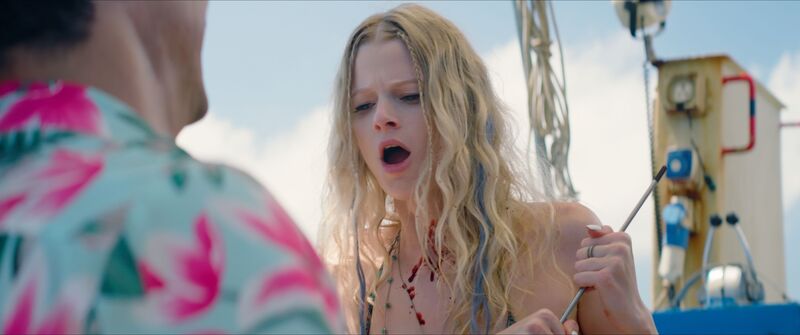
Alice Eve understands how to play elevated panic without turning every scene into melodrama. A lesser performance could’ve pushed the material into full-on SyFy channel. However, Eve keeps things grounded enough that the reactions still feel human even when the surrounding scenario grows increasingly off-kilter. There’s a controlled exhaustion to her performance that works well against the escalating violence around her. She looks like somebody constantly calculating whether survival is even worth trusting the people standing beside her.
The supporting cast helps maintain that atmosphere, too. Nobody here feels like they wandered in from a completely different movie, which matters more than people realize with this kind of ensemble thriller. Eric Michael Cole and Jim Klock especially understand the assignment. The performances don’t need awards-season subtlety; they need conviction under pressure, and the film largely gets that. It might be Elle Haymond who gives the film's most subdued yet important performance; she really manages to convey more with a stern look or one-liner than you would expect.
What keeps CHUM from climbing higher is that the screenplay occasionally struggles to balance its two competing horror concepts. The shark material and the psychopathic human threat don’t always click the way they should. There are stretches where the film feels more invested in one over the other, causing the momentum to wobble slightly whenever the narrative shifts focus. You can occasionally feel the script's trying to juggle survival horror, slasher energy, relationship drama, and aquatic thriller simultaneously. Though in the end I prefer a messy genre film like this, aiming for multiple layers rather than another shark movie built entirely around attack scenes and CGI chaos.
There’s also something refreshingly mean about CHUM that keeps it engaging. Modern studio horror sometimes sands its edges down too much, terrified of making characters too flawed or endings too unpleasant. This movie doesn’t have that problem. It allows people to behave selfishly, irrationally, and cruelly once survival instincts take over. Trust evaporates quickly. Loyalty becomes conditional.
Director (and one of the many writers) Jonathan Zuck also deserves credit for restraint during several of the larger suspense sequences. The film doesn’t constantly overplay its hand visually. Some attacks happen quickly rather than stretching into elaborate set pieces. That unpredictability helps maintain tension by preventing the movie from falling into a repetitive rhythm. When violence arrives, it often feels abrupt instead of choreographed.
The shark effects themselves are solid without becoming the centerpiece. That’s probably the smartest decision the production makes. CHUM understands audiences have seen enough bad digital sharks to last a lifetime. Instead of forcing endless CGI creature shots into every scene, the film weaponizes anticipation more effectively than spectacle. You spend more time fearing the water than staring directly at what’s underneath it. They learned what JAWS did so well back in the day.
What ultimately sticks with me most isn’t the carnage, though. It’s the bitterness running underneath the entire film. CHUM isn’t secretly optimistic about people. It’s a movie about stress stripping away, leaving only the survival instinct. The ocean becomes less a monster playground and more a pressure cooker, exposing every insecurity, betrayal, and fracture these people already carried onboard.
That darker edge gives the film more staying power than many recent shark horror films. It doesn’t reinvent the subgenre, but it understands something many creature features don't, that audiences don’t just need danger; they need instability. Fear works better when the people trapped together already feel dangerous to one another before the monster even arrives.
Please visit https://linktr.ee/overlyhonestr for more reviews.
You can follow me on Letterboxd, Instagram, Twitter, and YouTube. My social media accounts can also be found on most platforms by searching for 'Overly Honest Reviews'.
I’m always happy to hear from my readers; please don't hesitate to say hello or send me any questions about movies.
[photo courtesy of IFC (INDEPENDENT FILM COMPANY), REDWIRE PICTURES, GREEN LIGHT PICTURES, KCD MEDIA.]
DISCLAIMER:
At Overly Honest Movie Reviews, we value honesty and transparency. Occasionally, we receive complimentary items for review, including DVDs, Blu-rays, CDs, Vinyl Records, Books, and more. We assure you that these arrangements do not influence our reviews, as we are committed to providing unbiased and sincere evaluations. We aim to help you make informed entertainment choices regardless of our relationship with distributors or producers.
Amazon Affiliate Links:
Additionally, this site contains Amazon affiliate links. If you purchase through these links, we may receive a commission. This affiliate arrangement does not affect our commitment to honest reviews and helps support our site. We appreciate your trust and support as you navigate these links.
