Childhood Becomes Collateral Damage
Will You Still Be My Friend (日光)
MOVIE REVIEWS
Will You Still Be My Friend (日光)
 -
- 


Genre: Drama, Coming-of-Age
Year Released: 2026
Runtime: 1h 40m
Director: Lu Po-Shun
Writer: Lu Po-Shun
Cast: Jaden Wang, Aloysius Looi, Lung Tien Hsiang, Lu Yi-Ching, Andie Chen, Kate Pang, Xing Chang
Where to Watch: shown at the 2026 San Sebastián International Film Festival
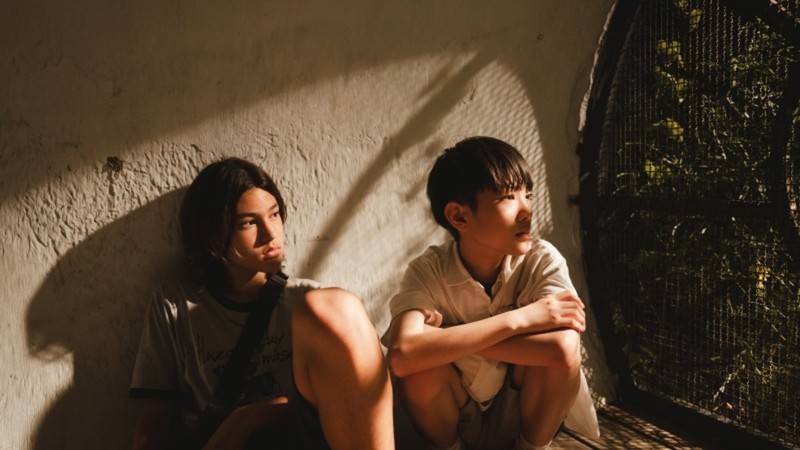
RAVING REVIEW: A thirteen-year-old can understand that the adults around him are angry long before he understands why. He can see people choosing sides, hear how families talk about one another change, and recognize when someone he cares about suddenly becomes someone he’s apparently supposed to avoid. WILL YOU STILL BE MY FRIEND builds itself around that uncomfortable space, where childhood feelings are still relatively uncomplicated, but the world surrounding them absolutely isn’t.
Jun lives in a fishing village along Taiwan’s southern coast and has formed a close friendship with Jasper, a boy raised in Singapore whose family has moved into the area because of a solar power development project. That alone places them on opposite sides of a conflict they had nothing to do with creating. Residents are increasingly angry about the project, accusations involving Jun’s grandfather complicate matters further, and what should be an ordinary friendship starts carrying consequences neither boy is prepared to handle.
Director Lu Po-Shun has been circling ideas about home, belonging, and life in Taiwan’s coastal communities for years, and that background matters here. The solar development isn’t simply something dropped into the story to give the adults a reason to argue. It changes the physical community, threatens livelihoods, introduces outsiders with money and influence, and forces residents to decide what they’re willing to accept in the name of progress. None of those questions have easy answers, especially when the people absorbing the fallout aren’t the ones making the decisions.
That makes Jun an effective way into the story because his understanding of the conflict is necessarily incomplete. He doesn’t need to know every financial arrangement or political argument to recognize that Jasper is being treated differently, just as he doesn’t need an adult vocabulary for every feeling he has toward him. There’s something painfully familiar about reaching an age when emotions stop fitting comfortably into the categories you’ve always used for them.
The relationship between Jun and Jasper is where WILL YOU STILL BE MY FRIEND has the most interesting ground to explore. Their friendship exists separately from the adults at first, allowing them a small world where family loyalties and village politics don’t have to matter. The problem is that childhood doesn’t permanently protect them from any of that. Eventually, other people’s grudges become their grudges, other people’s suspicions become expectations, and simply wanting to remain friends becomes far more complicated than either boy thought possible.
Jun’s growing uncertainty about what Jasper means to him adds another layer without requiring the story to become something entirely different suddenly. The question isn’t simply whether these boys are friends or whether Jun’s feelings are developing into something else. He’s trying to understand an attachment at the exact moment outside forces are telling him that the attachment itself has become inconvenient. That combination gives the coming-of-age material far more weight than a straightforward first-crush story would.
There’s also an appealing contradiction in using solar energy as the source of so much community tension. Renewable energy sounds like uncomplicated progress from a distance, but projects don’t exist in the abstract once land, money, jobs, local authority, and the people living nearby enter the equation. WILL YOU STILL BE MY FRIEND is less interested in declaring a winner in that argument than it is in showing what happens when a dispute becomes personal enough that everyone begins carrying it home with them.
The potential weakness is that the adult conflict has to serve several purposes at once. It provides the larger social issue, the divide between the boys’ families, the questions surrounding Jun’s grandfather, and the mechanism that keeps pressuring the friendship. With so much narrative responsibility resting on the same dispute, there are moments when the machinery behind the story becomes easier to see than it should. The boys’ emotional uncertainty feels naturally messy; the adults occasionally risk becoming pieces needed to move them toward the next problem.
That imbalance matters because the smaller story has the greater emotional pull. Lu doesn’t need corruption allegations or increasingly complicated village politics to convince us that losing your closest friend at thirteen can feel catastrophic. Those elements give the film valuable context, but its strongest idea is considerably simpler. Children routinely inherit conflicts already underway before anyone bothers to explain the rules.
The coastal setting also gives WILL YOU STILL BE MY FRIEND an identity beyond the familiar beats of a teenage friendship drama. Lu grew up in a fishing village himself, and there’s a clear reason he keeps returning to these communities in his work. A place like this isn’t simply scenery behind Jun and Jasper; it represents history, family, employment, identity, and the uncomfortable question of what gets preserved when economic change arrives promising something better.
That connection ultimately makes the film’s title feel less innocent than it first appears. Asking whether someone will still be your friend sounds like one of the simplest questions a child can ask, until friendship has become tangled up with family loyalty, community resentment, class, sexuality, and the fear of being left behind. WILL YOU STILL BE MY FRIEND takes that small question seriously, finding something much bigger in the moment when two boys discover that caring about each other doesn’t mean the rest of the world will make it easy for them.
Please visit https://linktr.ee/overlyhonestr for more reviews.
You can follow me on Letterboxd, Instagram, Twitter, and YouTube. You can also find my social media accounts on most platforms by searching for 'Overly Honest Reviews'.
I’m always happy to hear from my readers; please don't hesitate to say hello or send me any questions about movies.
[photo courtesy of INLIGHT FILM STUDIO, VERDANT PEAK FILMS]
DISCLAIMER:
At Overly Honest Movie Reviews, we value honesty and transparency. Occasionally, we receive complimentary items for review, including DVDs, Blu-rays, CDs, Vinyl Records, Books, and more. We assure you these arrangements do not influence our reviews, as we are committed to unbiased, sincere evaluations. We aim to help you make informed entertainment choices regardless of our relationship with distributors or producers.
Amazon Affiliate Links:
This site also contains Amazon affiliate links. If you purchase through these links, we may receive a commission. This affiliate arrangement does not affect our commitment to honest reviews and helps support our site. We appreciate your trust and support as you navigate these links.
