Chaos As a Spiritual Language
Tony Odyssey (Antônio Odisseia)
MOVIE REVIEWS
Tony Odyssey (Antônio Odisseia)
 -
- 

Genre: Drama, Surrealist, Psychological
Year Released: 2026
Runtime: 1h 45m
Director(s): Thales Banzai
Writer(s): Thales Banzai, Kelson Succi
Cast: Kelson Succi, Iraci Estrela, Sandro Guerra, Antônio Pitanga
Where to Watch: shown at the 2026 Slamdance Film Festival
RAVING REVIEW: What do you do when the world around you feels like the very thing you’re attempting to get away from? TONY ODYSSEY begins with that problem embedded in its core; it’s rooted in the quite ordinary disappointment of a person, before the movie breaks apart, twists, and ultimately doesn’t bother to be polite or even make sense (and doesn’t need to). From the first scenes, Thales Banzai’s first film shows that this isn’t a story that wants your comfort, or to make things clear, or even to reassure you. It’s a film about being used up from deep inside, about the harm of not moving forward, and about the idea that, perhaps, past the rules, there’s some way to get out.
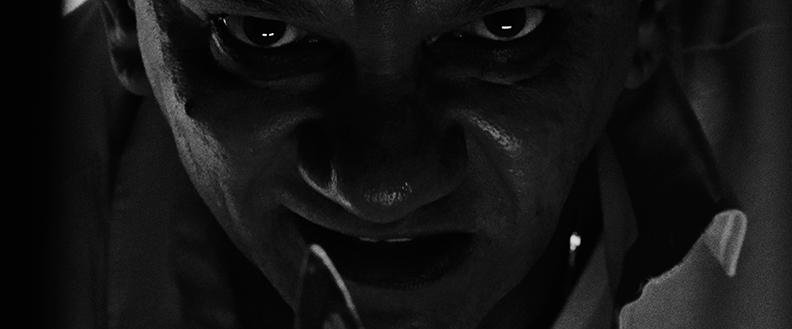
Kelson Succi’s Tony isn’t shown as someone who dreams, but as someone who’s already been worn out by doing the same things over and over. His existence is made up of work which offers no reward, duty without any progress, and the always-present danger of what might happen, however carefully he acts. When he chooses to rob the bar where he works, it isn’t so much a decision to go against the rules as something that was always going to happen. The robbery isn’t shown as clever or exciting. It’s desperate, clumsy, and filled with the feeling that whatever happens next will be even worse. That feeling, between being scared and needing to do something, drives the whole film.
After the ‘drug,’ which causes hallucinations, appears in the story, TONY ODYSSEY doesn’t go about the usual ways of showing things in films about drugs. There’s no feeling of being astonished or playing around with ideas. Instead, the film uses being in an altered state to face things. The world Tony goes into feels next to reality, not separate from it. You recognize it, but it’s unfriendly, a little wrong in ways that make everything feel unstable. São Paulo becomes both a real city and a mental puzzle that offers hints and signs but never any explanations.
Banzai’s directing relies a lot on not being certain, and that won’t appeal to all people. Scenes flow into each other without changes, time is stretched and shortened, and what causes what often seems deliberately hidden. But the film’s refusal to spell things out is also its best quality. TONY ODYSSEY trusts people in the audience to be willing to feel uncomfortable, to follow what the characters feel rather than being told what to think, and to accept that not every question should have a real answer.
Succi carries the film with a performance that feels both open and unwilling. Tony isn’t written symbolically, or as someone representing something else, and Succi doesn’t play him as that either. There’s anger here, but it’s softened by being tired. There’s hope, but it’s mixed with not trusting people. Even when he’s most reckless, Tony feels fixed in a real emotional world. You believe every bad thing he does, because you understand why staying where he is feels even worse.
Iraci Estrela’s Ivy acts as both the cause of events and something different from Tony. She isn’t a guide or a judge of what’s right and wrong, and the film doesn’t turn her into either. Instead, she is movement, quick, sensual, facing things head-on, and sometimes damaging. Her being there pushes Tony on, but also shows the limits of escape as something people do together. Not everyone is looking for the same kind of being saved, and TONY ODYSSEY is clever enough to let that feeling of disagreement stay, without sorting it out.
Sandro Guerra’s Mr. Casio is floating over the film even when he isn’t on the screen, showing how power works, which doesn’t need to be explained to be harmful. At the same time, Antônio Pitanga’s appearance brings a seriousness that links the film to the history of Brazilian films and culture. His being there isn’t looking back to the past, or just for show. It makes the idea that TONY ODYSSEY is talking to Brazilian cinema from the past, but not trying to copy it, stronger.
What makes TONY ODYSSEY different is that it doesn’t treat spirituality as something to laugh at or as a way to solve problems. God, when mentioned, isn’t kind or frightening, but far away, saying different things, and difficult to understand. The film doesn’t make fun of faith, but it doesn’t make it seem good, either. Instead, it shows belief as another system Tony is trying to deal with, one that offers meaning, but asks that you give up your freedom.
This isn’t an easy film; its pace is deliberately uneven, its structure is broken up, and its symbols aren’t just for show. Some people watching will find that strange. Others will see it as a risk that had to be taken, especially for a first film, which could easily have been safer. Banzai chooses to be ambitious, rather than easy to understand, and while that choice has some rough parts, it also gives the film its power.
TONY ODYSSEY doesn’t pretend to have answers for the viewers. It’s a film about asking the right questions at the wrong time, about looking for change when the world offers none, and about the uncomfortable truth that getting away doesn’t guarantee you’ll be changed. What it does offer is a sense of certainty about what it’s doing. Every choice, even the annoying ones, feels planned. In a world full of carefully made films that have been tested in the market, that alone makes this journey worth it.
Please visit https://linktr.ee/overlyhonestr for more reviews.
You can follow me on Letterboxd, Instagram, Twitter, and YouTube. My social media accounts can also be found on most platforms by searching for 'Overly Honest Reviews'.
I’m always happy to hear from my readers; please don't hesitate to say hello or send me any questions about movies.
[photo courtesy of 5 PRA 2, 5 BY 2]
DISCLAIMER:
At Overly Honest Movie Reviews, we value honesty and transparency. Occasionally, we receive complimentary items for review, including DVDs, Blu-rays, CDs, Vinyl Records, Books, and more. We assure you that these arrangements do not influence our reviews, as we are committed to providing unbiased and sincere evaluations. We aim to help you make informed entertainment choices regardless of our relationship with distributors or producers.
Amazon Affiliate Links:
Additionally, this site contains Amazon affiliate links. If you purchase through these links, we may receive a commission. This affiliate arrangement does not affect our commitment to honest reviews and helps support our site. We appreciate your trust and support as you navigate these links.
