Chris Jones
Entertainment Editor
Chris Jones, from Washington, Illinois, is the Mail Entertainment Editor covering Movies, Television, Books, and Music topics. He is the owner, writer, and editor of Overly Honest Reviews.
By 1929, Stan Laurel and Oliver Hardy had already developed the comic partnership that would define the rest of their lives and careers. Stan’s naive confusion, Ollie’s wounded dignity, and their shared ability to turn a minor problem into a spectacular disaster were all firmly in place. LAUREL & HARDY: THE SILENT YEARS gathers nine shorts made as Hollywood was shifting toward sound, capturing the duo at the end of one era without suggesting they needed to change much for the next.
I really had no clue what to expect here. I didn’t know anything about the film going in; all I had seen were the poster and some stills. Revenge stories usually know where they’re headed long before the characters do. IS GOD IS takes a familiar route and drags it through family histories, mythic rage, dark humor, and a whole lot of fire until the path feels less like justice and more like inheritance. Aleshea Harris adapts her own stage play into a film that’s often bold, frequently strange, and carried by two lead performances that understand anger as something more complicated than an action-movie fuel source.
“Opportunity begets opportunity.” The wise words fall out of Will’s mouth in a rare moment of lucidity. He, along with his friends Caro and Felipe, have ventured to a remote vacation home to seek that opportunity they feel they so desperately deserve. Waiting for them there is their estranged collaborator, Sam, who is a little preoccupied.
ATTACK ON PARADISE has a relatively simple focus, with a building, a mother, a son, a gang problem, a police raid, and enough bodies in motion to make every stairwell feel like a bad decision. Bob Colaers’ action thriller takes one of the oldest genre delights, a trapped hero fighting through hostile territory. It drops it into an Antwerp apartment complex that has become less a home than a pressure cooker. There’s a familiarity here, but the film makes this story its own.
What are some basic expectations you have when going to watch a movie? The screen is supposed to be self-contained, right? You can be part of the experience, but you’re never going to be in the experience. YOU ARE THE FILM turns that distance into a doorway, a warning system, and eventually a rather funny argument over who gets to control life once someone else can see its next scene.
SUGAR COOKIES doesn’t feel like the Troma most viewers think they know. No mutant janitor swinging through radioactive chaos, no splatter-comedy, no self-aware barrage of slime, shouting, and bad taste. This is earlier, stranger (oddly enough), and more patient, the kind of low-budget 1970s erotic thriller that seems to have wandered out of New York’s underground film scene with lipstick on the glass and a knife hidden somewhere nearby.
STARBRIGHT is the kind of movie that makes you wish wanting something badly were enough to make it work. Francesco Lucente’s fantasy adventure has sincerity pouring out of nearly every frame, from its grieving farm girl to its fallen star to its big speeches about hope, faith, and the possibility that light can survive in a broken world. It wants to be sweeping. It wants to be old-fashioned. It wants to make you feel again. That’s admirable, and there are moments where that ambition peeks through. The problem is that the movie keeps mistaking scale for depth and length for emotional weight.
OUR EFFED UP WORLD has the nerve to look at an alien invasion and ask whether the end of everything might arrive at an inconvenient emotional time. That’s funnier than it sounds, sadder than expected, and exactly the kind of contradiction Alice Maio Mackay chases in their productions. The movie has monsters from beyond the stars, goofy genre ethics, bursts of attitude, and a title that mirrors the world we live in, all too well! Underneath all of that, it’s really about grief making the world feel optional.
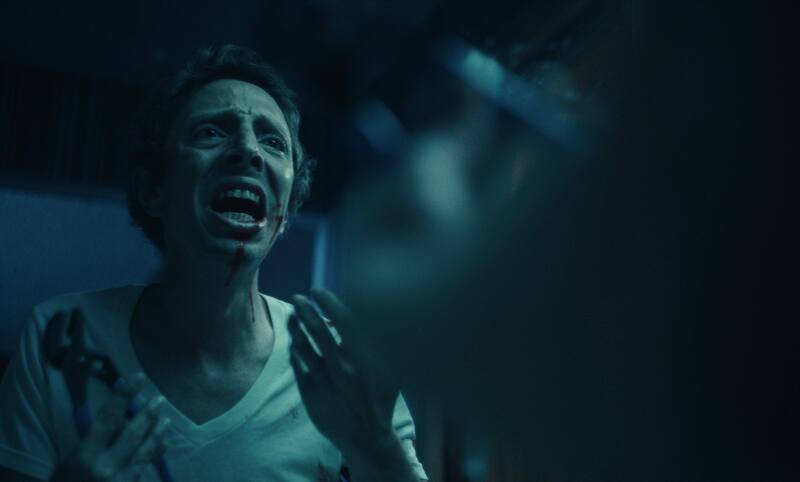
Some horror films present themselves with blood, shadows, or something waiting in the corner of the frame. GODHEAD takes a more vexatious route, in the best and most uncomfortable sense. It gets under the skin through certainty. Not true. Not faith. Certainty. The kind that makes people stare a little too long, speak with a little too much confidence, and turn ordinary rooms into places where logic starts slipping loose from the walls.
Harrison Houde’s feature directorial debut takes a father-son story, drags it through the harm of addiction, and refuses to file down the uncomfortable parts into something easier to digest. It’s a dark comedy, sure, but that only gets you halfway there. This is also a movie about responsibility, denial, panic, hope, and the kind of love that keeps working long after reason has left the room.
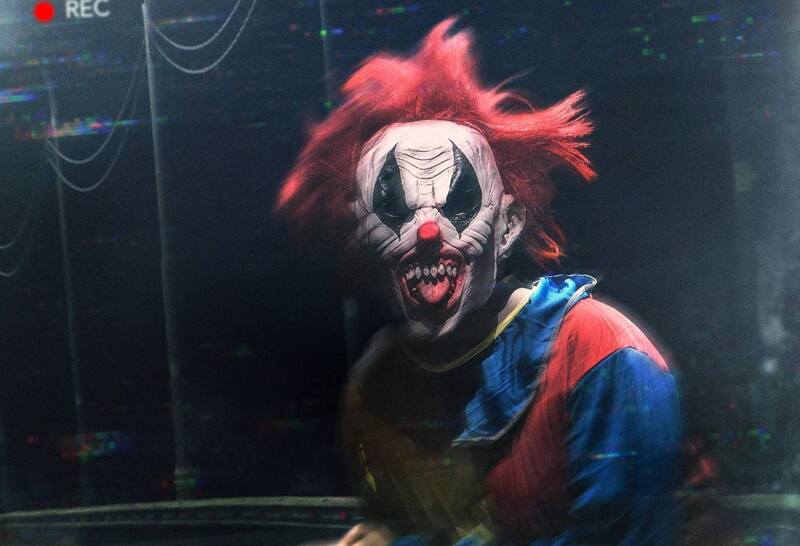
Reviewing a Troma movie by normal standards feels a little like complaining that a haunted house has too many jump scares. At a certain point, the mess is part of it all, and you have to understand that. RISE OF THE SUPER TROMETTES arrives with slime on its shoes, a dirty joke in its pocket, and absolutely no interest in behaving for anyone outside the converted. That doesn’t make it good. The truth is, it’s bad by most measures, yet it also makes it hard to dismiss as nothing.
Hank Hill doesn’t retire so much as relocate his sense of duty from one job to every problem within walking distance. That’s the joke running through KING OF THE HILL: S15, a season that understands Hank was never only a propane salesman. He’s a man who needs a fence, rules, a neighbor doing something wrong, and preferably all four before breakfast. Retirement hasn’t loosened him up. It’s just given him more time to notice everything.
A good Agatha Christie mystery doesn’t need to jump from one idea to the next to feel dangerous. It needs suspicion in the walls, politeness with a pulse beneath it, and enough side-eye to make everyone look guilty for at least a moment. MURDER IS EASY has all the pieces for that kind of story, and sometimes it pulls them all together beautifully. The trouble is that the case itself never becomes as gripping as the world around it.
The funniest thing about MICKI & MAUDE may be how hard it works to make a terrible idea feel lighter than it is. Director Blake Edwards takes a story about deception, marriage, pregnancy, and bigamy, then pushes it through the idea of a classic parody, trusting Dudley Moore’s charm to keep the whole thing from collapsing under the weight of its own premise.
Some fantasy films survive because of the story. Some survive because of nostalgia. THE 7TH VOYAGE OF SINBAD survives because its monsters feel like they were made by someone who believed every movement mattered. The seams show, the performances are all over the place, the dialogue can land with all the little to no delicacy, and the story is barely interested in pretending to be complicated. None of that erases the strange, lasting pleasure of watching Ray Harryhausen’s creations move through Nathan Juran’s 1958 adventure, as ancient myths come to life.