The Cost of Being the Exception
The Tallest Dwarf
MOVIE REVIEWS
The Tallest Dwarf
 -
- 

Genre: Documentary
Year Released: 2025, 2026
Runtime: 1h 32m
Director(s): Julie Forrest Wyman
Where to Watch: shown at the 2026 Slamdance Film Festival
RAVING REVIEW: What does it mean to try and find where you fit in your body, when the world is so keen to put you into a box, and when that box itself is being questioned? THE TALLEST DWARF is a documentary that begins with the filmmaker’s own doubts and doesn’t turn those doubts into something to be looked at. Julie Forrest Wyman doesn’t approach this topic as someone who has all of the answers, or as a director hoping for a straightforward idea to emerge from it. Rather, the film works through a series of questions and shows how identity can be formed, rejected, put off, or quietly changed by the medical profession, by what people generally believe, and even by kindness that says nothing.
The film’s heart is Wyman’s relationship with dwarfism and her feelings about being part of the Little People community. Having been brought up without any real way to think about her own body, she had a childhood of not quite knowing what was going on, where being different was there, but not often spoken about. THE TALLEST DWARF isn’t so much about explaining dwarfism as it is about what happens when someone is kept from being seen, and from having a place to belong. That postponement is what drives the film’s feelings.
Instead of building to a single moment of revelation or understanding, the documentary follows conversations and moments of realization. Wyman’s times with dwarf artists, performers, and people who work for change aren’t like studies of cases. They’re shown as lives lived, each one shaped by the pull between how people see themselves and how the public sees them. The film lets these people be, lets them exist, and it doesn’t force them into being symbols. They aren’t spokespeople; they’re people dealing with a world that often sees their bodies as problems to be fixed or things to be questioned.
THE TALLEST DWARF asks awkward questions about what’s lost when difference is seen as a fault. Moving toward being “normal” isn’t, by itself, seen as a good thing; it’s a process that can destroy culture, history, and community, in the name of making things easier or more comfortable for others. What makes this work so well is that the film doesn’t try to make the argument simple. Wyman recognizes the real medical problems faced by people with dwarfism, but also questions what’s behind the ideas and treatments that some look for.
The camerawork often uses close-up shots, quietly underscoring the film’s interest in how people see things. The camera listens. Choices in editing emphasize the flow of thought rather than trying to make you feel a certain way, allowing conversations to run and contradictions to be seen. There are times when the pace slows, but these pauses seem to serve a purpose, creating room for thought rather than rushing.
The film’s most moving parts are often the quietest. Talks about family history, stories about “partial dwarfism”, and the feelings left over from growing up without mirrors are all dealt with carefully. Wyman’s willingness to show her own feelings never turns into telling everything for no reason. She knows where the line is between looking at yourself and making yourself the center of things, and the film always turns attention to what people have in common and what’s at risk for everyone.
Community is both a safe place and a problem. THE TALLEST DWARF doesn’t make the Little People community seem perfect, or treat it as if it’s all the same. Instead, it shows how outside pressures, how the media shows them, and what doctors say, all shape the community itself. Belonging is shown as something you have to work at, not something you can expect. That work has emotional danger, especially for someone who’s only just started to talk about who they are.
The documentary is also about politics without using slogans. It's a criticism of people being used as symbols to be put on display, not in an abstract argument. The film trusts the people watching to make connections, to see what dwarfism has in common with other experiences of bodies being different, but without reducing those differences to the same. That trust gives the work its strength.
At the end of the day, THE TALLEST DWARF is a documentary about identity at a turning point. It captures a moment when new medical ideas, as seen in culture and personal history, come together, but it doesn’t say what should happen next. The film ends without being sure of the next steps, but not without reason. It leaves the people watching with questions that remain, not because they haven’t been answered, but because they can’t be.
This is a thoughtful film based on real feelings that treats its subject with care and intelligence. It doesn’t try to persuade you by force, but by paying attention. By doing that, THE TALLEST DWARF becomes not just about dwarfism, but about the process of giving yourself a name in a world that wants to do it for you.
Please visit https://linktr.ee/overlyhonestr for more reviews.
You can follow me on Letterboxd, Instagram, Twitter, and YouTube. My social media accounts can also be found on most platforms by searching for 'Overly Honest Reviews'.
I’m always happy to hear from my readers; please don't hesitate to say hello or send me any questions about movies.
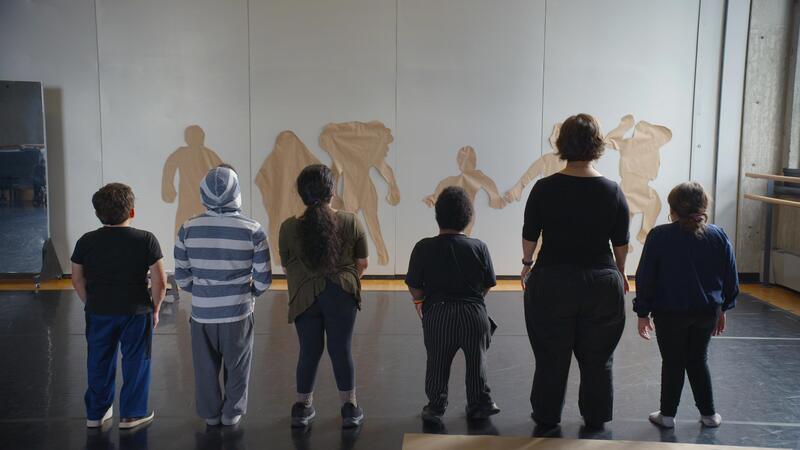
[photo courtesy of INDEPENDENT TELEVISION SERVICE, MULTITUDE FILMS]
DISCLAIMER:
At Overly Honest Movie Reviews, we value honesty and transparency. Occasionally, we receive complimentary items for review, including DVDs, Blu-rays, CDs, Vinyl Records, Books, and more. We assure you that these arrangements do not influence our reviews, as we are committed to providing unbiased and sincere evaluations. We aim to help you make informed entertainment choices regardless of our relationship with distributors or producers.
Amazon Affiliate Links:
Additionally, this site contains Amazon affiliate links. If you purchase through these links, we may receive a commission. This affiliate arrangement does not affect our commitment to honest reviews and helps support our site. We appreciate your trust and support as you navigate these links.
