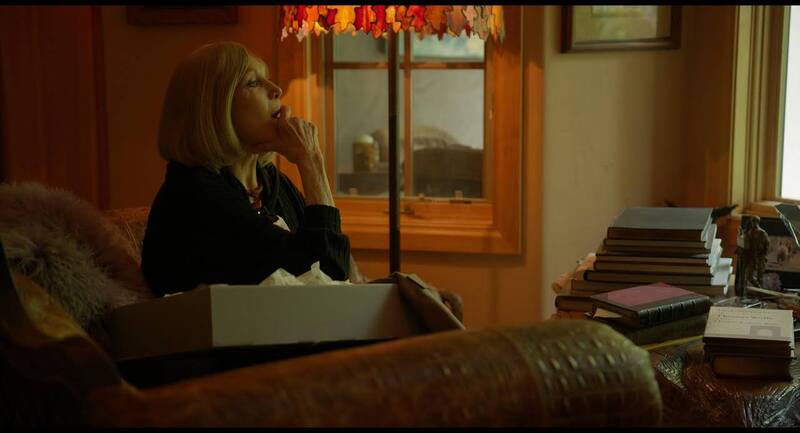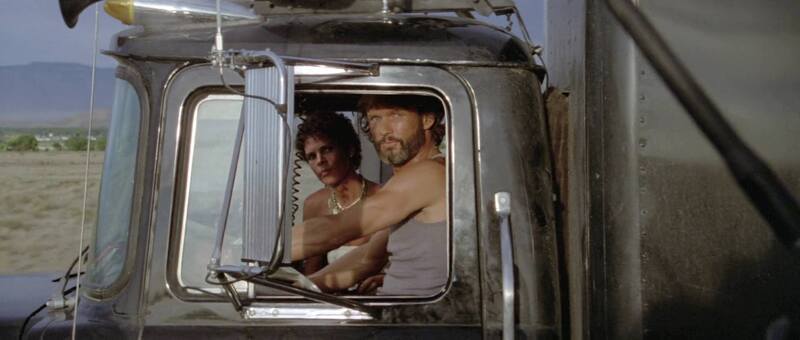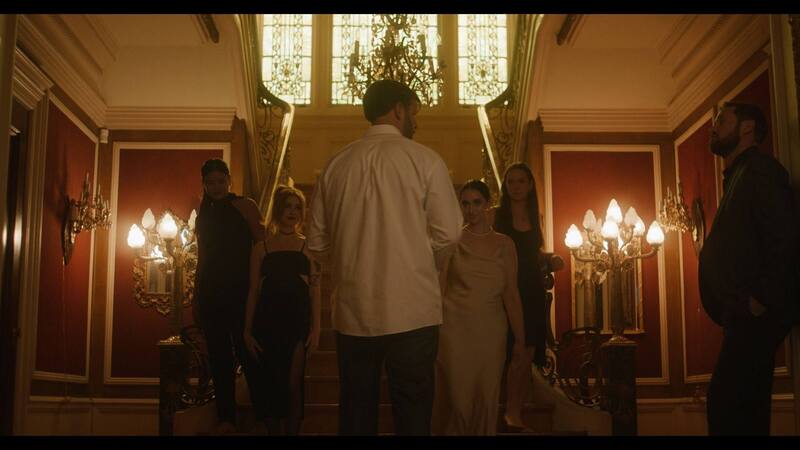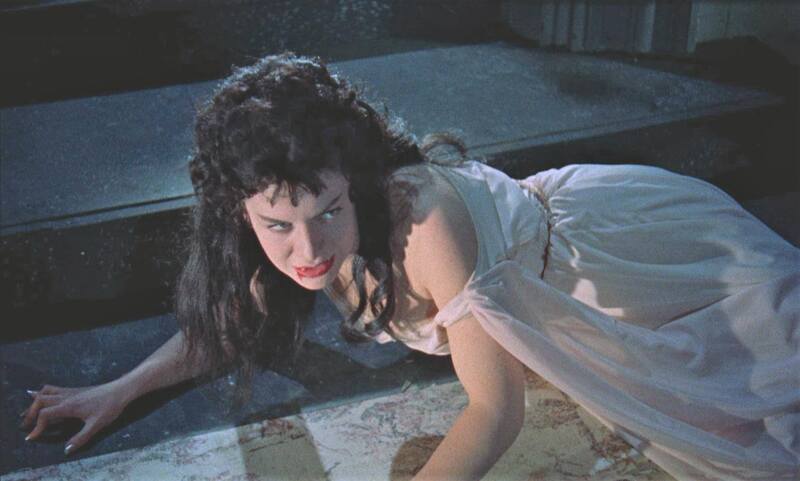
PROTECTOR knows exactly what kind of movie it wants to be, which makes its weaker choices more frustrating, but it’s also why I give the film the credit it gets. This is a lean, violent, rescue-driven action thriller built around a mother with military training, a kidnapped daughter, and a criminal network begging to be torn apart. That idea needs pressure, clarity, momentum, and a lead who can sell physical punishment without turning the whole thing into parody. Milla Jovovich handles her side of that bargain far better than the movie handles its own.
Never Change!
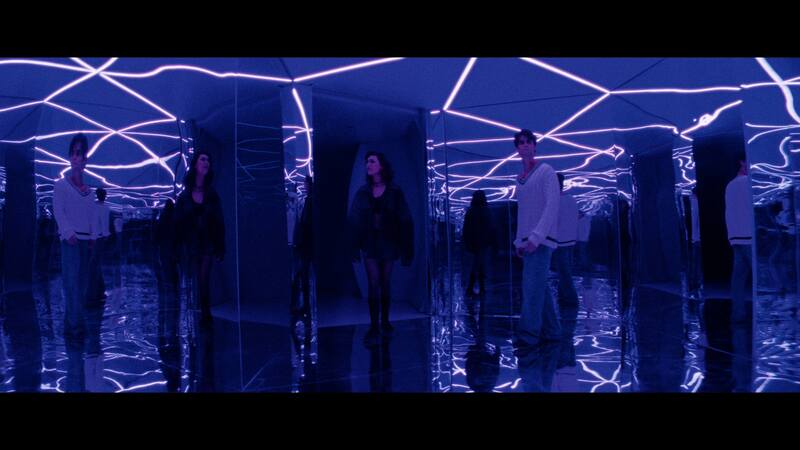
NEVER CHANGE! takes an instantly recognizable nightmare, the fear of being forced back into high school, and turns it into a strange, surprisingly pointed, yet also an undeniable 90s throwback comedy about people who never got the ending they thought they were owed. The setup is ridiculous. In 2008, the graduating class of North Meadows High School had its senior year cut short by a disastrous tornado. Now those former students are in their mid-30s, with jobs, families, regrets, stalled relationships, faded ambitions, and emotional baggage they’ve had years to pretend they outgrew. Then they’re ordered to return home and finish high school once and for all.
Yes
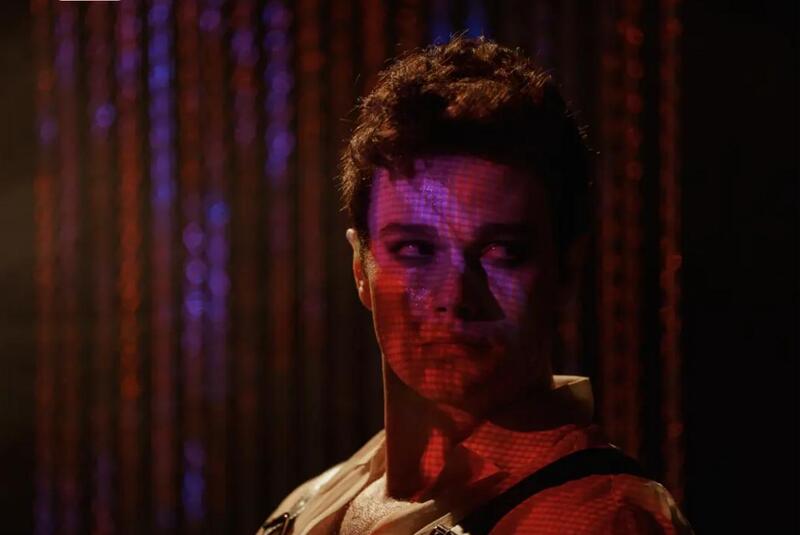
I had no clue what to expect going into this, and I’m still not entirely sure I get it all. There are films built to persuade audiences, films built to entertain them, and films built to make viewers feel trapped inside somebody else’s emotional state for two and a half hours. YES belongs firmly in that last category. Nadav Lapid doesn’t approach this story like a careful political dramatist trying to guide audiences toward a specific conclusion. He attacks the screen with panic, rebellion, exhaustion, rage, absurdity, music, screaming, and sensory overload until the entire movie starts feeling less like a traditional narrative and more like a prolonged spiritual collapse caught on camera.
Blood & Rust
Most vampire stories still gravitate toward some level of elegance. Even when the creatures themselves become monstrous, there’s usually some trace of gothic romanticism lingering around them. Castles. Velvet. Seduction. Wealth. BLOOD & RUST walks in the complete opposite direction. This is a vampire movie that smells like stale coffee, old fryer grease, cigarette smoke trapped in your jacket, and abandoned American industry. Its monsters don’t rise from aristocratic shadows. They crawl through the dying veins of a forgotten Ohio town where everybody already looks drained before the vampires even arrive.
Suburban Fury (DVD)
There’s something deeply unnerving about a documentary that refuses to reassure the viewer. SUBURBAN FURY never gives the comfort of certainty, conclusions, or emotional closure. Instead, Robinson Devor builds the entire film around instability, specifically the instability of memory, self-mythology, political identity, and personal truth. The result feels less like a conventional documentary and more like sitting across from someone who may be confessing, performing, manipulating, rationalizing, or all four simultaneously.
Find Your Friends
Every friend group worth having has that person who insists the night isn't over yet. The bar is closing, everyone's exhausted, half the group wants to leave, and somehow they still manage to convince everybody that the next stop is where the real fun starts. FIND YOUR FRIENDS feels like an entire movie built around that moment. It captures the intoxicating rush of chasing one more adventure long after common sense has packed up and gone home, then follows that vibe into increasingly dangerous territory until the line between a party and a nightmare completely disappears.
Easy Girl (Smalltown Girl)
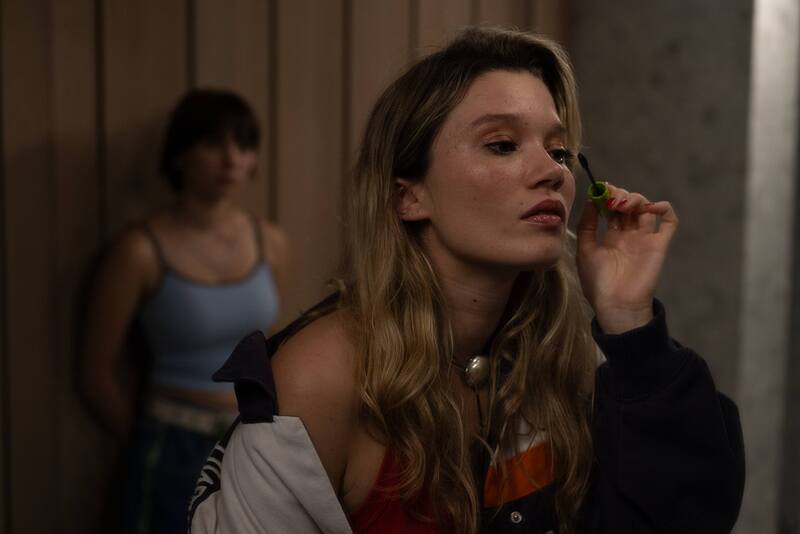
There’s a point early in EASY GIRL where the atmosphere feels almost suspiciously carefree. Two young women drift through bars, apartments, and strangers’ bedrooms with the kind of reckless abandon movies usually package as liberation. The nights are loud, the clothes are flamboyant, and the consequences seem temporarily buried beneath cigarettes, glitter, flirtation, and alcohol. Writer/director Hille Norden lets that illusion breathe just long enough for viewers to settle in before slowly exposing how unstable the foundation underneath it really is.
threeASFOUR: Full Circle
Gabi Asfour, Angela Donhauser, and Adi Gil have spent decades building a fashion label that refuses to follow the rules, and THREEASFOUR: FULL CIRCLE understands that the most interesting part of their story has never been the clothes alone. Sean Ono Lennon and Brian C. González use the designers' work as an entry point into something much larger, exploring friendship, artistic conviction, cultural identity, and the challenge of remaining true to a creative vision. The world constantly pressures artists to become more marketable, more accessible, and easier to categorize. The result is a documentary that values the people behind the designs as much as the designs themselves.
Rolling
One bad day would be manageable. ROLLING starts with about six of them stacked on top of each other. Alice “loses” her job, gets hit with another rent increase, confronts a landlord who represents everything wrong with her situation (and landlords in general), and then watches a terrible decision create an even bigger problem. From there, the film turns into a frantic scramble for survival, but what makes it work isn't the escalating chaos. It's the feeling that every disaster grows out of frustrations that were already simmering beneath the surface long before the first body hits the floor.
Quiet Echoes in the Darkness: A Daybreak Novel
Spy fiction has spent decades teaching audiences to associate a certain level of competence with invincibility. The elite operative enters a room, reads everyone and everything in the room instantly, takes endless levels of punishment like it’s an inconvenience, and keeps moving forward like a machine. Even when those stories pretend to acknowledge trauma, the damage usually functions as just a twist in the story, rather than a true limitation. QUIET ECHOES IN THE DARKNESS pushes against that ideal almost immediately. Jack Caldwaller may be the most capable person in the room, but author Mason Trask never lets readers forget the physical and psychological cost attached to maintaining that reputation. A choice like that ends up defining the entire novel.
Fungicide [Visual Vengeance Collector's Edition]
Some movies fail because they aim high and collapse under the weight of ambition. Then there are movies like FUNGICIDE, where the ambition itself becomes the entire experience. Not because the film succeeds, but because every decision feels powered by unfiltered enthusiasm that eventually bulldozes past limitations and lands in a bizarrely entertaining experience.
The Year Before the War (Gads pirms kara)
THE YEAR BEFORE THE WAR opens like a warning disguised as a hallucination. Before the film introduces philosophy, war, nationalism, or revolution, it establishes a sense of instability. Ice cracks. Bodies drift through frozen landscapes. Crowds gather with the energy of people unknowingly approaching catastrophe. Dāvis Sīmanis doesn’t frame pre-World War I Europe as a world on the verge of collapse in a historical sense. He presents it as a civilization already infected long before the first trench is dug.
Hi, Mom! [4K UHD + Blu-ray]
Some filmmakers spend years learning how to smooth out what makes a legend. Brian De Palma spent the beginning of his career throwing everything he could at the screen. HI, MOM! feels less like a carefully assembled studio production and more like a filmmaker testing every boundary he can before someone tells him to stop. That gives the film a strange kind of durability. Even when the movie struggles, and it absolutely does, it never feels cautious. More than fifty years later, that recklessness still carries a charge.
Film Noir Classics Double Feature: Borderline (1950) & D.O.A. (1949)
Film noir has always carried a strange relationship with exhaustion. These are movies filled with people who look like they haven’t slept in days, trapped inside systems that stopped caring about them long ago. Everyone lies. Everyone walks into rooms already doomed by choices they haven’t made yet. Even when the stories drift toward romance or procedural vibes, there’s usually a quiet understanding beneath it all that fate has already made its decision before the first scene even starts. That feeling hangs heavily over D.O.A., and it’s the reason the film still feels alive more than seventy-five years later.
Hungry
HUNGRY gets a surprising amount of mileage out of the fact that hippos are absolutely terrifying animals. Creature features usually lean on sharks, crocodiles, giant snakes, or mutated insects, while hippos rarely get treated like the potentially violent animals they actually are. These things are basically living tanks with terrible tempers, capable of tearing people apart with ease. Writer/director James Nunn recognizes that immediately, which helps the film avoid collapsing into pure self-aware parody. The premise could’ve easily turned into disposable nonsense built entirely around the novelty of a killer hippo movie, but HUNGRY plays the danger straighter than expected. Instead of chasing camp in every scene, the film keeps pushing toward something meaner, uglier, and more chaotic, and that choice gives the attacks far more weight than they probably should have in a movie like this. Instead of following along the line of the increasingly long list of board game adaptations, this one treats it more like a wink and nod to nostalgia instead of what it could have been.
The Screaming [Visual Vengeance Collector's Edition Blu-ray + CD]
Most shot-on-video horror movies from the late 1990s and early 2000s feel like they were assembled by people who barely wanted to make them (that’s gonna piss some people off, but it's true). You can almost sense the exhaustion baked into every shot. The lighting feels flat, the pacing drags endlessly, the performances feel half-conscious, and the entire production exists purely because somebody realized horror fans will watch almost anything once. THE SCREAMING somehow survives that same chaos of regional microbudget horror because writer/director Jeff Leroy actually seems excited to be there. That enthusiasm matters.
Jinsei (無名の人生)
JINSEI feels less like a normal animated film and more like somebody emptying decades of anxiety, loneliness, ambition, media obsession, political dread, personal memory, and existential confusion directly onto the screen before the feeling disappears. There are moments where it barely seems interested in coherence at all. Entire stretches drift through fragmentation, abrupt stylistic pivots, and surrealism with almost reckless confidence. Yet somehow, by the end, the film leaves behind an impression far stronger than many more polished animated features ever manage. That’s because JINSEI understands something a lot of coming-of-age epics don’t, that identity rarely develops in a straight line.
Signal One
SIGNAL ONE approaches alien contact less like an adventure and more like a slow psychological fracture. The film isn’t interested in heroic discovery or chaos. Interestingly, at the moment, human curiosity turns into fear. The deeper the characters delve into communication with something beyond their understanding, the more the film questions whether humanity is emotionally or intellectually prepared to hear an answer at all.
Love Letter (with All About Lily Chou-Chou in most theaters)
There are filmmakers who tell stories, and then there are filmmakers who seem to recreate the journey through emotion itself. Shunji Iwai belongs firmly in the second category. Watching LOVE LETTER and ALL ABOUT LILY CHOU CHOU together creates an almost overwhelming portrait of how differently people process absence, loneliness, longing, and emotional survival. One film reaches toward healing through remembrance. The other stares directly into collapse and asks whether music and connection can keep somebody from disappearing inside themselves.
Chum
A lot of modern shark movies die the second they start treating the shark like the entire focus. Once the novelty wears off, there’s usually nothing underneath besides floating bodies, fins, and characters so disposable you spend half the runtime hoping the movie finally gets around to feeding them to something. CHUM works better than most because it understands the shark isn’t actually the main threat. It’s just the pressure point that causes things to boil over. The true focus is forcing already unstable people into a situation where every selfish instinct surfaces.
Born A Ninja / Commando The Ninja Double Feature [Visual Vengeance Collector's Edition]
BORN A NINJA and COMMANDO THE NINJA feel like somebody recorded a fever dream onto a stack of damaged VHS tapes, duplicated them fifty times, then accidentally created cult cinema gold in the process. Within minutes, ninjas are vanishing into smoke, people are screaming about stolen germ-warfare formulas, and a martial-arts style called “Hocus Pocus” is being taken seriously. None of it should work. Most of it barely makes sense. Yet both films attack the screen with such relentless, low-budget conviction that resisting their charm eventually becomes impossible. Logic stops mattering. Structure becomes optional. Dialogue sounds like it was translated through six different versions of Google Translate before arriving at the dubbing booth. Yet somehow, against every reasonable instinct, the experience becomes hypnotic. These aren’t high-end martial arts classics or forgotten gems waiting to be rediscovered as misunderstood masterpieces. They’re messy, ridiculous, aggressively low-budget fragments of 80s ninja exploitation operating entirely on raw enthusiasm, and that enthusiasm becomes impossible to resist.
Villa 187
The most striking thing about VILLA 187 is how quickly it strips away the illusion that permanence actually exists. A phone notification, a family receiving life-changing news, the realization that decades spent building a home can suddenly become fragile overnight. From there, Eiman Mirghani constructs a documentary that feels less like a recollection and more like an emotional aftershock still unfolding.
The Floor Remembers
THE FLOOR REMEMBERS understands something that a lot of documentaries about disappearing spaces tend to miss: nostalgia alone isn’t enough. Simply reminding audiences that something once mattered doesn’t automatically make it meaningful. Jayme Kaye Gershen’s short never treats the Miami Roller Rink (Hot Wheels Skating Center) (Super Wheels) as a museum frozen in time. The rink isn’t presented as a relic. It’s alive, active, loud, and constantly moving. The film isn’t mourning a dead culture. It’s documenting one that stubbornly refuses to vanish. That distinction gives the documentary its pulse.
Mariana Ant (Mariana Hormiga)
MARIANA ANT feels like a children’s story that’s been left out in the sun too long. Beneath the handmade fantasy, exaggerated performances, and theatrical surrealism sits something unexpectedly bitter. Maite Uzal and Rubén Pascual Tardío treat the film’s cruelty with complete sincerity, allowing the darker turns to land without softening them through irony or self-awareness. The result is strange, funny, uncomfortable, and occasionally sad in ways that sit with you longer than you’d expect from a sixteen-minute short.