Chris Jones
Entertainment Editor
Chris Jones, from Washington, Illinois, is the Mail Entertainment Editor covering Movies, Television, Books, and Music topics. He is the owner, writer, and editor of Overly Honest Reviews.
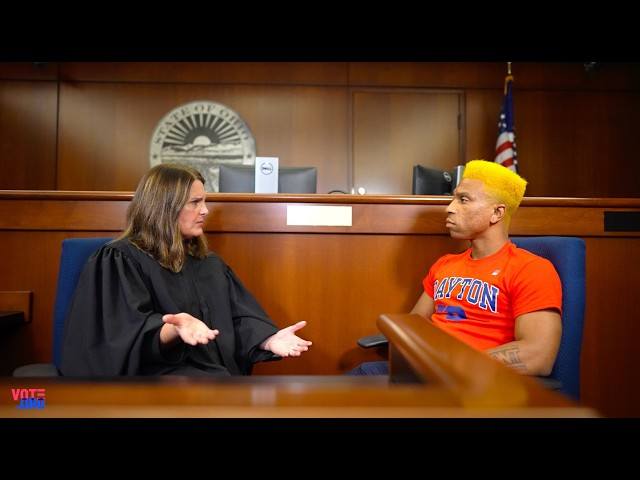
By the time CHAD POWERS ended its first season, the disguise had already stopped being the whole joke. Russ Holliday could keep fooling strangers, but the people who actually knew Chad were getting close enough to notice that something didn’t add up. Season 2 picks up that pressure rather than finding six new ways for a wig and prosthetics almost to fall off, and that gives the series a little more substance. Russ is no longer simply trying to get another chance at football. He has built relationships as Chad, enjoyed success as Chad, and discovered that people may actually prefer the person he becomes when he isn’t being Russ.
The first thing I noticed about FILIPIÑANA was how physically hot it feels. Rafael Manuel lets the sun, the cicadas, the sprinklers, and the long stretches of inactivity settle over the movie until the country club starts to feel almost narcotic. Everyone moves as though the heat has slowed the entire property down, even as workers continue trimming, cleaning, serving, carrying, and maintaining an environment designed for people who barely have to lift a finger. It’s a slow movie, sometimes almost aggressively so, and I can understand why that approach will test some viewers. For me, patience pays off more often than it frustrates, because lethargy is part of what Manuel is examining.
Rima Te Wiata isn’t in HUNT FOR THE WILDERPEOPLE for nearly as long as Sam Neill or Julian Dennison, but the entire movie depends on what Bella establishes early on. Ricky Baker arrives at another foster home expecting the same thing he has apparently learned to expect everywhere else. Adults already have an opinion of him; he’ll eventually disappoint them, and whatever temporary arrangement has been made will fall apart. Bella refuses to participate in that cycle. She feeds him, jokes with him, gives him a dog, and doesn’t treat every display of attitude as evidence that something is fundamentally wrong with him. The kindness is so uncomplicated that Ricky doesn’t quite know what to do with it.
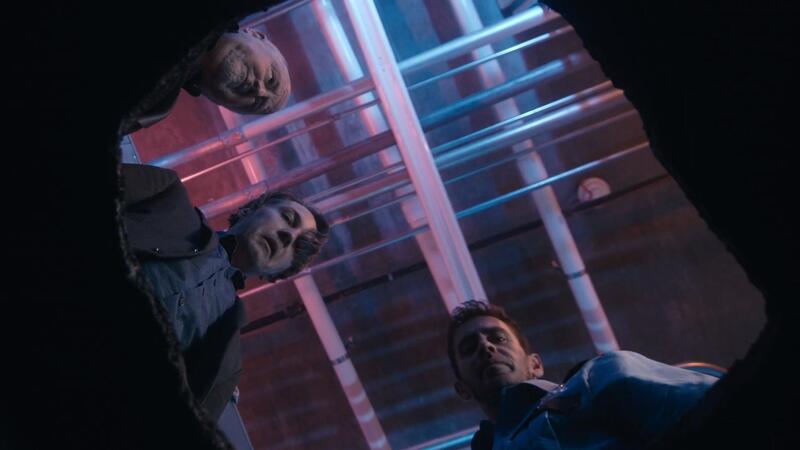
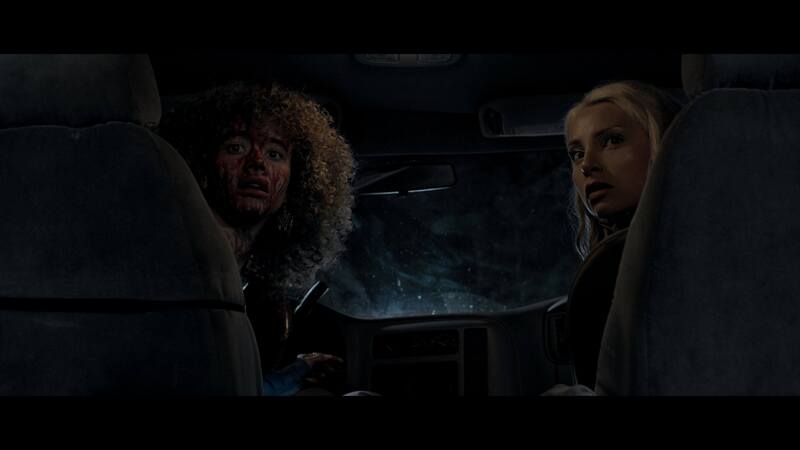
The most effective parts of FALL 2: DEADPOINT are the moments when Michael and Peter Spierig simply let the height register, a foot searches for somewhere safe to land. Loose material disappears over an edge. The camera looks down long enough for the distance to stop being an abstraction. You understand exactly where these people are, how little space they have to work with, and what one bad movement would mean. The original FALL figured out that a survival thriller like this doesn’t need much once it convinces you the drop is real. The sequel remembers that lesson.
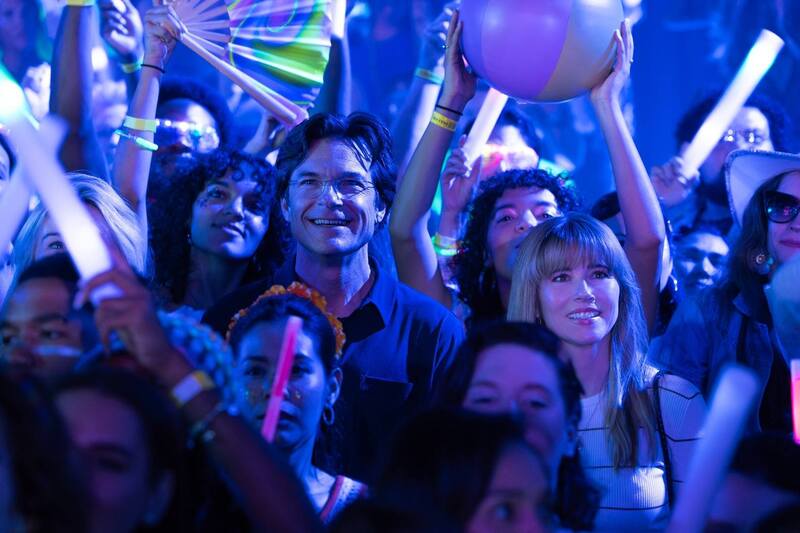
Lucy Lawless can walk Alexa Crowe into a room full of suspects and make it seem as though she’s already figured out which three people are lying before anyone has finished introducing themselves. Five series into MY LIFE IS MURDER, that confidence has become the show’s greatest advantage. Alexa is smart without constantly needing the scripts to announce it, sarcastic without becoming exhausting, and just difficult enough that the people around her have learned when to push back. Lawless knows this woman completely by now, and Series 5 gets plenty of mileage from watching a performer this comfortable with a character.
The new Synapse Films Blu-ray makes T.A.G.: THE ASSASSINATION GAME feel like exactly the kind of 1980s movie that should have developed a much larger cult following. It has a great premise, a cast filled with actors who were still a few years away from becoming much more recognizable, and Nick Castle directing his first feature after already having one of the strangest résumés in Hollywood. There’s also something difficult to categorize about the finished movie. It isn’t really a slasher, doesn’t commit fully to being a comedy, periodically flirts with film noir, and spends a surprising amount of time as a college romance. That combination is both the reason it remains interesting and the reason it never completely comes together.
I think what surprised me the most with this rewatching of STRICTLY BALLROOM is how much of Baz Luhrmann is already there. This was his first feature, made years before ROMEO + JULIET, MOULIN ROUGE!, and ELVIS, the enormous productions that would eventually become synonymous with his name. There’s no mistaking who directed this, though. The colors are vibrant, the performances push beyond realism, the camera moves with the same enthusiasm, and everyone seems to exist in a world where emotions deserve an extraordinary presentation. The difference is scale. Luhrmann had far fewer toys at his disposal, and that limitation may be one reason STRICTLY BALLROOM remains one of his most endearing films. There’s something genuinely scrappy underneath all the sequins, and this 4K makes them all shine!
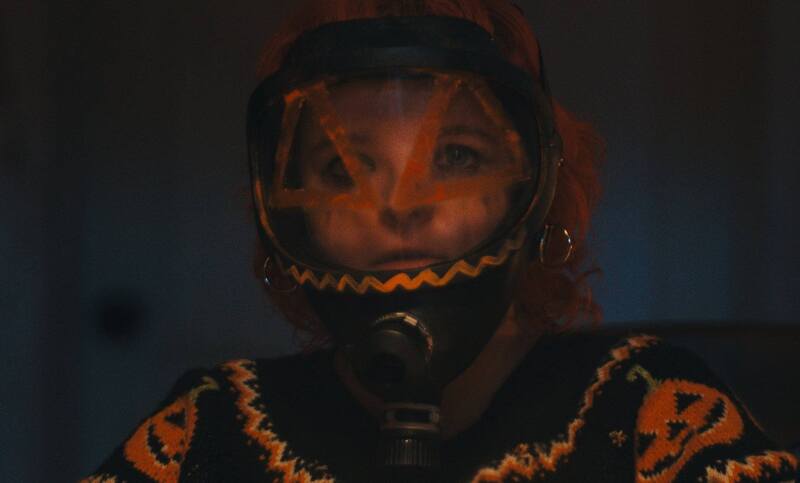
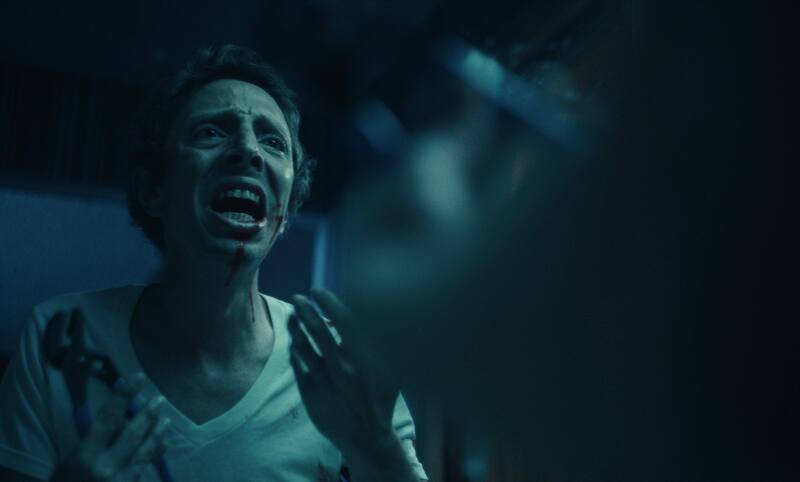
James Ross II spends some of PARASOMNIA’s best moments watching Riley prepare to sleep. There’s an anxiety to the process because bedtime isn’t an ordinary part of her day. It’s something she has to manage. Jasmine Mathews plays those routines with the weariness of someone who has been dealing with the same problem for years, and the movie understands that something is frightening about needing a strategy for an act the body eventually demands anyway. Riley can postpone sleep, prepare for it, and convince herself that tonight might be different. Eventually, she still has to close her eyes.
The first stretch of DEAR YOU is a lot funnier than what you would expect a tearjerker like this to be. Xiaowei isn’t traveling to Thailand because of some sudden interest in his family history. He’s in debt, desperate, and heard enough about a wealthy grandfather to see the trip as a possible solution to his own problems. Zheng Runqi plays this role without making Xiaowei unbearable, and director Lan Hongchun lets the film's contemporary part begin with enough lightheartedness that the movie initially feels lighter than it ultimately is.
Director John H. Cunningham spends most of OCCUPATIONAL HAZARD: THE FIRST CORAL REEFERS letting the people around Jimmy Buffett talk, and that, without a doubt, was the right choice here. Buffett’s story has been told enough that another documentary tracing his entire career from struggling songwriter to the endless Margaritaville empire wouldn’t have offered much. Cunningham instead concentrates on the musicians who helped him figure out what Jimmy Buffett music actually sounded like, particularly during the years when nobody involved could have known how large the whole thing would eventually become.
Rewatching THE A-TEAM now, the cast is easily the reason the movie still works. Liam Neeson, Bradley Cooper, Sharlto Copley, and Quinton “Rampage” Jackson all become their roles quickly enough that the friendship between Hannibal, Face, Murdock, and B.A. feels established long before the story finishes explaining how they became a team. Director/co-writer Joe Carnahan knew he was making something ridiculous; at the same time, he also understood that two hours of ridiculousness needed people you actually wanted to spend those two hours with.
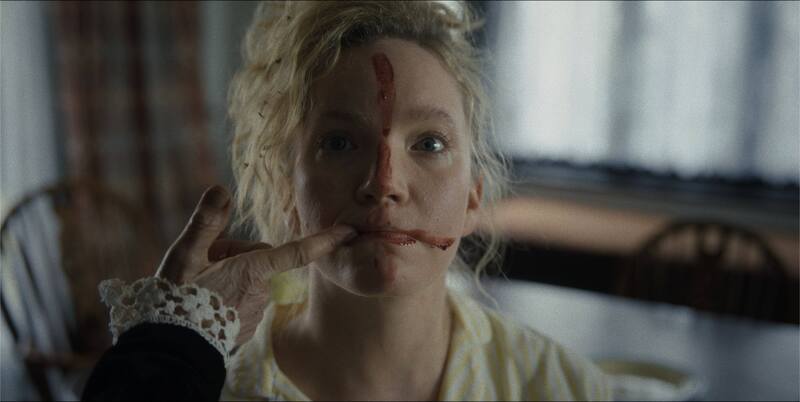
Jōji “George” Iida’s 1987 directorial debut has an interesting science-fiction premise underlying everything, but the storytelling is rarely easy to follow. Characters show up, medical experiments are discussed, motivations remain fuzzy, and stretches of exposition somehow manage to explain plenty without making the situation clearer. Then the movie reaches its final act and finally shows what all that patience was buying. Flesh gets pulled apart, bodies mutate, fluids start flowing, and an unassuming low-budget production suddenly becomes exactly the sort of practical-effects showcase that earns a cult movie another life almost four decades later. The majority of the film’s runtime may be anything but coherent, but that’s part of the joy in discovering an experience as wild as this.
"Sinful Synergy" offers a compelling exploration of marital dissatisfaction turned into carnal liberation, featuring TheModernWorkingGirl in a performance that balances emotional vulnerability with raw sexual energy. The scene establishes its premise quickly, and effectively, a neglected wife seeking retribution for her husband's infidelity, all while avoiding melodrama through natural dialogue and believable character motivations.
There was a time when going to the movies was more than just choosing a title and finding the best seat. The person selling the ticket might know you and your family; somebody would inevitably cause trouble during the show (although that seems to have only gotten worse lol); the building probably had something that needed to be fixed; and the theater could function as a neighborhood gathering place as much as a place to watch a film. ONCE UPON A TIME IN A CINEMA understands that experience and the larger idea of cinema of the day, and David Gleeson's affection for those places gives the movie its best moments.
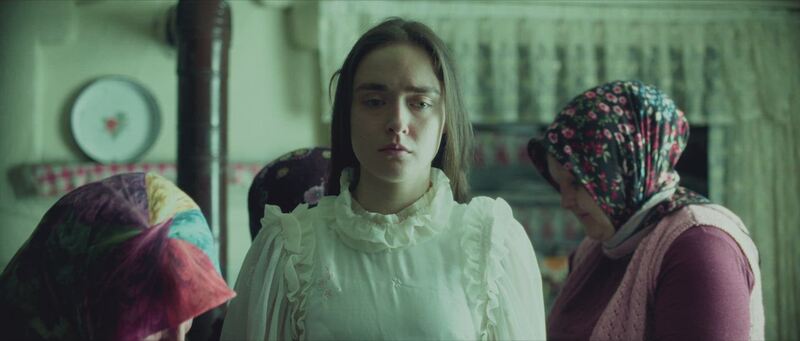
Aysanat Edigeeva spends the majority of BURNING being observed rather than understood. As Asel, a young mother grieving the death of her firstborn, she has the guarded existence of someone living in a place where every motion can be interpreted by somebody else. Neighbors notice her behavior, her mother-in-law’s rituals, her husband’s frustration, and the family’s isolation, then fill the gaps with whatever explanation makes the most sense to them. Director Radik Eshimov lets that casual observation shape the horror. The people watching aren’t short on confidence, even when what they actually know is remarkably limited.