A Young Girl Against the World
The Goat
MOVIE REVIEW
The Goat
 -
- 


Genre: Adventure, Thriller, Drama
Year Released: 2026
Runtime: 1h 31m
Director(s): Ilaria Borrelli
Writer(s): Ilaria Borrelli
Cast: Jessica Hosam, Mira Sorvino, John Savage, Amr Saad, Sayed Ragab, Maya Talem, Nelly Karim
Where to Watch: arrives on VOD and DVD June 23, 2026
RAVING REVIEW: There’s a meaningful, painful story buried inside THE GOAT, and the frustrating thing is how often the film seems to know it. Ilaria Borrelli’s English/Arabic language drama has urgency, anger, and a young lead performance strong enough to hold attention, even when the movie around it keeps buffing complex issues down to blunt dramatic points.
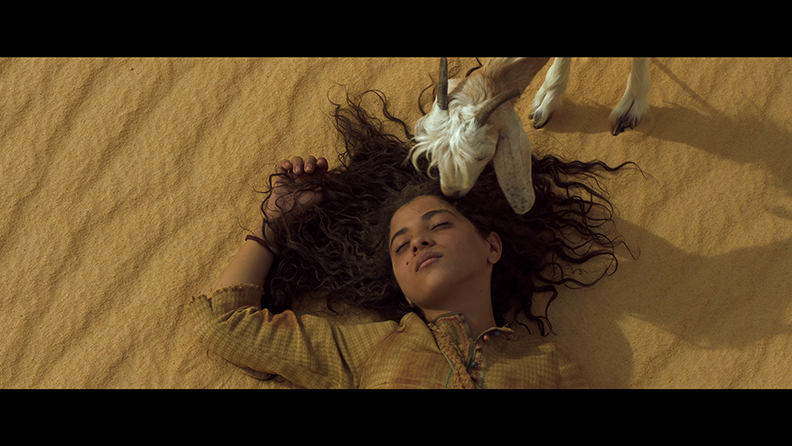
The film follows Hadiya, a 12-year-old girl forced into marriage, who escapes into the desert with her family goat, Sparrow. Her journey becomes both a fight for survival and an attempt to save her village’s only water source from a Western corporation seeking to turn it into a bottled-water venture. The story touches on child marriage, corporate exploitation, poverty, gendered violence, climate anxiety, and the way vulnerable communities are often treated as collateral damage by people with money and power. None of that is insignificant, and THE GOAT approaches the material with conviction. Conviction, though, can’t carry a film when its storytelling keeps flattening its own complexity.
At its best, THE GOAT works as a survival fable centered on Hadiya’s attempt to keep moving after nearly every system around her has failed her. Jessica Hosam gives the film a grounded emotional presence, and her performance is the main reason the movie remains watchable even when the writing turns. Hadiya isn’t treated only as a symbol of suffering. Hosam gives her flashes of fear, stubbornness, exhaustion, and hope, often portraying so much with just her eyes. Her scenes in the desert have a simple power, especially when the film lets the landscape speak without underlining every threat.
Sparrow is also one of the film’s more interesting choices. As Hadiya’s companion, source of survival, and eventually a spiritual link to her late mother, the goat pushes the film toward magical realism. That idea could easily have slipped into something that lost focus, but those moments are often more effective than the movie’s corporate-thriller machinery. When THE GOAT stays close to Hadiya’s hunger, grief, thirst, fear, and imagination, it comes closest to becoming the emotionally direct story it wants to be.
The film struggles with its framing. THE GOAT clearly wants to condemn Western exploitation, and that is a worthy target. John Savage plays the head of a U.S. multinational trying to seize the village’s spring for luxury bottled water, while Mira Sorvino plays the company engineer caught inside that system. Those scenes aren’t without purpose, but they often feel written in broad strokes rather than reality. The corporate dialogue tends to explain the movie’s themes rather than dramatize them, and the Western characters can feel less like people than like signposts for greed, guilt, and moral awakening.
That’s where the white-savior concern becomes hard to ignore. The film doesn’t simply turn Sorvino’s character into the person who rescues Hadiya, which matters. Hadiya remains the emotional center of the journey, and the movie does make room for Egyptian performers, including Amr Saad and Sayed Ragab, to carry major parts of the story. Even so, the film’s authorship and perspective complicate the viewing experience. This is an Arab-centered story about girls, water, poverty, and survival told through the lens of a Western filmmaker, and the movie sometimes seems more comfortable explaining injustice to outside viewers than trusting the world onscreen to speak for itself.
That issue isn’t disqualifying. Filmmakers can tell stories outside their own background with care, collaboration, and humility. THE GOAT has clearly been made with urgency in mind. The trouble is that its most sensitive material is often handled with the directness of an awareness campaign rather than the emotional precision of a drama. It wants to shake viewers awake, but sometimes it does so by oversimplifying the very people it’s trying to honor.
The child marriage storyline is devastating by design, and the film doesn’t shy away from the horror of Hadiya’s situation. That story should be difficult to sit with. It should make viewers uncomfortable. The question is whether the film’s discomfort leads to deeper understanding or simply piles trauma onto a young character until the audience gets the point. THE GOAT lands on both sides of that line. Some sequences carry real sorrow and anger, while others risk turning Hadiya’s suffering into a series of dramatic checkpoints. The emotional intent is clear, but the execution is uneven.
There are also moments when THE GOAT feels pulled between three different films. One is a child’s desert survival story. One is a magical-realist grief tale. One is an environmental thriller about global capitalism. Any one of those could have carried a stronger version of this movie. Together, they create an ambitious but uneven structure where the most intimate story often has to fight for space against the message-driven material surrounding it.
That imbalance keeps THE GOAT from becoming the righteous drama it wants to be. The film’s heart is in the right place, and that counts for something. It’s trying to speak about child exploitation, resource theft, and the way powerful countries benefit from suffering they prefer not to see. Dismissing the film outright would ignore the sincerity behind it. Sincerity, though, is not the same thing as insight. The movie’s strongest moments come when it trusts Hadiya’s journey, her silence, her exhaustion, and her will to survive.
THE GOAT is difficult to rate because it’s easy to respect what it wants to say while also being frustrated by how it says it. Jessica Hosam gives the film a vulnerable, determined center, and the desert survival aspect has enough force to leave an impression. The framing, however, is too blunt, too often tilted toward outside explanation, and too reliant on moral contrasts. It’s a well-meaning film with real issues, a survival fable that needed more trust in its own protagonist and less need to announce its importance. This, to me, is the definition of a 2.5/5, something that falls right in the middle, a film I didn’t hate, but also didn’t love.
Please visit https://linktr.ee/overlyhonestr for more reviews.
You can follow me on Letterboxd, Instagram, Twitter, and YouTube. My social media accounts can also be found on most platforms by searching for 'Overly Honest Reviews'.
I’m always happy to hear from my readers; please don't hesitate to say hello or send me any questions about movies.
[photo courtesy of CLEOPATRA ENTERTAINMENT]
DISCLAIMER:
At Overly Honest Movie Reviews, we value honesty and transparency. Occasionally, we receive complimentary items for review, including DVDs, Blu-rays, CDs, Vinyl Records, Books, and more. We assure you that these arrangements do not influence our reviews, as we are committed to providing unbiased and sincere evaluations. We aim to help you make informed entertainment choices regardless of our relationship with distributors or producers.
Amazon Affiliate Links:
Additionally, this site contains Amazon affiliate links. If you purchase through these links, we may receive a commission. This affiliate arrangement does not affect our commitment to honest reviews and helps support our site. We appreciate your trust and support as you navigate these links.
