The Forest Knows Their Name
Camp
MOVIE REVIEW
Camp
 -
- 

Genre: Horror, Coming-of-Age
Year Released: 2026
Runtime: 1h 51m
Director(s): Avalon Fast
Writer(s): Avalon Fast
Cast: Zola Grimmer, Alice Wordsworth, Cherry Moore, Lea Rose Sebastianis, Ella Reece, Austyn Van De Kamp, Izza Jarvis, Sophie Bawks-Smith
Where to Watch: opening in New York on June 26, 2026, at the IFC Center with special NY sneak previews on June 24 and June 25
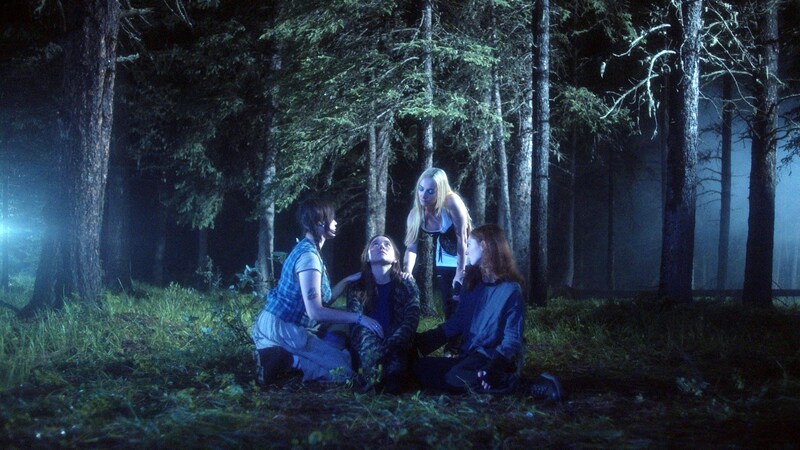
RAVING REVIEW: The woods in CAMP don’t feel like an escape from the world. They feel like a place where every bad thought is more like an echo. Avalon Fast’s latest feature takes the familiar idea of a summer camp horror movie and pulls it apart until something different, sadder, and more personal remains. Cabins, campfires, counselors, rituals, secrets in the trees, those ingredients are all there, but CAMP isn’t built around the usual slasher expectations. It’s more interested in how grief mutates when someone is too young to understand it, too guilty to process it, and too desperate for absolution to recognize the danger in being welcomed too quickly.
Emily has already lived through two devastating tragedies by the time the film introduces us. At her father’s suggestion, she takes a counselor position at a camp for troubled youth, hoping the distance might help loosen the hold of her past. Instead, she steps into a community that feels both nurturing and unstable. The other counselors accept her without making her explain herself, and that acceptance becomes intoxicating. However, that peace comes with a catch. So does friendship. Somewhere in the woods, a voice keeps telling Emily to go home, and the longer she stays, the harder it becomes to tell whether that warning is supernatural, psychological, or the last honest part of herself trying to survive.
Fast calls this mode of filmmaking “Girl Horror,” and CAMP makes a strong case for that label as something more than branding. The horror comes from girlhood as a spiritual wound, from the fear of being seen, from the thrill and terror of finding a group that offers belonging with no obvious terms attached. This is a queer coming-of-age nightmare where witchcraft feels less like a genre accessory than a language the characters invent because ordinary systems have failed them. Nature is present, but not as a cure. Friendship is present, but not as a rescue.
Zola Grimmer’s debut performance gives the film a pulse, even if it leaves a scar. Emily could have been reduced to a collection of trauma markers, but Grimmer plays her as someone half-present in her own body, pulled between numbness and sudden flashes of feeling. She doesn’t over-explain Emily’s guilt. She lets it sit in her posture, in the way Emily watches other people before deciding how much of herself to reveal, in the hunger of someone who wants forgiveness but doesn’t believe they deserve it. The performance has a fragile, searching quality that keeps the film grounded even when the storytelling drifts into ritual, dream logic, and jagged memory.
The counselor group around Emily gives CAMP its irresistible assault. Alice Wordsworth, Cherry Moore, Lea Rose Sebastianis, Ella Reece, Izza Jarvis, and Sophie Bawks-Smith create a circle that feels warm, strange, funny, dangerous, and sometimes difficult to pin down to any single category. That’s part of the film’s design. These young women aren’t presented as saviors, corrupters, or symbols of empowerment. They’re lonely, wounded, magnetic, chaotic people who have built their own way of surviving. Their rituals offer release, but release doesn’t mean innocence. Their bond can look like healing in one scene and frightening in the next.
That is where CAMP becomes most interesting. Fast understands the appeal of the coven fantasy. With the idea that girls who have been hurt can gather in secret, name their pain, and transform it into power. They also understand the darker side of that fantasy. Pain can become intimacy. Intimacy can become permission. Permission can become violence. The film doesn’t condemn its characters or turn their search for power into a punishment. It lets their choices remain complicated, making the experience more unsettling than it would have been with a traditional arc.
CAMP has the feel of a memory copied too many times and then traced over by hand. Eily Sprungman’s cinematography leans into deep blues, forest greens, campfire warmth, blown-out light, and shadowy cabin spaces that make the setting feel suspended between nostalgia and dread. The film occasionally shifts in texture, with moments that resemble a home video or a hallucination. These choices could have become distracting in a less focused movie, but here they fit Emily’s fractured state. The world doesn’t always look stable because Emily doesn’t feel stable inside. Max Robin’s score and the sound design add to that sense of unease without forcing the film into conventional genre tropes. CAMP isn’t especially interested in jump scares, body-counts, or traditional horror. Anyone walking in for a more direct occult thriller may not find the experience they’re expecting. It moves by sensation and emotional association.
The looseness is also part of the spell. Fast’s filmmaking has an instinctive quality that feels rare, even when the film roams. CAMP has the confidence to follow a mood until it turns into meaning, and then to leave some of that meaning unresolved. That can be frustrating, but it also keeps the film from becoming only about trauma. The woods don’t solve Emily’s grief. Her guilt isn’t erased by friendship. Her queerness isn’t treated as a lesson or a big reveal. Her coming-of-age story doesn’t lead to easy self-acceptance because the film knows that growing up sometimes means realizing that the thing that saved you may have damaged you, too.
The comparison point many viewers will reach for is THE CRAFT, which makes sense on the surface, but CAMP is less interested in teen-witch iconography than in emotional contamination. Fast frames young women as both mythic and painfully human. However, Fast’s sensibility is rougher, more feral, and more willing to let that interrupt beauty. The result is a film that feels handmade in the best sense, not perfect, not overly sanded down, but alive with a specific perspective.
CAMP is bewitching, uneven, intimate, and deeply honest. Its horror is quiet until it isn’t, and its coming-of-age story refuses to separate self-discovery from self-destruction. Avalon Fast is working with a voice that already feels distinct, and while the film’s spell runs a little long, it leaves a mark. This is summer camp as purgatory, sisterhood as salvation and threat, and grief as a curse that keeps changing shape.
Please visit https://linktr.ee/overlyhonestr for more reviews.
You can follow me on Letterboxd, Instagram, Twitter, and YouTube. My social media accounts can also be found on most platforms by searching for 'Overly Honest Reviews'.
I’m always happy to hear from my readers; please don't hesitate to say hello or send me any questions about movies.
[photo courtesy of DARK SKY FILMS]
DISCLAIMER:
At Overly Honest Movie Reviews, we value honesty and transparency. Occasionally, we receive complimentary items for review, including DVDs, Blu-rays, CDs, Vinyl Records, Books, and more. We assure you that these arrangements do not influence our reviews, as we are committed to providing unbiased and sincere evaluations. We aim to help you make informed entertainment choices regardless of our relationship with distributors or producers.
Amazon Affiliate Links:
Additionally, this site contains Amazon affiliate links. If you purchase through these links, we may receive a commission. This affiliate arrangement does not affect our commitment to honest reviews and helps support our site. We appreciate your trust and support as you navigate these links.
