A Summer Night Turns Savage
Penny Lane Is Dead
MOVIE REVIEWS
Penny Lane Is Dead
 -
- 


Genre: Horror, Thriller, Slasher
Year Released: 2025, 2026
Runtime: 1h 28m
Director(s): Mia-kate Russell
Writer(s): Mia-kate Russell
Cast: Sophia Wright-Mendelsohn, Tahlee Fereday, Alexandra Jensen, Bailey Spalding, Steve Le Marquand, Fletcher Humphrys, Ben O’Toole
Where to Watch: available to stream on Shudder August 28, 2026
RAVING REVIEW: I wasn’t sure what to expect here; I intentionally avoided reading about the film because the premise sounded so intriguing. PENNY LANE IS DEAD understands that friendships never look as perfect from the inside as they do looking back on them. Penny, Toni, Amy, and Kat know exactly where one another’s weak spots are, which jokes will sting, and how quickly affection can turn into embarrassment or resentment. Writer/director Mia-kate Russell spends enough time inside that little ecosystem that when a prank pushes the night into something much more dangerous, the bloodshed feels like an escalation rather than a completely different movie.
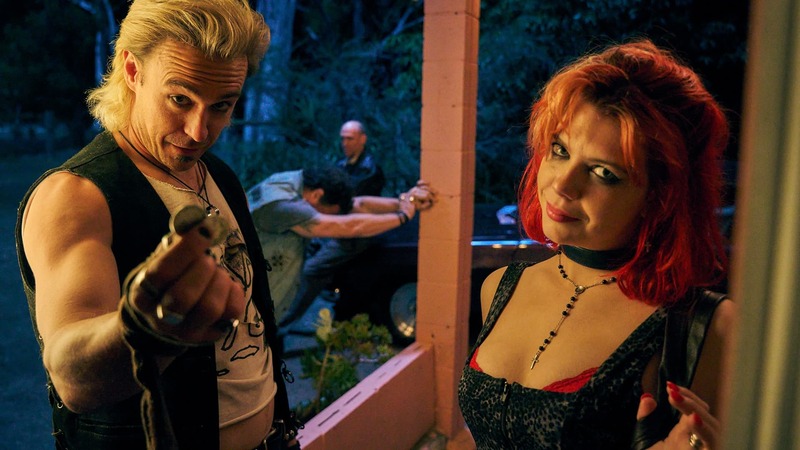
It’s 1986, and Penny Lane (Bailey Spalding) has plenty of reason to celebrate. She’s been accepted into college and heads into a hot Australian night with longtime friends Toni (Tahlee Fereday) and Amy (Alexandra Jensen). Penny’s cousin Kat (Sophia Wright-Mendelsohn) carries considerably more resentment into the gathering. What begins with a spiked cupcake and the sort of thoughtless behavior teenagers assume they’ll laugh about later opens the door to a night involving predatory men, fractured loyalties, and a body count.
Russell calls the film her answer to the Ozploitation tradition, and that is more than clear here. PENNY LANE IS DEAD isn’t trying to recreate an old slasher with pinpoint reverence. Its period setting gives Russell permission to play with exploitation cinema’s excesses while changing whose perspective controls them. The movie enjoys bad taste, heightened personalities, violent payback, and a sense that almost anything can happen once the night gets far enough out of control.
The campier aspects are just as deliberate. Russell’s stated influences range from John Waters and THE ROCKY HORROR SHOW to Pedro Almodóvar, and that mixture explains some of the film’s stranger choices better than simply calling it an ’80s throwback. Characters can be ridiculous without becoming jokes. Violence can be horrifying and funny within moments of each other. Emotional reactions sometimes arrive louder than realism would demand because this world isn’t aiming for quiet naturalism in the first place. There’s a freedom in knowing what you want as your source inspirations and leaning into them without copying them.
Sophia Wright-Mendelsohn benefits most from that freedom. Kat could have been written as the jealous relative who sets the plot in motion and then becomes disposable once the real danger knocks on the door. Wright-Mendelsohn makes her much harder to ignore. There’s insecurity underneath the cruelty and genuine hurt behind some of the hostility, even when Kat responds to those feelings in ways that make everything worse.
Her unpredictability gives the first half much of the impact that keeps the film rolling. Kat can be funny, exhausting, hurt, and savage without those traits canceling one another out. Russell doesn’t ask us to excuse her behavior, but understanding where some of it comes from makes the growing tension between the women more interesting than a cliched setup in which a killer is waiting to show up.
Spalding has a quieter job as Penny. Her character begins from a place of optimism, with college representing a real break from the life and relationships around her. That future makes the danger feel especially cruel as the night begins to close in. Spalding never pushes Penny into the generic final-girl mode. Fear, confusion, and poor judgment remain part of her even after survival begins to demand a firmer response.
Fereday and Jensen help make the group feel like real people with years behind them rather than characters introduced minutes before catastrophe. Russell has said she imagined the four women as personalities so different that, together, they almost make one balanced person. You can see that approach in the way they work and in how they bounce off each other. Each brings something the others lack, and each can also make an already volatile situation worse.
The 1986 throwback becomes even more meaningful once Russell’s reasoning is explained. She based part of it on memories of teenage summers before phones could record every mistake or make everyone accessible in seconds. That absence matters in practical terms once things become dangerous, but it also shapes the characters before the horror begins. They misbehave without imagining evidence of every decision will follow them forever.
That confidence extends to the violence. Russell worked for years in makeup and special effects before directing her first feature, and the gore has the physical quality you’d expect from someone who understands what practical horror effects can contribute. A cut has texture; blood doesn’t function as just a splash of red before everyone moves on. When somebody gets hurt, the body carries that.
The kills also avoid feeling interchangeable. Some are disgusting, some are satisfying, and others lean directly into the film’s meaner sense of humor. Russell clearly appreciates the pleasure an exploitation audience can take in watching a terrible person receive an appropriately terrible consequence. She isn’t embarrassed by that!
The distinction between enjoying revenge and endorsing everything around it becomes important as the film brings misogyny and sexual menace into the story. PENNY LANE IS DEAD borrows from movies that frequently turned endangered women into exhibition, then shifts its sympathies toward the women fighting their way through those situations. Russell doesn’t erase exploitation cinema’s ugliness. She redirects it.
Once everything erupts, events can arrive so quickly that emotional consequences don’t always get enough room to really evolve or impact those who deserve it. A character might experience something horrifying only for the next threat to demand their immediate attention. At 88 minutes, PENNY LANE IS DEAD wastes very little time, though another second here or there could have made certain relationships hurt more when they fracture. A handful of decisions also belong firmly to the logic of a traditional slasher film. People go in different directions when they shouldn’t. Characters sometimes move toward a problem because the movie needs them there. Russell can’t completely escape those moments, and a few of them create frustration rather than suspense. Russell describes her own approach as horror with a mischievous edge, and that comes through much more strongly than an attempt to reproduce the movies of the 80s beat for beat. PENNY LANE IS DEAD looks backward, but its sensibility belongs to the filmmaker making it now.
There’s an unmistakable affection for women who are allowed to be difficult. These characters aren’t sanitized into victims so the audience will approve of them before things turn violent. They can be selfish, reckless, funny, jealous, confident, angry, loyal, and cruel. Russell allows them to remain complicated even when the conventions of the genre start sorting people into survivors and casualties. That choice adds value to the relationship running throughout the film. Queerness isn’t treated as a reveal or used to make the movie feel contemporary despite its period setting. It just belongs within the friendships, temptations, and tensions already defining these characters.
For a first feature, Russell has a remarkably clear sense of what she wants the movie to sound, look, and feel like. The Ozploitation influence provides the permission to get nasty, her camp influences keep that nastiness from becoming humorless, and her practical-effects experience gives the violence a satisfying physical presence. The result doesn’t need the 80s because audiences are nostalgic for mixtapes and bad hair. It needs 80s because these girls can make one terrible decision without immediately imagining a permanent record of it. Unfortunately for Penny and her friends, some mistakes didn’t need a camera to become impossible to escape.
Please visit https://linktr.ee/overlyhonestr for more reviews.
You can follow me on Letterboxd, Instagram, Twitter, and YouTube. My social media accounts can also be found on most platforms by searching for 'Overly Honest Reviews'.
I’m always happy to hear from my readers; please don't hesitate to say hello or send me any questions about movies.
[photo courtesy of SHUDDER]
DISCLAIMER:
At Overly Honest Movie Reviews, we value honesty and transparency. Occasionally, we receive complimentary items for review, including DVDs, Blu-rays, CDs, Vinyl Records, Books, and more. We assure you that these arrangements do not influence our reviews, as we are committed to providing unbiased and sincere evaluations. We aim to help you make informed entertainment choices regardless of our relationship with distributors or producers.
Amazon Affiliate Links:
Additionally, this site contains Amazon affiliate links. If you purchase through these links, we may receive a commission. This affiliate arrangement does not affect our commitment to honest reviews and helps support our site. We appreciate your trust and support as you navigate these links.
