An Animation Legend Has His Story Told
Don Bluth: Somewhere Out There
MOVIE REVIEW
Don Bluth: Somewhere Out There
 -


Genre: Documentary, Biography, Animation
Year Released: 2026
Runtime: 1h 28m
Directors: Dave LaMattina, Chad Walker
Where to Watch: available on digital November 20, 2026
RAVING REVIEW: Don Bluth spent so much of his career fighting for the kind of animation he believed deserved to exist, even when doing so threatened everything he'd worked for. That's quite a legacy for someone who began his professional life dreaming of working for Walt Disney. DON BLUTH: SOMEWHERE OUT THERE, directed by Dave LaMattina and Chad Walker, examines the experiences of an artist who helped define an entire generation's relationship with animated films. It's an absorbing examination of ambition, independence, and the complicated decisions involved in protecting something you love. Bluth's career will be familiar to anyone who grew up watching his films, but understanding the circumstances behind them adds another dimension to those accomplishments.
For many people, the name Don Bluth immediately brings to mind THE SECRET OF NIMH, AN AMERICAN TAIL, THE LAND BEFORE TIME, or even ANASTASIA. His characters occupied a different corner of childhood entertainment from the cheerful adventures that Disney often favored. Children faced frightening situations, separation from their families, and danger, sometimes in stories that weren't interested in making everyone happy. Those films could be devastating for young audiences, but they also respected their ability to process complicated emotions. Bluth understood that animation didn't have to protect children from every aspect of life. His willingness to embrace difficult stories became a defining characteristic of his filmmaking, making his professional struggles particularly relevant to the work itself.
LaMattina and Walker previously directed I AM BIG BIRD: THE CAROLL SPINNEY STORY, another documentary about an artist whose creative work became inseparable from the memories of millions. The filmmakers explore the decisions that made his films possible and the complications that followed their successes. Bluth's career offers many opportunities for sentimental storytelling, yet the documentary focuses on the difference between pursuing an artistic ideal and running a successful business. Those two things weren't always compatible, and the tension between them offers a compelling lens for understanding his career.
Bluth's relationship with Disney is central to the story, starting with his early fascination with animation and culminating in the opportunity to work for the company that inspired him. He joined Walt Disney Productions as a young man and later returned to develop his career under the guidance of artists who had helped establish the studio's reputation. These weren't just employees teaching a newcomer how to draw. They represented an approach to animation that depended on patience, expertise, and an understanding of how carefully constructed movement could give illustrated characters personalities. Bluth absorbed those lessons and grew increasingly concerned that the company was abandoning the standards behind its earlier achievements.
That dissatisfaction eventually resulted in one of the most consequential departures in American animation history. In 1979, Bluth left Disney with Gary Goldman and John Pomeroy, and other animators followed them into uncertainty. Leaving an established studio meant surrendering the security and resources that made animated productions possible. It also meant challenging an organization whose name had become synonymous with the art form. Bluth wasn't attempting to reject everything Disney represented. He believed the company had abandoned the principles that made it so exceptional, and his independent studio aimed to preserve them.
The documentary's exploration of that decision raises a question that extends beyond animation. When does dedication to artistic standards become an unwillingness to accept compromises? Bluth's determination was essential to establishing his studio, but the same refusal to retreat from his convictions could complicate the decisions required to sustain it. There's a difference between recognizing an artist's accomplishments and presenting decisions as evidence of judgment. By examining Bluth's understanding of his career, the documentary makes room for the possibility that those very qualities can create difficulties. His ambition deserves respect, but treating ambition as uncomplicated would diminish the complexity of his experiences.
THE SECRET OF NIMH was a prime demonstration of what Bluth and his collaborators wanted to accomplish. Its animation and willingness to confront darker material set it apart from much of the family entertainment around it. The film didn't deliver the breakthrough that would have secured the studio's future, but it showed that a major animated feature could be produced outside Disney's infrastructure. Commercial success and artistic achievement weren't guaranteed, a problem that would continue following Bluth throughout his career. The documentary's account of his independent ventures gives this early period a significance beyond the reputation the film eventually earned.
Then came DRAGON'S LAIR, an entirely different accomplishment that introduced Bluth's animation to gaming. Its use of laserdisc technology allowed players to interact with elaborate animated sequences that looked dramatically different from the comparatively simple graphics of many contemporary video games. Bluth wasn't abandoning his commitment to hand-drawn artistry. He was discovering another medium in which those skills could be valuable. The success of DRAGON'S LAIR demonstrated that innovation didn't necessarily require abandoning the techniques he was determined to preserve.
Steven Spielberg's involvement brought Bluth into another part of his story, beginning with AN AMERICAN TAIL and continuing with THE LAND BEFORE TIME. These films introduced his distinctive storytelling to enormous audiences while demonstrating that Disney wasn't the only company capable of producing commercially successful animated features. I would argue that THE LAND BEFORE TIME created something equal to anything Disney had done. The partnership also highlights how dependent independent filmmakers can become on larger financial institutions and influential collaborators. Creative freedom doesn't eliminate the need for funding, particularly when the medium involves hundreds of artists working over months and years. Bluth had escaped one system, but that didn't mean he could operate without the expectations of people investing in his productions.
The move to Ireland provides another important chapter in this history. Establishing an animation operation in Dublin wasn't just about cutting costs. Bluth and his collaborators helped develop a workforce capable of sustaining large-scale productions, creating opportunities for artists who would contribute to the country's growing animation industry. This aspect of his career deserves attention because his influence extended beyond the films carrying his name. Training animators and building infrastructure for their work can have consequences long after a particular studio closes. The Irish chapter also demonstrates how creative industries can develop through a combination of individual ambition and institutional support. His fingerprints remain on the industry today, with Cartoon Saloon crediting him in part for their motivation to create.
Of course, the successes didn't continue forever. Financial pressure around independent animation remained, and Bluth's later productions faced increasingly difficult commercial circumstances. Films such as ROCK-A-DOODLE, THUMBELINA, and A TROLL IN CENTRAL PARK belong to a moment in time when the studio struggled to maintain its own image. It would be pointless to pretend this chapter of his story never happened. A career documentary becomes more interesting when it acknowledges the distance between an artist's intentions and the results of their work. Bluth's accomplishments are considerable enough that examining his failures doesn't threaten his legacy. Instead, those failures make his persistence easier to understand without romanticizing the consequences.
His eventual association with Fox Animation Studios produced ANASTASIA (which, ironically enough, has come full circle and is now owned by Disney). This commercial success demonstrated his ability to connect with audiences. Its achievement is especially interesting in the larger story because Bluth spent years trying to establish independence from major companies, only to find another opportunity working within a corporate structure. It just shows how difficult it can be to maintain artistic autonomy in an industry that requires substantial resources. TITAN A.E., which followed, arrived as computer-generated animation was becoming increasingly dominant. The changing marketplace introduced problems that couldn't be solved simply by working harder or insisting on traditional production methods.
LaMattina and Walker worked with materials preserved at the Savannah College of Art and Design, including original animation artwork, handwritten notes, production footage, and documentation from projects that never reached completion. This lets a documentary about filmmaking examine the creative process beyond the finished products audiences already know. Animation requires an extraordinary amount of time and effort that can disappear behind the simplicity of a character moving across the screen.
Bluth himself remains the documentary's most important participant. At this stage of his life, his reflections benefit from decades separating him from the disappointments that once shaped his future. That distance is valuable, though it doesn't mean every recollection should be treated as the definitive interpretation of an event. Personal documentaries are inevitably shaped by their subjects' perspectives, and memory can transform an experience into something it didn't feel like at the time. Including other voices and historical material helps place Bluth's account within a larger world. His story is worth hearing on its own terms, but the people who worked beside him were essential to making his ambitions achievable.
Gary Goldman and John Pomeroy deserve recognition within that history. Their involvement wasn't incidental to Bluth's departure from Disney or the development of his operation. They were creative collaborators whose contributions helped sustain productions that demanded an enormous collective effort. Animation is a collaborative medium even when the public associates a film with a single director, and Bluth's accomplishments depended on countless artists working alongside him.
Bluth's insistence that animation deserves to be treated as a serious discipline also remains relevant today. Traditional hand-drawn animation has become less common in mainstream filmmaking (see again why I love Cartoon Saloon!), and digital production continues to change how animated entertainment is created. More recently, generative A.I. has raised additional concerns about how entertainment companies value individual artists' labor.
It's easy to celebrate the appearance of traditional animation without considering the extensive labor needed to achieve it. Equally, the popularity of computer-generated imagery doesn't mean the artists working in that medium lack dedication or imagination. Bluth's importance comes from his willingness to challenge the assumption that one company should set the creative standards for an entire industry. Competition created opportunities for different approaches to storytelling, and his successes demonstrated that audiences were willing to embrace them.
What distinguishes DON BLUTH: SOMEWHERE OUT THERE from just another retrospective is the recognition that an extraordinary career doesn't always have to be successful. Bluth challenged Disney, achieved international success, trained artists, faced setbacks, and repeatedly adapted to circumstances he couldn't control. His career doesn't fit into a story where perseverance guarantees the result someone originally imagined. There's a greater appreciation to be found in examining how he continued working through those changing circumstances. The documentary gives that history a human perspective without turning every disappointment into a victory.
For anyone who associates Bluth's name with the films that shaped their childhood, this documentary offers a compelling reason to look beyond those memories. His work entertained audiences, but it also challenged assumptions about animation and helped create opportunities for artists outside the industry’s tentpoles. LaMattina and Walker approach a remarkable career with an interest in the person behind it, including the contradictions that make his experiences worth examining. DON BLUTH: SOMEWHERE OUT THERE serves as a tribute to a filmmaker whose achievements remain, but it also recognizes that the story behind those achievements is considerably more complicated. Bluth spent his life trying to protect an art form he loved, and understanding what that determination demanded of him makes his legacy all the more fascinating.
Please visit https://linktr.ee/overlyhonestr for more reviews.
Follow me on Letterboxd, Instagram, Twitter, and YouTube. You can also find my social media accounts on most platforms by searching for 'Overly Honest Reviews'.
I’m always happy to hear from my readers; please don't hesitate to say hello or send me any movie questions.
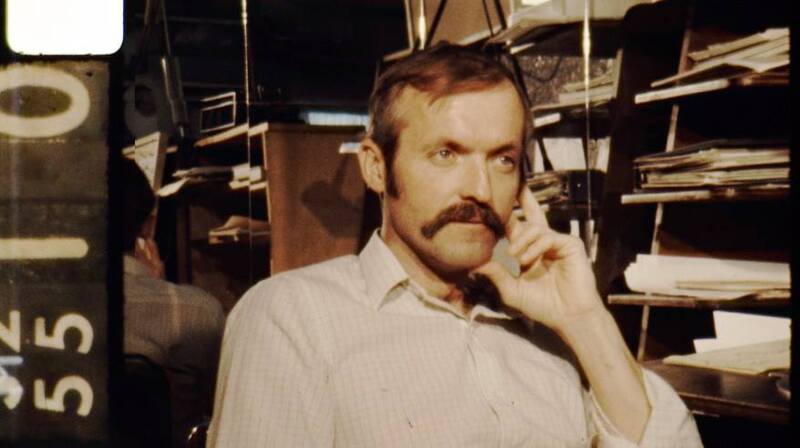
[photo courtesy of COPPER POT PICTURES]
DISCLAIMER:
At Overly Honest Movie Reviews, we value honesty and transparency. Occasionally, we receive complimentary items for review, including DVDs, Blu-rays, CDs, Vinyl Records, Books, and more. We assure you these arrangements do not influence our reviews, as we are committed to unbiased, sincere evaluations. We aim to help you make informed entertainment choices regardless of our relationship with distributors or producers.
Amazon Affiliate Links:
This site also contains Amazon affiliate links. If you purchase through these links, we may receive a commission. This affiliate arrangement does not affect our commitment to honest reviews and helps support our site. We appreciate your trust and support as you navigate these links.
