Art, Obsession, and Emotional Collateral
Bight
MOVIE REVIEW
Bight
 -
- 

Genre: Thriller, Drama
Year Released: 2026
Runtime: 1h 32m
Director(s): Maiara Walsh
Writer(s): Maiara Walsh, Cameron Cowperthwaite
Cast: Cameron Cowperthwaite, Maiara Walsh, Mark Hapka, Maya Stojan, Cassandra Scerbo
Where to Watch: arriving on VOD, digital on February 10, 2026
RAVING REVIEW: What happens when permission becomes emotional leverage? BIGHT, with that question hanging in the air, spells out its consequences, positioning itself not as provocation but as an uncomfortable examination of how easily desire can be weaponized when boundaries are treated as suggestions rather than safeguards.
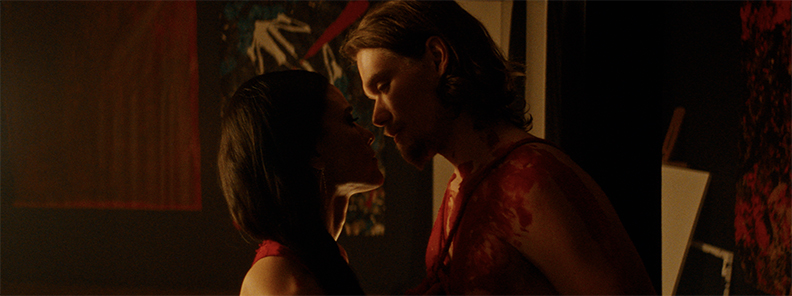
Directed and co-written by Maiara Walsh in her feature debut, BIGHT enters the ‘erotic’ thriller space with clear intent. This isn’t nostalgia-driven voyeurism, nor is it content to coast on surface-level provocation. Instead, it frames intimacy as a destabilizing force, one that exposes existing fractures rather than creating new ones. From its opening moments, the film shows that pleasure will never be separate from power here, and that emotional consent doesn’t guarantee emotional safety.
At the center of the film are two couples whose lives intersect during a single evening, and the evening spirals outward in meaning. Atticus and Charlie arrive already broken, carrying grief, resentment, and unspoken regret into a space that promises release but offers no protection. Cameron Cowperthwaite plays Atticus as a man hollowed out by compromise, someone who has mistaken emotional passivity for stability. His performance is deliberately restrained, often frustrating by design, because the character himself has learned how to disappear inside his own life. That absence becomes one of the film’s most potent sources of tension.
Maiara Walsh, pulling double triple duty as director, co-writer, and performer, gives Charlie a sharp interiority that resists sympathy. Charlie isn’t written as a victim seeking rescue, nor as a provocateur chasing chaos. She exists in the uncomfortable middle of someone desperate to feel grounded again but unsure which version of herself still qualifies as real. Walsh’s performance is measured and raw in equal measure, never reaching for melodrama, allowing moments of silence to carry as much weight as confrontation.
Mark Hapka’s Sebastian operates as the film’s strongest pull. A successful avant-garde erotic photographer whose confidence borders on control, Sebastian embodies the danger of someone who frames transgression as enlightenment. Hapka plays him with disarming calm, never tipping into parody, which makes his manipulation feel disturbingly plausible. Sebastian doesn’t coerce through aggression but through validation, offering others permission to become versions of themselves they already fear they might be.
Maya Stojan’s Naomi completes the quartet with a performance defined by withholding. Naomi is the film’s most elusive figure, her opacity functioning as both armor and a threat. Stojan understands that mystery can be a form of dominance, and she uses restraint to unsettling effect. Naomi’s presence complicates the dynamic not by escalating conflict but by refusing to explain herself, forcing others to project meaning onto her actions.
BIGHT’s eroticism is purposeful but never indulgent. The film uses intimacy as a tool rather than a selling point, allowing erotic moments to carry consequence instead of a visual display. Scenes involving shibari and performance are framed less as acts of beauty and more as demonstrations of control, precision, and vulnerability.
One of the film’s strengths is its patience. Rather than rushing toward shock or betrayal, BIGHT allows discomfort to accumulate gradually. Conversations stretch longer than expected, glances linger uncomfortably, and power shifts occur before anyone notices them. This deliberate pacing may challenge viewers expecting a more traditional structure for an erotic thriller, but it serves the film’s ambitions well. The tension here is emotional before it becomes situational.
The emotional devastation promised throughout the film arrives in the third act, but some aspects feel more like suggestions than exploration. Certain character decisions beg for deeper interrogation, particularly regarding accountability versus self-justification. The film chooses implication over resolution, which aligns with its ethos but may leave some viewers wanting a sharper sense of closure. BIGHT’s refusal to moralize is one of its most commendable qualities. The film neither punishes nor celebrates desire. Instead, it interrogates the systems people build around intimacy to protect themselves from vulnerability, only to discover that those systems can become cages.
Ultimately, BIGHT understands that erotic thrillers live or die by emotional credibility. The film is less interested in how far its characters will go physically than in how far they are willing to lie to themselves emotionally. Desire is never portrayed here as liberation, only as exposure. What people do with that exposure determines whether the connection becomes a source of growth or damage.
This is a challenging watch, not because of explicit content, but because of how it captures the ways people rationalize harm when it feels consensual. BIGHT doesn’t offer comfort, nor does it pretend that self-discovery is an act of healing. Instead, it leaves viewers with an unsettling realization that boundaries are meaningful only when they are respected, not when they are crossed.
Please visit https://linktr.ee/overlyhonestr for more reviews.
You can follow me on Letterboxd, Instagram, Twitter, and YouTube. My social media accounts can also be found on most platforms by searching for 'Overly Honest Reviews'.
I’m always happy to hear from my readers; please don't hesitate to say hello or send me any questions about movies.
[photo courtesy of WHITE ROOM, 80 PROOF PICTURES]
DISCLAIMER:
At Overly Honest Movie Reviews, we value honesty and transparency. Occasionally, we receive complimentary items for review, including DVDs, Blu-rays, CDs, Vinyl Records, Books, and more. We assure you that these arrangements do not influence our reviews, as we are committed to providing unbiased and sincere evaluations. We aim to help you make informed entertainment choices regardless of our relationship with distributors or producers.
Amazon Affiliate Links:
Additionally, this site contains Amazon affiliate links. If you purchase through these links, we may receive a commission. This affiliate arrangement does not affect our commitment to honest reviews and helps support our site. We appreciate your trust and support as you navigate these links.
