When Silence Becomes a Sentence
Baby Doe
MOVIE REVIEW
Baby Doe
 -
- 

Genre: Documentary
Year Released: 2025, 2026
Runtime: 1h 40m
Director(s): Jessica Earnshaw
Where to Watch: available in select theaters July 10-16, 2026, at DCTV (New York City), July 14 at Laemmle Glendale (Los Angeles), July 15 at Laemmle Noho (Los Angeles), and July 19th at The Roxy (San Francisco)
RAVING REVIEW: Some documentaries ask the audience to feel like they’re a part of the case; BABY DOE asks something far more uncomfortable. It asks whether a person’s worst moment can ever be understood without excusing it, and whether a legal system built around guilt and punishment has the patience to sit with fear, denial, religion, shame, and memory when those things refuse to line up. That distinction is so important in this context because Jessica Earnshaw isn’t making a film designed to feed the usual true crime appetite. She’s making one that studies what happens after a headline has already decided who someone is.
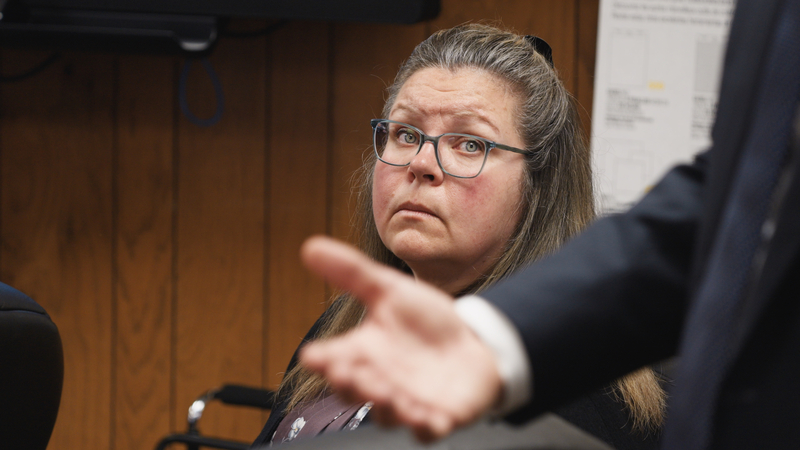
The film follows Gail Eastwood-Ritchey, whose life as a wife, mother, and grandmother is torn open when DNA evidence links her to a decades-old Ohio cold case known as “Geauga’s Child.” Thirty years earlier, Gail gave birth alone and left the newborn in the woods, later maintaining that the baby was stillborn. Authorities don’t accept that explanation, and the case moves toward a murder charge carrying the possibility of life in prison. That could easily turn into a courtroom countdown or a grim parade of information, yet BABY DOE is strongest when it stays close to the emotional wreckage around Gail rather than treating her as a puzzle piece.
Earnshaw’s access gives the film an added perspective that most true-crime docs never get. Gail’s husband, Mark, their adult children, her mother, friends, attorneys, prosecutors, law enforcement voices, and medical experts all become part of a larger portrait of judgment. Not every piece points in the same direction, which is exactly why the film works. Gail can be sympathetic in one moment and maddeningly hard to read in another. Her story about the past carries a sense of distance, and that becomes one of the film’s most unsettling qualities. BABY DOE doesn’t ask viewers to let that discomfort pool into either pity or condemnation. It lets the contradiction remain.
A weaker version of this story would either turn Gail into a monster or make her a victim of circumstance. Earnshaw refuses; she gives space to the horror of what happened, the grief surrounding an abandoned newborn, and the community’s understandable need for accountability. She also digs into the social conditions that can surround pregnancy denial, particularly when young women grow up inside strict religious environments where sexual shame can become a kind of prison before any courtroom ever gets involved.
The religious element is handled with care because the film isn’t taking cheap shots at faith. It’s more interested in how a community’s values can collide with the reality of fear. Gail’s past is shaped by a world where pregnancy outside marriage could feel catastrophic, and BABY DOE keeps returning to the loneliness of that pressure. The film doesn’t argue that shame explains everything. It argues that ignoring shame leaves a dangerous blank space in how these cases are discussed, prosecuted, and remembered.
Earnshaw’s background as a photojournalist shows in the way she watches faces. Much of the film’s tension comes from stillness. Shots of Gail listening as family members process what they thought they knew, and attorneys trying to shape a defense around a memory that has been buried for decades. The courtroom provides structure, though the more revealing moments often occur on the edges. A pause from Gail can say as much as any explanation. A family member’s careful wording can reveal love, doubt, loyalty, and fear all at once.
The film’s best quality is its refusal to let the legal question become the only question. Whether Gail belongs in prison is part of the story, naturally, but BABY DOE also asks how many systems failed before the law ever entered the picture. Family expectations, religious doctrine, sexual secrecy, media coverage, forensic certainty, and public disgust all press down on the same case. Earnshaw doesn’t pretend each force carries equal blame, and she doesn’t force a conclusion onto something that remains emotionally shattered. Instead, she shows how easy it is for institutions to demand coherence from people who may not even understand themselves.
The references to pregnancy denial and comparable cases are fascinating, and a little more time with those experts would have sharpened the documentary’s wider argument. Some viewers may also want a more thorough examination of the prosecution’s perspective, especially given the case's intensity. The film isn’t evasive, but its intimacy with Gail and her family shapes the experience.
Even with those limitations, BABY DOE earns its influence through restraint. It understands that a subject this painful doesn’t need inflating. The film is already dealing with a dead newborn, a woman facing the consequences of a hidden past, a family forced to reexamine its foundation, and a courtroom trying to translate trauma into verdicts. Earnshaw trusts those pieces enough to avoid turning them into spectacle. That trust makes the documentary harder to shake because it never gives viewers the release that certainty provides.
BABY DOE is difficult to watch, not because it chases moments of shock, but because it denies the comfort of soothing. It’s compassionate without being soft, critical without being cruel, and grounded enough to understand that understanding is not the same thing as forgiveness. Earnshaw has made a documentary that treats Gail’s case as more than just a grim headline, more than a legal argument, and more than another entry in the true-crime genre. It’s a story about denial, judgment, motherhood, faith, and the frightening possibility that the past can wait decades before demanding to be seen.
For a film built around an act many people will understandably struggle to process, BABY DOE finds a careful and humane path through the wreckage. It doesn’t tell the audience what to feel about Gail. It gives viewers enough to wrestle with her, the case, the culture around her, and the cost of a world where shame can become louder than survival. That’s why the film lands with such force. It doesn’t close the file. It opens the wound. I intentionally avoided the core view here. I went into this evaluating the film, not the case. I’m not a true crime expert; I don’t study and examine these cases. I wasn’t there; I can’t pretend to understand. You have to process the event yourself, but the film was one heck of an experience either way.
Please visit https://linktr.ee/overlyhonestr for more reviews.
You can follow me on Letterboxd, Instagram, Twitter, and YouTube. My social media accounts can also be found on most platforms by searching for 'Overly Honest Reviews'.
I’m always happy to hear from my readers; please don't hesitate to say hello or send me any questions about movies.
[photo courtesy of LUNAMAX FILMS, IMPACT PARTNERS, INMAAT FOUNDATION, SWEET CREATURES]
DISCLAIMER:
At Overly Honest Movie Reviews, we value honesty and transparency. Occasionally, we receive complimentary items for review, including DVDs, Blu-rays, CDs, Vinyl Records, Books, and more. We assure you that these arrangements do not influence our reviews, as we are committed to providing unbiased and sincere evaluations. We aim to help you make informed entertainment choices regardless of our relationship with distributors or producers.
Amazon Affiliate Links:
Additionally, this site contains Amazon affiliate links. If you purchase through these links, we may receive a commission. This affiliate arrangement does not affect our commitment to honest reviews and helps support our site. We appreciate your trust and support as you navigate these links.
