The Distance Between Survival and Living
Blind AF
MOVIE REVIEW
Blind AF
 -


Genre: Documentary, Biography, Sports
Year: 2024, 2026
Runtime: 1h 27m
Director: Gina LeVay Goldstein
Where to Watch: available October 28, 2026 on Prime and more
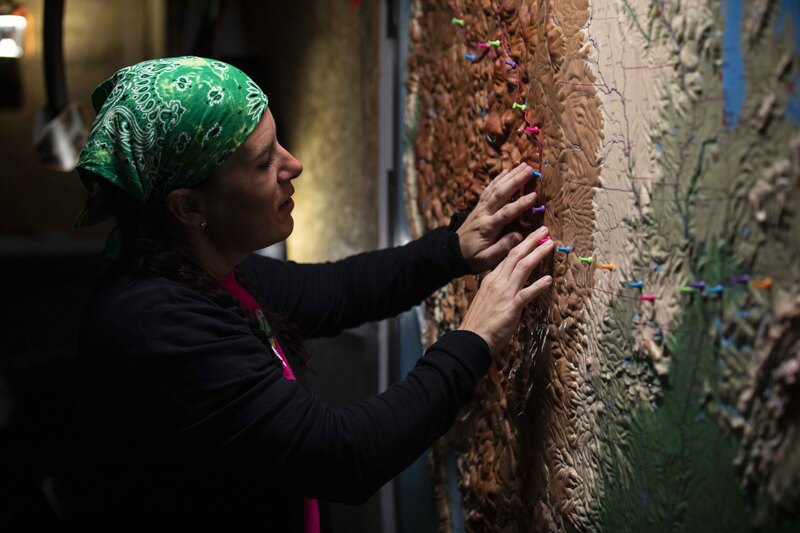
RAVING REVIEW: Shawn Cheshire doesn't care what other people think she should be able to do. The Army veteran, Paralympian, and multiple world-record holder has spent years pursuing challenges most people wouldn't even consider, and blindness has done little to diminish her appetite for risk. Her latest undertaking is to ride a bicycle 3,600 miles across the United States without a tandem partner, an extraordinary physical challenge made far more complicated by her inability to see the road ahead. Director Gina LeVay Goldstein's BLIND AF follows along on that journey while examining the experiences that have shaped Cheshire's determination to live independently, including a personal history far more painful and complicated than her athletic achievements initially suggest.
Cheshire lost her sight following a traumatic brain injury sustained while working as a paramedic in 2009. At thirty-six, she was a single mother of two, and her life changed, requiring significant adjustment. Severe depression eventually led her to seek treatment through the Department of Veterans Affairs, where adaptive sports and treatment for complex post-traumatic stress disorder became important parts of rebuilding her life. Within just a few years, she competed at the 2016 Paralympic Games in Rio, became a thirteen-time U.S. national champion in paracycling, and set a world record for crossing the Grand Canyon without a sighted guide.
That's an extraordinary collection of accomplishments, but BLIND AF is careful not to suggest that athletic success somehow resolved everything Cheshire was experiencing. Her past includes abuse during her childhood, domestic violence, and psychological trauma that continued affecting her long after the circumstances themselves had changed. Goldstein treats those experiences as essential to understanding Cheshire, rather than as obstacles she needed to overcome before becoming an accomplished athlete.
The cross-country expedition provides the film with a natural structure. Cheshire sets out to complete the demanding journey in sixty days, navigating the unknown while confronting the physical and practical challenges associated with riding independently. The distance alone would be formidable for an experienced sighted cyclist, but Cheshire's undertaking requires an entirely different relationship with her surroundings. Goldstein uses the journey to examine her subject's adaptation and determination without suggesting that blindness defines every aspect of her life.
Through personal reflections, journal entries, and interviews with people familiar with Cheshire's experiences, Goldstein begins examining the relationship between her subject's independence and the circumstances that shaped it. Cheshire's determination becomes more complicated as these details emerge, particularly when the desire to keep moving intersects with memories and unresolved emotional experiences. Her accomplishments remain impressive, but understanding the circumstances surrounding them gives the film considerably more substance.
Goldstein's connection with Cheshire is another important aspect of the production. The filmmaker initially met her during an ESPN assignment in 2015, when Cheshire was still adjusting to life without sight while raising her children. The encounter stayed with Goldstein, who reconnected with her in 2019 to discuss developing a documentary. What followed was a collaboration spanning approximately five years, with Cheshire participating in creative discussions about how her experiences would be communicated. That involvement extended throughout most of the filmmaking process, allowing her to contribute directly to the presentation of material that could easily have been interpreted entirely through someone else's perspective.
Goldstein incorporates immersive sound design to communicate aspects of Cheshire's experience as a blind woman living with complex PTSD. These techniques let the film explore personal perception rather than relying solely on conventional interviews and footage from the cycling expedition. Cheshire's role in developing these elements matters because representing disability involves far more responsibility than simply finding an interesting visual approach. Goldstein makes an effort to involve the person whose experiences she's attempting to communicate, and that creative consideration gives the documentary a stronger foundation.
Goldstein worked with a PTSD advisor during production and established consent practices for participants discussing sensitive personal material. Given the difficult subjects involved, including sexual violence and abuse, the attention paid to emotional safety is particularly important. The film's revelations carry considerably more weight when approached as Cheshire's experiences to communicate rather than uncomfortable details included simply to increase the dramatic impact of her athletic journey. Her willingness to discuss these subjects gives BLIND AF some of its most poignant moments.
Interestingly, Cheshire herself is often more compelling than that framing allows. Her story raises questions about how society approaches disability, particularly the assumptions people make concerning independence, acceptable risks, and what constitutes a fulfilling life. There's a difference between supporting someone and deciding which challenges they should be allowed to pursue. BLIND AF recognizes that distinction, framing Cheshire's pursuit of an extraordinarily demanding goal as part of a larger examination of her right to set boundaries and decide her own future.
The documentary's Best of Fest honor at the 2025 Sedona International Film Festival reflects the broader appeal of Cheshire's story, which extends well beyond her athletic accomplishments. Following its festival run, BLIND AF arrives on digital platforms October 28, 2026, introducing Cheshire's experiences to a considerably wider audience. Its accessibility considerations are also worth acknowledging, with Goldstein identifying audio description and closed captioning as important parts of the production's approach to reaching viewers. For a documentary so concerned with inclusion and individual perspective, accessibility deserves to be treated as an essential consideration rather than an afterthought.
BLIND AF doesn't completely escape the limitations of its inspirational documentary framework, and its relatively brief running time leaves certain facets of Cheshire's history deserving of greater attention. Goldstein has found a subject whose experiences justify considerably more than a straightforward account of an extraordinary cycling expedition. The years of collaboration behind the film create a portrait that recognizes the importance of giving Cheshire meaningful input into how her life is represented.
Cheshire has no interest in becoming anyone's definition of an inspirational figure. Her determination isn't an invitation for others to feel better about their own circumstances, and pursuing challenges doesn't mean she owes anyone an explanation for her decisions. She's lived through extraordinary difficulties and accomplished things most people wouldn't even dream of, but her ambitions continue evolving as she discovers what she wants to pursue next. Goldstein allows viewers to appreciate those ambitions without reducing Cheshire to her disability or her athletic achievements. Her independence isn't measured by how many records she breaks, and her experiences deserve attention regardless of what she accomplishes next. Even a 3,600-mile cycling expedition isn't enough to satisfy her curiosity about her own capabilities. Before the documentary ends, Cheshire is already working toward another achievement. Most people would probably want a lengthy vacation after attempting to cross the country on a bicycle. For Cheshire, the finish line seems like another chance to decide where she's headed next.
The 3,600-mile journey offers an impressive reason to start watching. The documentary's greater value lies in understanding why Cheshire keeps pursuing challenges that demand so much of her. Her accomplishments are remarkable, but they aren't required for her independence to matter or for her experiences to deserve attention. BLIND AF is most rewarding when it recognizes that difference, presenting a woman determined to make decisions about her own life without allowing anyone else to decide how far she's permitted to go.
Please visit https://linktr.ee/overlyhonestr for more reviews.
Follow me on Letterboxd, Instagram, Twitter, and YouTube. You can also find my social media accounts on most platforms by searching for 'Overly Honest Reviews'.
I’m always happy to hear from my readers; please don't hesitate to say hello or send me any movie questions.
[photo courtesy of TIGER STRIPE MEDIA, ALL RISE FILMS]
DISCLAIMER:
At Overly Honest Movie Reviews, we value honesty and transparency. Occasionally, we receive complimentary items for review, including DVDs, Blu-rays, CDs, Vinyl Records, Books, and more. We assure you these arrangements do not influence our reviews, as we are committed to unbiased, sincere evaluations. We aim to help you make informed entertainment choices regardless of our relationship with distributors or producers.
Amazon Affiliate Links:
This site also contains Amazon affiliate links. If you purchase through these links, we may receive a commission. This affiliate arrangement does not affect our commitment to honest reviews and helps support our site. We appreciate your trust and support as you navigate these links.
