When Safety Starts to Corrupt
The Key (La Clef)
MOVIE REVIEWS
The Key (La Clef)
 -
- 

Genre: Drama, Comedy, Social
Year Released: 2025, 2026
Runtime: 1h 48m
Director(s): Paul G. Sportiello
Writer(s): Paul G. Sportiello
Cast: Sylka, Bruno Clairefond, Alain Guillot, Dorothée Deblaton, Emilie Hantz
Where to Watch: shown at the 2026 Slamdance Film Festival
RAVING REVIEW: What does it mean to live in a world that has already decided you’re not important? THE KEY is based around individuals who’ve managed to vanish, not by choice, but as the easiest way to get by in life. Paul G. Sportiello’s first feature film isn’t about showing off poverty or on the outside to make a point about morality. Rather, it depicts invisibility as something people learn, something handed down between those who come to realize that not being noticed is, at times, safer than being seen.
Alain and Bruno aren’t a pair of people who find each other as soulmates or preordained partners. They simply come into each other’s lives because they both already live on the edge of things. The early parts of the film establish this distance slowly and carefully. Talks seem to stop short. Rooms seem temporary. Lives seem to be on hold, not really happening. Sportiello doesn’t give in to the temptation to make their loneliness obvious. This isolation is ordinary, a part of daily life, and fully accepted.
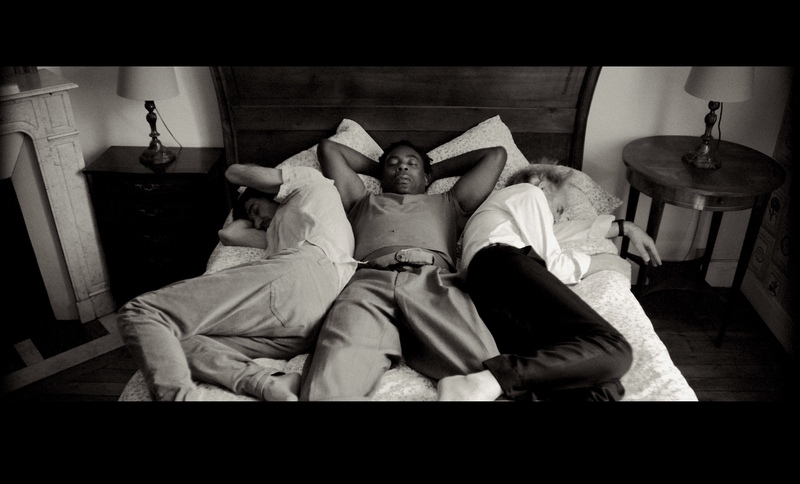
Then Z appears, changing everything. Sylka plays him with a blend of gentleness and awareness; he isn’t shown as a rescuer or a fraud. He’s just someone who has found a solution. His way of surviving by using empty, upscale flats isn’t so much a trick but a natural result of being ignored. The film doesn’t present this as brave. It shows it as sensible, vital. THE KEY isn’t about fighting back. It is about adjusting.
When the three of them come together, the film becomes something else, though it doesn’t claim to be. Their connection grows naturally through the meals they share, the silence they keep, and a sense of understanding. Z sees in Alain and Bruno as something of a family, but not because they’re special, but because they are there. The film makes it clear just how rare such a presence is when simply staying alive takes all your energy.
Sportiello’s use of black-and-white film reinforces the film’s control of emotion. Paris isn’t a city of love so much as a scene of corridors, staircases, and places borrowed from others. The lack of color doesn’t make poverty look beautiful. It makes the picture simpler by removing distractions so that you can focus on faces, movement, and moments of doubt. The shots often put the characters on the sides, visually making the idea of only partly existing clear.
As THE KEY gets harder and more intent on refusing to let the story be comforting, as we see Alain and Bruno become more certain of their ability to take what isn’t theirs, the film shows a subtle decay. Wanting things begins to show. Not greed in an overt way, but the idea that having more access might at last give them some real value. This reasoning is tempting. If being unseen gives you freedom, then having more access must give you satisfaction. The film watches this shift without taking sides, but not without results.
There are no long talks explaining what’s happening. No sudden change to show good versus evil. Instead, the characters’ actions change a little. Limits become looser. Thankfulness disappears. What began as a way to stay alive starts to feel like a right. THE KEY knows that the cruelty of the system doesn’t just hurt people; it changes how they understand what makes them happy.
Sylka’s acting is a true strength of the film. Z isn’t innocent, but he’s honest. His understanding of survival doesn’t include the wish to rule others. When the balance between the three begins to break down, the pain is quiet, but terrible. It’s the pain of realizing that the only place you felt safe has become like the world that left you out in the first place. Bruno Clairefond and Alain Guillot give very internal performances, allowing unease to surface in small, unflashy ways. Their characters aren’t evil. They are people trying to find the limits of their new power, without knowing what it will cost. The film doesn’t excuse them, but it also won’t turn them into symbols.
Sportiello’s past, as the film’s publicity material mentions, clearly shapes the story’s viewpoint, but the film doesn’t become too personal. Instead, it grows outwards. THE KEY presents itself as a study of the stories of moving up in the world, of glass ceilings disguised as open doors, and of how easily desperation can be mistaken for ambition.
If THE KEY has a fault, it’s that its subtlety might put off viewers who want a more traditional story or clearer ending. The film doesn’t give the expected relief. It leaves some characters and viewers feeling uncomfortable because it is unfinished. For others, that’s what makes it seem real.
What makes THE KEY special is its refusal to romanticize the idea of being unseen, while still admitting its short-term benefit. The film understands that not being seen can protect you, but it can also empty you. Happiness, the film suggests, isn’t hidden behind locked doors or borrowed privilege. It’s found in being recognized, however fragile that recognition might be. THE KEY doesn’t shout its message. It waits for you to notice it.
Please visit https://linktr.ee/overlyhonestr for more reviews.
You can follow me on Letterboxd, Instagram, Twitter, and YouTube. My social media accounts can also be found on most platforms by searching for 'Overly Honest Reviews'.
I’m always happy to hear from my readers; please don't hesitate to say hello or send me any questions about movies.
[photo courtesy of HTTH PRODUCTIONS]
DISCLAIMER:
At Overly Honest Movie Reviews, we value honesty and transparency. Occasionally, we receive complimentary items for review, including DVDs, Blu-rays, CDs, Vinyl Records, Books, and more. We assure you that these arrangements do not influence our reviews, as we are committed to providing unbiased and sincere evaluations. We aim to help you make informed entertainment choices regardless of our relationship with distributors or producers.
Amazon Affiliate Links:
Additionally, this site contains Amazon affiliate links. If you purchase through these links, we may receive a commission. This affiliate arrangement does not affect our commitment to honest reviews and helps support our site. We appreciate your trust and support as you navigate these links.
