A Creature Feature That Aims Higher Than Blood
God of Frogs
MOVIE REVIEWS
God of Frogs
 -
- 


Genre: Horror, Anthology, Creature Feature
Year Released: 2026
Runtime: 1h 38m
Director(s): Adrian Bobb, Ali Chappell
Writer(s): Adrian Bobb, Matthew Campagna, Ali Chappell
Cast: Alexander Eling, Kate Vernon, Corteon Moore, Lynne Griffin, Sean Sullivan, Ali Chappell
Where to Watch: available on UK digital March 2, 2026
RAVING REVIEW: GOD OF FROGS is built around a simple, unpleasant idea: what if an ancient hunger didn’t just survive, but fed on time itself. Instead of anchoring itself in a single era or set of characters, the film spans decades, returning every 25 years to the same creature and the same cursed lineage. IT is an anthology horror film that wants its creature to feel inevitable rather than surprising, less a jump scare than a recurring infection that adapts to its surroundings.
The film opens in 1969, deep in the wilderness, where a secluded cult performs a ritual that feels both primal and intimate. This first segment establishes the rules of the world and the tone the film is chasing. The creature, a frog-like god worshipped through fear and devotion, is introduced as something already known, already feared, already embedded in the belief system of those who serve it. Ali Chappell’s Lilith becomes the unwilling vessel that binds the creature’s fate to a single family line, and the film wisely avoids overexplaining the mythology. What matters isn’t where this god comes from, but what it demands.
From there, GOD OF FROGS jumps forward to 1994, then 2019, then finally 2044, using each era as a reflection of how power, exploitation, and chaos change shape while remaining fundamentally rotten. The structure is a risk. Anthology horror lives or dies by consistency, and here the connective tissue is thematic rather than narrative. The monster remains the same, but the humans around it are shaped by their time, whether that’s the self-serious arrogance of documentary filmmaking, the performative cynicism of modern politics, or the cold abstraction of corporate dominance.
The 1994 segment, centered on a missing film crew, leans heavily into the found-footage aesthetic without fully committing to it. It’s effective in moments, particularly in how it frames curiosity as entitlement. These characters believe they’re uncovering something important, something dangerous but manageable. The film understands how often that exact mindset fuels horror, the idea that knowledge equals control. This section works best when it resists gimmicks and focuses on the slow realization that documentation offers no protection.
The 2019 chapter is the most clearly satirical, staging the creature’s hunger against the backdrop of media and political power. It’s here that GOD OF FROGS becomes the most pointed, using public visibility as both shield and stage. The death at the center of this segment is deliberately shocking, not just for its violence, but for its framing. The film isn’t interested in shock as novelty. It’s interesting how horror becomes content the second it’s broadcast, dissected, and shared. The monster doesn’t need secrecy. It thrives on exposure.
By the time the film reaches 2044, the tone shifts again, this time toward the corporate apocalypse. The final segment imagines a future where exploitation has been systematized, depersonalized, and insulated behind branding and infrastructure. The creature’s hunger feels almost quaint compared to the damage already being done by human systems, which is exactly the point. The film suggests that monstrosity doesn’t disappear as society advances; it simply changes its viewpoint.
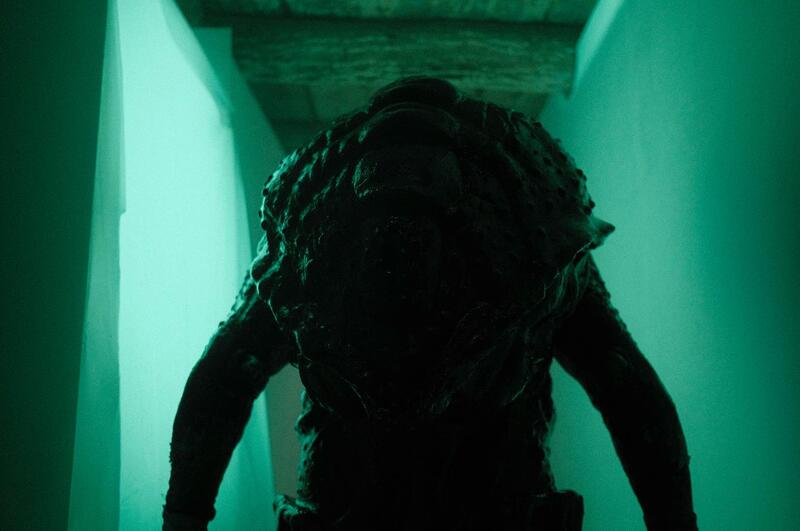
Across all four segments, the creature itself is used sparingly, and that restraint mostly works in the film’s favor. When it does appear, it’s unsettling without being elaborate. The design prioritizes texture and suggestion over excess detail, allowing imagination to do some of the work. This isn’t a creature feature obsessed with showing you everything. It wants the monster to feel ancient and indifferent, something that doesn’t need to announce itself because it knows it will be fed regardless.
The performances vary in impact, which is expected in an anthology. Alexander Eling and Kate Vernon bring a grounded presence to their segments, anchoring the more abstract ideas in recognizable human responses. Corteon Moore adds urgency and vulnerability, helping prevent the film from slipping into allegory. Even when individual storylines feel underdeveloped, the cast generally understands the assignment and plays the horror straight.
Where GOD OF FROGS stumbles is in pacing and balance; some segments could sustain a feature-length exploration on their own, while others feel rushed, as if the film is eager to move on to the next era. The ambition to cover seventy-five years of corruption and belief sometimes comes at the expense of emotional investment. You understand the idea before you feel the loss. That distance can blunt the impact, particularly for viewers who crave character-driven horror.
The film walks a tightrope between grimness and satire. The filmmakers clearly want to interrogate how belief systems evolve and how power uses myth, fear, and ritual to justify harm. However, the satire grinds to the point of threatening to undercut the horror. When the message becomes too clear, the monster risks being seen as a delivery system rather than a threat.
As a whole, GOD OF FROGS doesn’t escape the limitations of the anthology format, but it tries to use it purposefully. Not every moment lands with equal force, and some ideas feel larger than the runtime allows. This is a creature feature that wants you thinking about what survives across decades and why. It may not satisfy every appetite, but it leaves behind a lingering, uncomfortable aftertaste.
Please visit https://linktr.ee/overlyhonestr for more reviews.
You can follow me on Letterboxd, Instagram, Twitter, and YouTube. My social media accounts can also be found on most platforms by searching for 'Overly Honest Reviews'.
I’m always happy to hear from my readers; please don't hesitate to say hello or send me any questions about movies.
[photo courtesy of MIRACLE MEDIA, HIGHBALLTV]
DISCLAIMER:
At Overly Honest Movie Reviews, we value honesty and transparency. Occasionally, we receive complimentary items for review, including DVDs, Blu-rays, CDs, Vinyl Records, Books, and more. We assure you that these arrangements do not influence our reviews, as we are committed to providing unbiased and sincere evaluations. We aim to help you make informed entertainment choices regardless of our relationship with distributors or producers.
Amazon Affiliate Links:
Additionally, this site contains Amazon affiliate links. If you purchase through these links, we may receive a commission. This affiliate arrangement does not affect our commitment to honest reviews and helps support our site. We appreciate your trust and support as you navigate these links.
