Small Towns Keeping Cinema Alive
The Last Picture Shows
MOVIE REVIEW
The Last Picture Shows
 -
- 

Genre: Documentary
Year Released: 2026
Runtime: 1h 18m
Director: Rustin Thompson
Where to Watch: national theatrical rollout begins July 5, 2026, launching in New York City August 7 and in Los Angeles August 21
RAVING REVIEW: Faded marquees, empty ticket booths, peeling paint, and weeds pushing through cracked pavement can make neglect look almost romantic. THE LAST PICTURE SHOWS becomes meaningful when director Rustin Thompson moves beyond those images and starts listening to the people who still unlock the doors, sell the tickets, change the posters, and hope enough neighbors arrive to justify another week.
Thompson began the project expecting to document extinction. He traveled 10,825 miles through 10 Western states, recording 123 movie houses in communities where the next screen might be 50 or 100 miles away. Some theaters had closed. Others had become restaurants, churches, performance spaces, or vacant structures slowly disappearing from memory. The remaining cinemas were supposed to feel like the final specimens of an outdated business.
The people Thompson meets refuse to become an artifact. They’re owners, managers, projectionists, volunteers, preservationists, and neighbors who understand exactly how precarious their theaters are. They also understand that a building doesn’t become irrelevant simply because maintaining it has become difficult. That discovery changes the documentary from an obituary into something more complicated. The old marquees remain important, but Thompson gradually recognizes that architecture alone can’t explain what has been lost or preserved. A theater matters because people continue choosing to gather inside it.
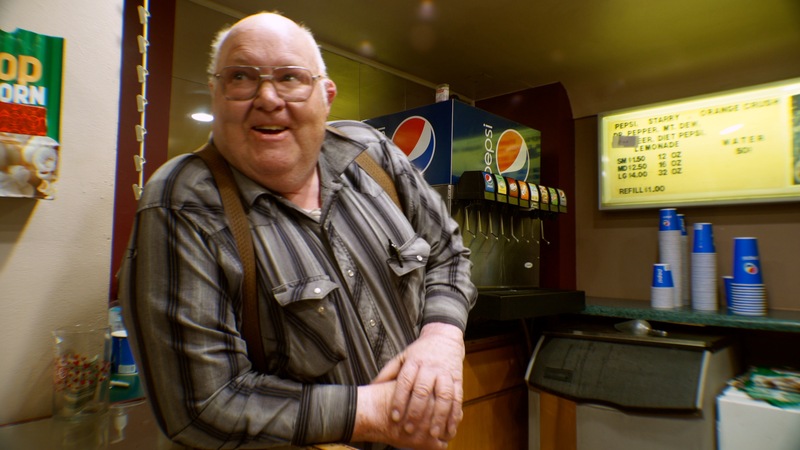
One of the earliest stops brings Thompson to the Desert Historic Theater in Burns, Oregon, a town with fewer than 3,000 residents. Owner Melvin “Tiny” Pedersen discusses buying the theater with his wife, raising money for a digital projector, and remaining committed even when a successful Friday night might mean fewer than 20 customers. The numbers sound discouraging until Tiny describes them as evidence that the theater is still serving its community.
The standards of a metropolitan multiplex can’t measure success in these towns. A single-screen theater may never get an enormous attendance. But it can remain the only local place where a child sees a movie on a large screen, teenagers hang out, older residents maintain their routine, and strangers share the same reaction without checking whether everyone else agrees. Thompson allows those ideas to emerge from conversations; the interviews have an unpolished openness that suits the subject. Many appear to have started because Thompson arrived, introduced himself, and found someone willing to talk. Visiting 123 theaters creates an impressive achievement, but no 78-minute documentary can give each building or community the attention it deserves.
The resulting tension is unavoidable. Thompson wants to preserve the scale of the journey while also slowing down for individual stories. The montages of theater exteriors communicate how widely these buildings are scattered. Although repeated shots of marquees and empty streets occasionally begin flattening places that the interviews have taught us to see as unique. It also breaks up the flow of the story. It would have been interesting to have them run as a slideshow during the credits, in my opinion.
Ross Melnick provides historical perspective throughout the trip. As a professor and co-founder of the Cinema Treasures archive, he places the current crisis within a longer cycle of exhibition, technological disruption, and reinvention. Theaters have faced radio, television, suburban migration, home video, cable, the internet, streaming, and repeated declarations that leaving home to watch a movie has become unnecessary. Moviegoing has always changed alongside American life. Downtown movie palaces lost audiences as populations moved outward, drive-ins followed families and automobiles into new spaces, multiplexes replaced many single-screen venues, and modern theaters added luxury seating and premium formats to compete with increasingly comfortable homes.
Small-town exhibitors don’t have the same options. They can’t always replace their seats for expensive recliners, add several premium screens, or spread an unsuccessful booking across a large complex. One poorly matched title can occupy their only auditorium while the audience they know would prefer something else stays home. The documentary’s discussion of studio booking practices is among its most valuable sections. Theater owners describe being required to hold certain releases longer than local demand can support. A corporate agreement that may make sense across multiple screens becomes absurd when applied to a town where most interested customers attended during the first weekend. Thompson uses a poorly attended superhero sequel as an example of that disconnect. The problem isn’t merely that the movie failed. The theater operators recognized the lack of demand but had little freedom to replace it with a smaller release or another title better suited to their customers.
The conversion from film projection to digital created another enormous burden. Digital distribution eventually simplified parts of the exhibition process, but the equipment demanded an investment that many small theaters couldn’t afford without fundraising, loans, public support, or community campaigns. Several buildings survived because their neighbors decided that losing a theater would mean losing something that couldn’t easily be rebuilt.
COVID-19 then attacked the reality on which those businesses depend. Closing the auditorium was damaging enough. Reopening didn’t automatically restore the habit of attending. People had grown accustomed to new streaming releases and the convenience of deciding what to watch without traveling anywhere. The documentary understands that convenience isn’t the same as experience. Watching a movie at home can be comfortable, inexpensive, and practical. It can’t reproduce the feeling of entering a room where the lights lower, conversation stops, and everyone agrees to give the same images their attention.
I would have liked to have seen additional time spent on wages, succession planning, accessibility, debt, and the personal cost of operating a theater that survives largely through sacrifice. Devotion can preserve a building, but it can also conceal a business model dependent upon someone working too many hours for too little return. THE LAST PICTURE SHOWS admires its caretakers without questioning what happens when they retire, become ill, or can no longer absorb another financial setback.
That missing scrutiny doesn’t make the optimism dishonest. Thompson never suggests that love alone pays for projectors, heating, insurance, repairs, or film rentals. The uncertainty remains visible even during the most encouraging interviews. Some theaters are surviving because committed individuals continually solve problems that larger companies would consider reasons to leave town.
Thompson serves as director, cinematographer, editor, and sound recordist, giving the production the same lean, personal character as many of the businesses it documents. There are no elaborate graphics or dramatic attempts to make the road trip appear more risky than it was. The theaters provide the imagery, whether glowing at dusk or sitting dark beneath an empty marquee. Roads, storefronts, mountains, desert landscapes, and small downtowns connect the interviews, creating a portrait of communities separated by distance but facing remarkably similar problems.
Most importantly, Thompson doesn’t mistake survival for security. These theaters can be necessary and financially vulnerable at the same time. Their value doesn’t guarantee their future, which is precisely why the work of their owners matters.
THE LAST PICTURE SHOWS argues that a movie house isn’t merely a delivery system for content. It’s a public space shaped by memory, ritual, architecture, and the people who return. Streaming can provide nearly endless access to movies, but access alone doesn’t create community. The documentary could have examined the harsher economics with greater depth, and its journey occasionally comes at the expense of individual detail. Its affection never becomes empty sentiment, however. Thompson set out looking for evidence that moviegoing was dying and found people too busy keeping it alive to participate in the funeral. The most moving sight isn’t an ornate auditorium or restored neon sign. It’s an owner standing behind a concession counter, waiting to see who walks through the door.
Please visit https://linktr.ee/overlyhonestr for more reviews.
You can follow me on Letterboxd, Instagram, Twitter, and YouTube. You can also find my social media accounts on most platforms by searching for 'Overly Honest Reviews'.
I’m always happy to hear from my readers; please don't hesitate to say hello or send me any questions about movies.
[photo courtesy of FOGHORN FEATURES]
DISCLAIMER:
At Overly Honest Movie Reviews, we value honesty and transparency. Occasionally, we receive complimentary items for review, including DVDs, Blu-rays, CDs, Vinyl Records, Books, and more. We assure you that these arrangements do not influence our reviews, as we are committed to providing unbiased and sincere evaluations. We aim to help you make informed entertainment choices regardless of our relationship with distributors or producers.
Amazon Affiliate Links:
Additionally, this site contains Amazon affiliate links. If you purchase through these links, we may receive a commission. This affiliate arrangement does not affect our commitment to honest reviews and helps support our site. We appreciate your trust and support as you navigate these links.
