Growing up Faster Than You Should
Home (Hjem)
MOVIE REVIEW
Home (Hjem)
 -
- 

Genre: Drama
Year Released: 2026
Runtime: 1h 45m
Director(s): Marijana Janković
Writer(s): Bo Hr. Hansen, Marijana Janković, Babak Vakili
Cast: Dejan Čukić, Nada Šargin, Tara Čubrilo, Jesper Christensen, Zlatko Burić, Claes Bang
Where to Watch: shown at the 2026 International Film Festival Rotterdam
RAVING REVIEW: What does it mean to owe your life to a sacrifice you never asked for? HOME explores that unspoken question and allows it to echo across decades, cultures, and roles without ever demanding an answer. Marijana Janković’s feature debut draws directly from lived experience, but it resists the trappings of autobiography as self-explanation. Instead, the film positions memory as something fragmented and unresolved, shaped as much by absence as by presence.
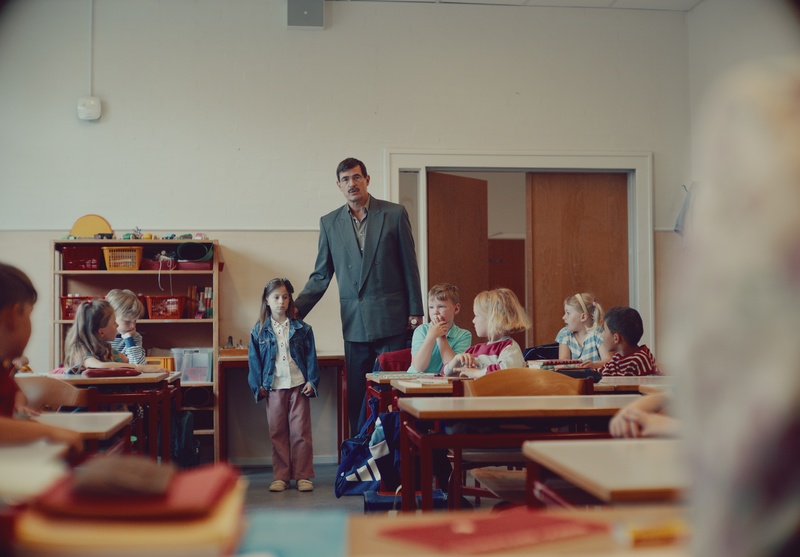
The story follows Maja, first as a six-year-old child uprooted from Yugoslavia during the region’s dissolution and later as an adult artist living in Denmark. Her family’s relocation is framed not as an escape but as a reluctant necessity. Two older brothers are left behind with the promise of reunion, a decision that quietly fractures the family long before borders or languages do. Janković places the audience inside Maja’s perspective early on, not through narration or obvious framing devices, but through proximity. The world feels unfamiliar because it is unfamiliar to her.
Denmark isn’t depicted as hostile, but it is never romanticized as a contrast. The film focuses on how displacement functions in practice: new systems, new expectations, and new struggles arrive all at once. Maja’s parents struggle with language and work, and those struggles are not isolated moments of hardship but persistent conditions. The film is clear-eyed about how quickly children in immigrant families are forced into adult roles. Maja learns Danish faster than her parents, and with that fluency comes responsibility. Translation becomes caretaking. Adaptation becomes an obligation.
Janković directs with restraint, allowing scenes to breathe without signaling to the audience what they should feel. There are no sweeping emotional cues or grand confrontations. Instead, tension builds through repetition: the same compromises are made again and again, and the same silences accumulate over time. This approach gives the film an earned credibility. The pain isn’t explosive; it’s enduring.
The performances anchor the film’s scope. Dejan Čukić and Nada Šargin portray Maja’s parents with an exhaustion that never turns into bitterness. Their love for their children is evident, but so is the cost of holding that love together under pressure. Zlatko Burić adds structure to the story’s adult world, embodying a life shaped by migration without leaning on an archetype. These are people who don’t articulate their suffering because doing so would serve no practical purpose.
As Maja grows older, the film shifts perspective without losing intimacy. Her success as an artist is presented without triumph. As an adult, she knows her role; she knows her passion must become her purpose. HOME is careful not to equate achievement with emotional resolution. Maja’s life in Denmark is stable, productive, and outwardly fulfilled, yet the film consistently returns to what was lost in the process. Gratitude and resentment coexist uneasily, and Janković allows both to remain valid without forcing reconciliation. This is one of the film's strongest aspects, showing what it means to be yourself while understanding what has held you back.
The film refuses to frame immigration as either heroic endurance or tragic victimhood; it’s something in between. There wasn’t a question of whether they should; it became a story of how to overcome the battles they faced in doing so. HOME understands displacement as more complex: a condition that reshapes identity rather than replaces it. The question of belonging is never resolved because it isn’t meant to be. Maja may live in Denmark, but not entirely. She belongs to Yugoslavia, but not in any present tense. The film treats this liminal space as permanent rather than transitional.
Where HOME may challenge some viewers is in its deliberate tempo and emotional understatement. There are no clear crescendos; the film progresses through observation rather than escalation. Some scenes linger longer than expected, and certain emotions repeat with minimal variation. This repetition mirrors the lived reality of displacement, where change is slow and resolution elusive.
Visually and structurally, the film avoids aesthetic expansion. Janković’s direction prioritizes clarity and honesty over stylistic signatures. This simplicity serves the story, even if it occasionally limits its cinematic scope. The focus remains firmly on character, memory, and consequence.
HOME succeeds because it trusts the audience to sit with that discomfort. It doesn’t ask for sympathy; it asks for recognition. By grounding its story in specificity while speaking to a broader generational experience, the film earns its place as more than just a reflection or person. It becomes a powerful examination of what families carry forward and what they leave behind, often without language for either.
Please visit https://linktr.ee/overlyhonestr for more reviews.
You can follow me on Letterboxd, Instagram, Twitter, and YouTube. My social media accounts can also be found on most platforms by searching for 'Overly Honest Reviews'.
I’m always happy to hear from my readers; please don't hesitate to say hello or send me any questions about movies.
[photo courtesy of THE PR FACTORY, NORDISK FILM PRODUCTION, TRUSTNORDISK, SEPTEMBER FILM]
DISCLAIMER:
At Overly Honest Movie Reviews, we value honesty and transparency. Occasionally, we receive complimentary items for review, including DVDs, Blu-rays, CDs, Vinyl Records, Books, and more. We assure you that these arrangements do not influence our reviews, as we are committed to providing unbiased and sincere evaluations. We aim to help you make informed entertainment choices regardless of our relationship with distributors or producers.
Amazon Affiliate Links:
Additionally, this site contains Amazon affiliate links. If you purchase through these links, we may receive a commission. This affiliate arrangement does not affect our commitment to honest reviews and helps support our site. We appreciate your trust and support as you navigate these links.
