The Aftermath Nobody Wants to Film
Still Standing
MOVIE REVIEWS
Still Standing
 -
- 

Genre: Documentary, Horror
Year Released: 2026
Runtime: 10m
Director(s): Victor Tadashi Suarez, Livia Albeck-Ripka
Where to Watch: shown at the 2026 Slamdance Film Festival
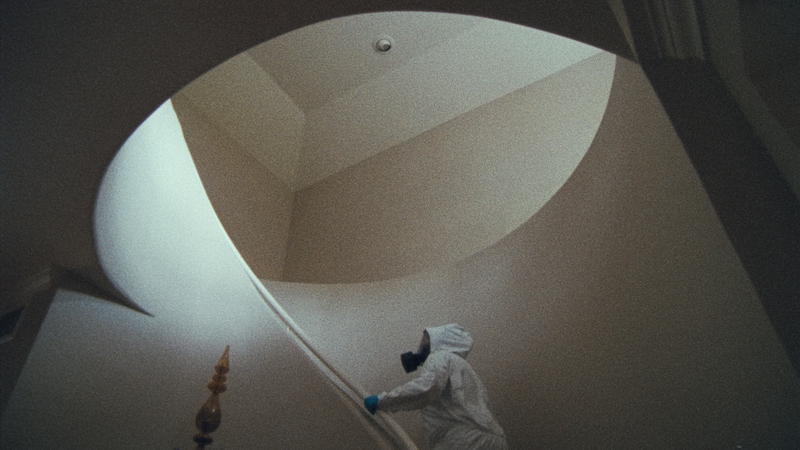
RAVING REVIEW: How do you measure what survival means when simply existing is treated like an accomplishment? STILL STANDING is one of those short documentaries that wastes absolutely no time pretending it needs more than it does. At ten minutes, it understands its responsibility, its limitations, and its strengths, and it never overreaches. Instead, it tightens its focus until the concept becomes unbearable in the best possible way. This isn’t a film about the exhibition of wildfire, not about flames swallowing neighborhoods, not about cinematic devastation. It is about what comes after, when the fires are gone, some of the houses are technically intact, and the danger is invisible.
Set in Altadena, California, in the aftermath of the Eaton fire, STILL STANDING examines a reality that sounds almost impossible until it becomes so horrifyingly clear. Thousands of homes remain standing after the blaze, yet they are contaminated with toxic ash. Insurance companies deem them habitable. Residents are told they can return. The question isn’t whether the house still exists, but whether living inside it is slowly poisoning you. That idea drives the entire film, and the directors wisely never dilute it.
What makes STILL STANDING so effective is how it reframes the idea of safety. These are not burned shells or condemned structures. These are bedrooms, kitchens, places filled with memory and the routine of life. The horror comes from realizing that comfort and danger now occupy the same physical space. A bed is no longer a refuge. Air is no longer neutral. The film leans into that tension without spelling it out, trusting the audience to sit with the discomfort.
Shot on 16mm, the image's grain matters. Texture isn’t an aesthetic flourish here; it’s thematic. The image itself feels contaminated, unstable, and almost apprehensive. It reinforces the idea that something is present even when you can’t just point to it. The choice to work with analog film isn’t meant to feel nostalgic. It feels deliberate, almost confrontational, as if the medium itself has been exposed to the same environmental threat as the subjects. That decision alone elevates the film beyond a standard-issue short documentary.
Structurally, the film is disciplined. In ten minutes, it contextualizes the disaster, introduces the dilemma, and leaves the audience with a lingering sense of unresolved injustice. There is no false closure here, because there is no closure in real life. Residents remain displaced. Insurance battles continue. Health risks remain undefined. The film doesn’t attempt to solve the problem. It exposes it, and respectively steps away.
One of the smartest choices STILL STANDING makes is refusing to personalize the story in a conventional way. There are no extended talking-head interviews designed to elicit tears. Instead, the focus remains on space, objects, and environments. This choice reinforces the idea that the loss here isn’t always dramatic or even visible. It’s quiet, procedural, and bureaucratic. People aren’t only losing their homes, but also their trust in the systems meant to protect them.
That approach may frustrate viewers who want more individual storytelling, and that is a fair critique. There is room for a feature-length expansion that dives deeper into personal narratives, medical consequences, and long-term displacement. But as a short, STILL STANDING makes the right call. It doesn’t try to be everything. It knows exactly what it wants to leave you thinking about, and it gets there with precision. The film focuses on one portion of the narrative.
The film also operates effectively in a space between genres. Labeled as nonfiction horror, that classification isn’t meant to be ironic. STILL STANDING genuinely plays like a horror film, just without a traditional antagonist. The threat is environmental, systemic, and largely invisible. The fear comes from realizing there are no clear rules, no regulatory thresholds, no definitive answers about safety. That uncertainty is more frightening than anything the film could stage.
STILL STANDING is a quietly devastating documentary short that understands the power of restraint. It turns homes into sites of unease, transforms environmental aftermath into psychological horror, and exposes the gap between institutional definitions of safety and lived reality. It does not raise its voice. It does not need to. The danger is already in the air.
Please visit https://linktr.ee/overlyhonestr for more reviews.
You can follow me on Letterboxd, Instagram, Twitter, and YouTube. My social media accounts can also be found on most platforms by searching for 'Overly Honest Reviews'.
I’m always happy to hear from my readers; please don't hesitate to say hello or send me any questions about movies.
DISCLAIMER:
At Overly Honest Movie Reviews, we value honesty and transparency. Occasionally, we receive complimentary items for review, including DVDs, Blu-rays, CDs, Vinyl Records, Books, and more. We assure you that these arrangements do not influence our reviews, as we are committed to providing unbiased and sincere evaluations. We aim to help you make informed entertainment choices regardless of our relationship with distributors or producers.
Amazon Affiliate Links:
Additionally, this site contains Amazon affiliate links. If you purchase through these links, we may receive a commission. This affiliate arrangement does not affect our commitment to honest reviews and helps support our site. We appreciate your trust and support as you navigate these links.
