A Civil Rights Landmark Reclaims Its Voice
The Lorraine
MOVIE REVIEW
The Lorraine
 -
- 

Genre: Documentary, History, Music
Year Released: 2026
Runtime: 1h 24m
Director(s): Sam Pollard
Where to Watch: shown at the 2026 Tribeca Festival
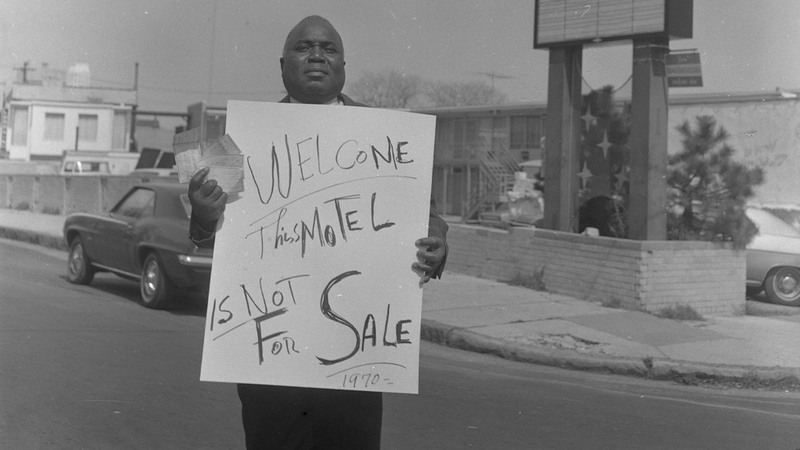
RAVING REVIEW: THE LORRAINE begins with a necessary moment of education. For many people, the Lorraine Motel exists in public memory as the place where Reverend Martin Luther King Jr. was assassinated, a site reduced in a way by history books, photographs, and collective grief to one balcony and one devastating moment. Sam Pollard’s documentary refuses to let that be the whole story. It doesn’t diminish the horror of what happened on April 4, 1968, but it pushes back against the way tragedy can consume everything that came before it. The film insists that the Lorraine wasn’t important because a great man died there. It was already important because Black life, artistry, entrepreneurship, safety, and resistance had been flourishing there long before the world turned its eyes toward Room 306.
That shift in focus gives THE LORRAINE its strength in its meaning. Pollard approaches the motel not just as a historical landmark but as a living institution shaped by Walter and Loree Bailey's care and understanding of what Black travelers needed during segregation. The film recognizes the practical and emotional weight of a Black-owned establishment offering shelter during the Jim Crow era. A room, a welcome, and the dignity of being treated as a person carried enormous meaning in a country designed to deny those basic comforts. THE LORRAINE understands that safety is political, especially when safety has been withheld by law, custom, and violence.
The documentary is most powerful when it brings to life a place many viewers may know only through still images. The Lorraine becomes alive in a way many have never seen it. Musicians arrive. Conversations happen. Black and white artists share creative space at a time when doing so carried real social tension. The film’s use of archival footage and music gives that history a pulse. There’s joy here; it becomes part of the record, proof that the Lorraine was a space where people weren’t just surviving racism, but building culture, community, and possibility inside a hostile world.
Pollard’s instincts are well-suited to the material. His work has often examined Black American history by refusing to separate political struggle from lived experience, and THE LORRAINE benefits from that wider view. The film doesn’t treat the Civil Rights Movement as a sequence of speeches and national turning points. It looks at the businesses, neighborhoods, and people that made organizing possible. That matters because change doesn’t only happen at podiums. They happen in trusted spaces where people can gather without having to explain their right to exist.
Walter and Loree Bailey emerge as more than the caretakers of a location that would later become part of history. The film frames them as builders of a rare kind of sanctuary, people whose work held cultural and social importance all at once. THE LORRAINE is careful to honor the emotional cost of being attached to a place that became known through violence. There’s something painful in watching a family’s legacy become overshadowed by the very event that cemented the site’s place in American memory. Pollard sits with that contradiction and lets it sting.
The film also has a strong musical undercurrent, not only because of the artists connected to the Lorraine, but because Memphis itself carries so much American music in its bones. THE LORRAINE doesn’t treat music as a sidebar to Civil Rights history. It understands that music, business, and political consciousness often occupied the same spaces. Hits were written, relationships formed, barriers crossed, and an institution like the Lorraine became part of a much larger cultural ecosystem.
The film has a sense of urgency by design, and that sometimes means certain areas feel compressed when they could sustain even deeper exploration. Walter and Loree Bailey’s story, the motel’s role in music history, the shifting memory of the assassination, and the transformation of trauma into public historical space could each support a documentary of its own. Pollard keeps the film focused, but there are moments when the material is so rich that the running time feels more like an invitation than a complete excavation.
THE LORRAINE doesn’t wander away from its purpose. It wants the viewer to leave with a revised understanding of a place that has too often been frozen at the moment of King’s death. Pollard’s documentary argues that remembering the assassination without remembering Lorraine’s life before it is its own kind of erasure. That point is so profound because the film never has to overstate it. The evidence is in the people, the music, the history, and the steady accumulation of details that make the motel feel present again.
What makes THE LORRAINE especially affecting is that it doesn’t ask viewers to choose between mourning and celebration. It holds both because the truth requires both. The assassination remains and always will be an open wound in American history. However, the film refuses to let that swallow the excellence that existed there before the bullet. That refusal feels profoundly important. Too often, Black history is taught through suffering first, with brilliance and self-determination treated as secondary. THE LORRAINE reverses that framing. It places life back at the center.
That makes the Lorraine feel painfully timeless in a way the film doesn’t have to force. This is a building tied to one of the worst moments in American history, yet its legacy has been reclaimed as something larger than the violence committed there. The motel became a museum, the site of an assassination became a place of education, and the memory of King’s final fight still gives modern movements a physical place to stand. That matters even more now, when the country seems determined to prove how far backward it can slide. We went from a president helping push through landmark civil rights legislation to an administration actively trying to dismantle the language, protections, and institutional commitments that grew from that struggle. The Tennessee Three, Representatives Justin Jones, Gloria Johnson, and Justin Pearson, gathering at the National Civil Rights Museum after being targeted for expulsion, make that connection impossible to ignore. The Lorraine isn’t just a reminder of what happened to King. It’s a reminder that the same battles over dignity, democracy, protest, representation, and who gets protected by power are still being fought in Tennessee and across the country. What was once marked by horror has become a starting point for resistance, and that reclamation gives the film some of its deepest moments.
The result is a documentary that feels restorative without becoming sentimental. Pollard doesn’t soften the violence of history, and he doesn’t pretend the Civil Rights Movement’s unfinished legacy can be resolved through remembrance alone. Instead, he shows how memory itself can be contested ground. Who gets remembered, what gets preserved, and which parts of a story are allowed to dominate all shape how the present understands the past.
THE LORRAINE is a moving act of reclamation, but it’s also a challenge. It asks why America so often remembers Black spaces only after tragedies bring them to attention. It asks what was lost when the Lorraine became known primarily as the site of an assassination instead of a thriving Black-owned institution where art, organizing, business, and community intersected. Most importantly, it gives Walter and Loree Bailey’s legacy room to stand beside the event that changed the motel forever. Pollard’s film doesn’t rewrite history. It widens the frame and, in doing so, restores a place that deserved to be remembered for more than the worst thing that happened there.
Please visit https://linktr.ee/overlyhonestr for more reviews.
You can follow me on Letterboxd, Instagram, Twitter, and YouTube. My social media accounts can also be found on most platforms by searching for 'Overly Honest Reviews'.
I’m always happy to hear from my readers; please don't hesitate to say hello or send me any questions about movies.
bAt Overly Honest Movie Reviews, we value honesty and transparency. Occasionally, we receive complimentary items for review, including DVDs, Blu-rays, CDs, Vinyl Records, Books, and more. We assure you that these arrangements do not influence our reviews, as we are committed to providing unbiased and sincere evaluations. We aim to help you make informed entertainment choices regardless of our relationship with distributors or producers.
Amazon Affiliate Links:
Additionally, this site contains Amazon affiliate links. If you purchase through these links, we may receive a commission. This affiliate arrangement does not affect our commitment to honest reviews and helps support our site. We appreciate your trust and support as you navigate these links.
