A Vampire Story With a Pulse
No Rest for the Wicked
MOVIE REVIEW
No Rest for the Wicked
 -
- 

Genre: Drama, Horror, Fantasy, LGBTQIA2S+
Year Released: 2026
Runtime: 1h 43m
Director: Kasper Kalle
Writers: Rasmus Birch, Kasper Kalle, based on the short story “Manor” by Karl Heinrich Ulrichs
Cast: Egor Venned, Pilou Asbæk, Sofia Nolsøe Mikkelsen, Jóhannes Haukur Jóhannesson, Kjartan Hansen
Where to Watch: shown at the 2026 Fantasia Film Festival
RAVING REVIEW: In NO REST FOR THE WICKED, the sea feels like a witness, a threat, a grave, and a promise all at once. That matters in a story where love has nowhere safe to go, where desire has to hide under weather, labor, prayer, and silence. Kasper Kalle’s Gothic vampire drama understands that repression doesn’t need to declare itself to become terrifying. Sometimes it’s in the space between two men standing too close. Sometimes it’s in the village watching. Sometimes it’s in the knowledge that the dead may have more freedom than the living.
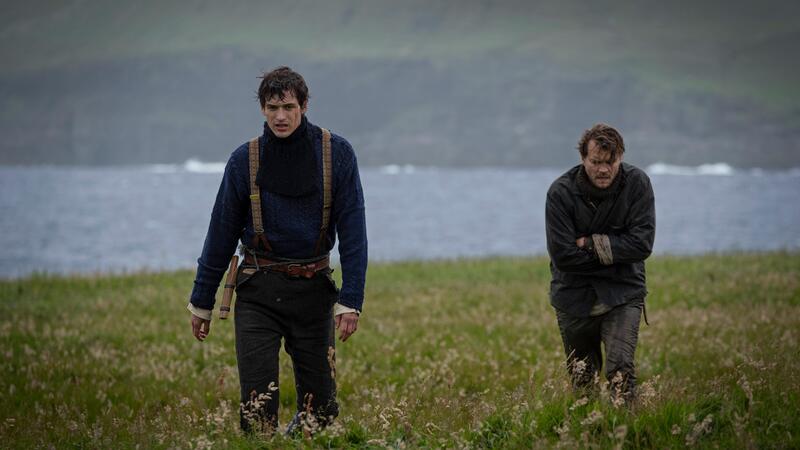
Set in the 19th-century Faroe Islands, the film follows Baldur, a young fisherman played by Egor Venned, whose life has been shaped by duty long before Helge arrives. Baldur isn’t someone searching for rebellion. He’s a son, a provider, a man bound to a small community where survival and obedience have become nearly indistinguishable. His mother, Alsa, played by Sofia Nolsøe Mikkelsen, depends on him. The island depends on everyone staying in their assigned place. Faith sits over daily life like another layer of fog.
Then Helge appears, and the film shifts without rushing. Pilou Asbæk brings a confidence to Helge that immediately separates him from the island’s expectations. He’s a whaler, a drifter, a stranger, and he carries the danger of possibility. Baldur sees something in him that the village can’t allow. The attraction between them isn’t treated as a modern romance set in period clothing. It grows through secrecy, glances, hesitation, and the burden of knowing that being seen could destroy them.
That restraint gives NO REST FOR THE WICKED an unexpected depth. The film isn’t interested in vampirism as a cheap shock factor. It pulls the vampire myth back toward grief, hunger, devotion, and panic. The monster isn’t simply the one who rises from the grave. The monster is also the system that decides love is more frightening than death.
That’s where the source material gives the film a deeper dimension. Karl Heinrich Ulrichs’ “Manor” isn’t just an old story to adapt. It’s a rare 19th-century Gothic text built around romantic love between men, and Kalle’s film seems to understand the responsibility of returning to that material. NO REST FOR THE WICKED treats queer longing as both intimate and mythic. Baldur and Helge’s relationship is human first. The film lets it become legend because forbidden love often has to become larger than life to survive the forces trying to erase it.
The Faroe Islands give the story an elemental cruelty. The cliffs, wind, water, and isolation make the characters feel small, yet the emotions feel enormous because there’s nowhere for them to go. The film’s harsh beauty supports the Gothic mood without overwhelming it. There’s a coldness here that doesn’t feel distant. It feels like something pressing against the skin.
Venned’s performance is quiet, and that kind of role can be harder than the showier one. Baldur has to carry longing, guilt, fear, duty, and obsession without turning every moment into an announcement. His attraction to Helge isn’t just sexual awakening; it’s a glimpse of another life, another self, maybe even another world beyond the moral framework he’s been handed. Asbæk gives Helge a more outward push, but the film works because their dynamic doesn’t reduce either man to a symbol.
The religious pressure surrounding them is familiar territory for queer Gothic horror, but NO REST FOR THE WICKED has the advantage of treating that as communal rather than abstract. The villagers don’t have to become zealots for the danger to register. Their fear grows from belief, control, superstition, and the need to preserve a social order already built on denial. Once tragedy strikes, the supernatural becomes the excuse for violence that was probably waiting for permission anyway.
Gothic romance asks for surrender, built around mood, ache, and dread more than constant incident. Anyone looking for a blood-heavy vampire film may find the early stretch too controlled, especially if they’re expecting the horror to arrive in a more direct form. NO REST FOR THE WICKED works best when judged on its own terms. It’s a tragic love story that uses horror to expose what society has already done to the people within it. The horror matters because the romance matters. The afterlife here isn’t just decoration on top. It’s the only space left when the living world refuses mercy. That gives the vampire material a real pulse. Blood becomes less important than return. The grave becomes less final than the village wants it to be.
NO REST FOR THE WICKED is the kind of film of cold hands and burning hearts, one where the most frightening idea isn’t that a lover might rise again, but that a community would rather face a monster than admit what created it. Kalle’s film grasps the deep sadness at the heart of Gothic horror. The dead are often feared only because they reveal what the living tried to hide. For Baldur and Helge, love is dangerous, but so is obedience. Between the two, only one offers any chance of being remembered.
Please visit https://linktr.ee/overlyhonestr for more reviews.
You can follow me on Letterboxd, Instagram, Twitter, and YouTube. My social media accounts can also be found on most platforms by searching for 'Overly Honest Reviews'.
I’m always happy to hear from my readers; please don't hesitate to say hello or send me any questions about movies.
[photo courtesy of OUTLIER PROJECTS, SF STUDIOS, TRUENORTH PRODUCTIONS]
DISCLAIMER:
At Overly Honest Movie Reviews, we value honesty and transparency. Occasionally, we receive complimentary items for review, including DVDs, Blu-rays, CDs, Vinyl Records, Books, and more. We assure you that these arrangements do not influence our reviews, as we are committed to providing unbiased and sincere evaluations. We aim to help you make informed entertainment choices regardless of our relationship with distributors or producers.
Amazon Affiliate Links:
Additionally, this site contains Amazon affiliate links. If you purchase through these links, we may receive a commission. This affiliate arrangement does not affect our commitment to honest reviews and helps support our site. We appreciate your trust and support as you navigate these links.
