When the Rules Change Sides
Head to Head
MOVIE REVIEWS
Head to Head
 -
- 

Genre: Dark Comedy, Drama, Satire
Year Released: 2026
Runtime: 1h 20m
Director: Ghasideh Golmakani
Writer: Ghasideh Golmakani
Cast: Mehrnoosh Satari, Saeed Naderi, Ebrahim Azizi, Amir Hajimohammadi, Reza Mohseni, Saman Mazloomi, Elaheh Farazmand, Bahador Bastanhagh, Mohammad Saeedi, Lili Farhadpour
Where to Watch: shown at the 2026 Toronto International Film Festival
RAVING REVIEW: The men in HEAD TO HEAD are perfectly willing to support their director's artistic vision until that vision becomes uncomfortable. Suddenly the clothes are too hot, the restrictions are unreasonable, their dignity is being challenged, and something they accepted in theory becomes much harder to tolerate once they're the ones expected to live with it. Ghasideh Golmakani doesn't exactly hide the point she's making, but this is one of those cases where subtlety might actually weaken the joke.
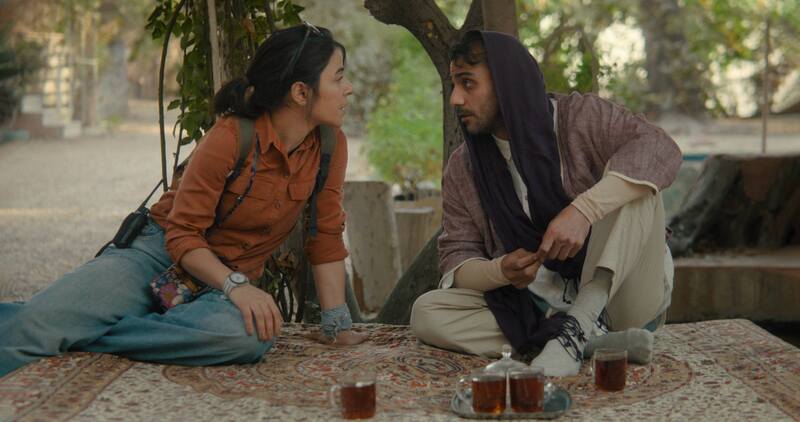
Bahar (Mehrnoosh Satari) is an established Iranian filmmaker preparing another production, and her male actors are eager enough to participate. Working with her carries the possibility of international attention, advancement, and perhaps opportunities that extend beyond Iran itself. Then comes her requirement! The men in her film will wear skirts and headscarves and remain dressed that way while working. The response initially has an almost predictable comic quality. These are actors, after all, so wardrobe is part of the job. Nobody wants to be the difficult person who jeopardizes an opportunity, particularly when Bahar's reputation could help careers. They agree, only to discover that agreeing to a restriction and spending hours actually obeying it are two completely different things.
That gap is where HEAD TO HEAD finds its purpose. Golmakani takes rules commonly imposed upon women and redirects them toward men who have had the luxury of viewing those rules from a distance. The clothing becomes hot and cumbersome. Appearance has to be monitored. Ordinary physical comfort becomes something another person gets to regulate, and complaints that might have sounded trivial before suddenly become matters of tremendous personal importance.
The satire doesn't depend on suggesting that putting on a headscarf for a film shoot somehow gives these men a complete understanding of women's lives. That would be far too simple, and the movie is smarter when it concentrates on the speed of their reaction instead. These men need remarkably little time before inconvenience becomes indignation. What’s been normalized for someone else feels outrageous the moment the expectation crosses the gender line.
Satari gives Bahar exactly the right amount of authority for that dynamic to work. She doesn't spend the film delivering speeches explaining the experiment or treating every complaint as an invitation for debate. Bahar is trying to make a movie, and that focus prevents HEAD TO HEAD from turning into 80 minutes of characters telling the film's themes to one another.
There's another layer in the power she holds as the director. The actors want something from her, which entangles their consent with ambition. They can refuse the costumes, but refusing may mean losing the role. They can complain, but complaining risks being labeled unprofessional. That imbalance allows Golmakani to move the satire beyond clothing and into the ways people rationalize uncomfortable systems when cooperation might benefit them. It also prevents Bahar from becoming an uncomplicated stand-in for righteousness. She's deliberately using her authority to create discomfort, and HEAD TO HEAD occasionally lets the tension around that decision exist without instantly resolving it. Turning oppression around doesn't automatically make the resulting power structure healthy, even when the reversal exposes something worth confronting.
The film-within-a-film setup is especially useful here because filmmaking already depends upon negotiated control. Directors tell actors what to wear, where to stand, how to move, and what parts of themselves must be altered for a role. HEAD TO HEAD pushes those demands just far enough that the men have to decide where professional obedience ends, and personal autonomy begins. Watching that boundary exist in real time is often funnier than any punchline. Pride becomes one of the movie's most reliable sources of comedy, particularly as the performers attempt to maintain their image while clearly growing more irritated. Their complaints can be perfectly reasonable on the surface, which is exactly what makes the situation effective. The audience can understand why they're uncomfortable while simultaneously recognizing the larger contradiction.
The easiest version of HEAD TO HEAD would have been just to establish the wardrobe reversal, spend the rest of the runtime watching men complain about it, and arrive at an obvious conclusion. The movie instead keeps pressure around the production itself, allowing artistic ambition, ego, institutional authority, and the possibility of outside attention to change what began as an internal conflict.
HEAD TO HEAD isn't simply saying that men would dislike being subjected to women's restrictions. Of course they would, and 80 minutes spent proving only that wouldn't be much of a movie. Golmakani is more interested in what people do after recognizing unfairness, especially when opposing it threatens their careers, their safety, or their ability to keep working. Some of the satire remains a little more generic than I would've preferred. The basic reversal is so understandable that certain conflicts underline an idea we've already grasped, and a few of the male reactions approach the kind of behavior designed primarily to make the point unmistakable. There were moments where I wanted Golmakani to trust the contradiction a little more rather than pushing it another step.
Saeed Naderi, Ebrahim Azizi, Amir Hajimohammadi, Reza Mohseni, and Saman Mazloomi each help create a sense of a production slowly becoming harder to control, rather than a single collective male reaction repeated across several characters. Elaheh Farazmand's assistant director, Saba, is also important because she occupies the area between supporting Bahar's intentions and dealing with the practical consequences of making the movie.
The production setting allows humor and anxiety to coexist without forcing a dramatic transformation between them. It can be absurd because the gender reversal exposes the absurdity already present in the original rule, then become genuinely threatening because that same reversal attracts attention from authorities capable of doing considerably more than shutting down a film shoot. Golmakani doesn't need to abandon the comedy for the danger to register. That's where the title becomes particularly effective. Everyone is positioned against someone else. Director against actors, artistic intention against reality, men against restrictions they've previously had little reason to challenge, filmmakers against authorities, and individual ambition against collective resistance. Nobody gets to remain on the sidelines once the experiment starts producing consequences.
HEAD TO HEAD is also interesting because its men aren't required to become enlightened converts for the satire to succeed. Human beings rarely experience hypocrisy, recognize it, and emerge with their politics transformed before lunch. Wounded pride, self-interest, fear, and professional ambition remain tangled together, making the discomfort more revealing than a neat change of heart ever could. Golmakani gets in, establishes the rules, lays down the gauntlet, lets the consequences grow, and leaves enough friction behind that the argument extends beyond the final scene.
HEAD TO HEAD is a surprisingly accessible political satire without stripping away what makes its subject serious. The image of men miserably adjusting skirts and headscarves in the heat can be funny. The laughter comes with an obvious question attached, though. If these restrictions become unbearable so quickly when applied to men, why has their burden on women been so easily accepted?
Golmakani doesn't need to provide the answer because the men's reaction has already done most of the work. HEAD TO HEAD uses discomfort as both the joke and the argument, then keeps pressing until everyone involved has to decide whether inconvenience is the real problem or whether they simply never objected to the rules when somebody else had to follow them.
Please visit https://linktr.ee/overlyhonestr for more reviews.
You can follow me on Letterboxd, Instagram, Twitter, and YouTube. My social media accounts can also be found on most platforms by searching for 'Overly Honest Reviews'.
I’m always happy to hear from my readers; please don't hesitate to say hello or send me any questions about movies.
[photo courtesy of DREAMLAB FILMS]
DISCLAIMER:
At Overly Honest Movie Reviews, we value honesty and transparency. Occasionally, we receive complimentary items for review, including DVDs, Blu-rays, CDs, Vinyl Records, Books, and more. We assure you that these arrangements do not influence our reviews, as we are committed to providing unbiased and sincere evaluations. We aim to help you make informed entertainment choices regardless of our relationship with distributors or producers.
Amazon Affiliate Links:
Additionally, this site contains Amazon affiliate links. If you purchase through these links, we may receive a commission. This affiliate arrangement does not affect our commitment to honest reviews and helps support our site. We appreciate your trust and support as you navigate these links.
