A Town Rarely Seen on Its Own Terms
Read Time:5 Minute, 14 Second
MOVIE REVIEW
Glendora
 –
– 


Genre: Documentary
Year Released: 2026
Runtime: 1h 14m
Director(s): Isabelle Armand
Where to Watch: shown at the 2026 Dances with Films New York
RAVING REVIEW: What does it mean to document a place without turning it into a character? That question sits quietly at the center of GLENDORA, not as a thesis statement but as a guiding principle. Isabelle Armand’s first feature documentary isn’t quite an exposé or even corrective; instead, it positions itself as a long conversation, one built over half a decade of presence, listening, and shared time. The result is a film that feels less like an argument and more like an invitation to witness a community on its own terms. I wasn’t sure what to expect before starting the film, and even after watching it, I was still left with a lingering sense of so many unknowns.
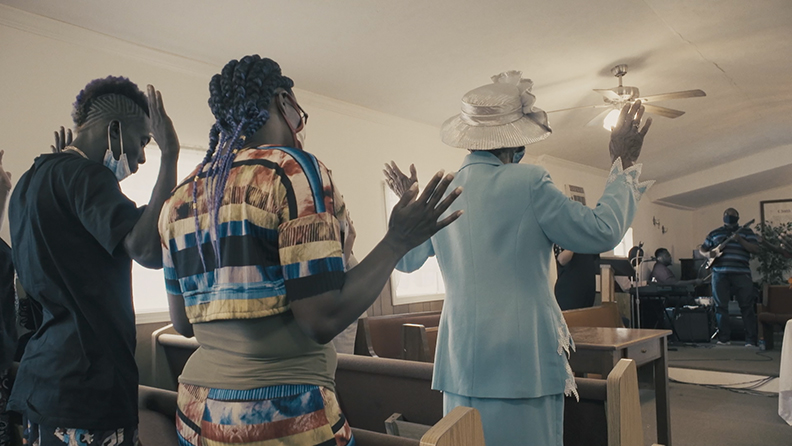
Set in the Mississippi Delta village of Glendora, a town with a population hovering around 160, the film resists the easy shorthand often applied to rural Southern communities, especially Black communities shaped by generations of economic neglect and racial injustice. GLENDORA isn’t interested in flattening its subjects into statistics or case studies. Instead, it moves through birthdays, graduations, funerals, music, and conversations that unfold without urgency. The town is never framed as a problem to be solved but as a living place with its own logic, contradictions, and cycles.
Armand’s approach is rooted in long-term collaboration, and that commitment shows in ways that are difficult to fake. Having begun filming in 2019 and remaining closely embedded through 2024, she builds a level of trust that allows people to speak with clarity and ease. These aren’t performances aimed at a distant audience; they feel like conversations meant to be preserved. The film’s structure reflects this ethos, weaving together voices across generations rather than centering a single narrative. Florida B. Smith’s recollections of sharecropping and memories surrounding Emmett Till sit alongside Blacmane Hayes’ reflections on gun violence and community responsibility. At the same time, Jefferey “Butchy” Rainey’s music provides both texture and emotional grounding.
One of GLENDORA’s strengths is its refusal to rush these stories into focused conclusions. The film understands that history, particularly lived history, doesn’t resolve itself within a single runtime. Instead of pushing toward catharsis, Armand allows moments to linger. This patience gives the documentary a sense of honesty that elevates it beyond surface-level observation. You’re not being told what to feel about Glendora; you’re being asked to spend time there.
The documentary is also careful in how it handles the broader historical context. References to racial injustice, economic abandonment, and systemic inequality are present but not foregrounded through archival footage or expert commentary. Instead, these forces emerge organically through memory and everyday reality. Mayor Johnny B. Thomas’s efforts to keep Glendora visible, including the establishment of a small Emmett Till museum, underscore how history remains active rather than settled. The past is not treated as background; it’s something the town continues to live with and respond to.
Music plays a particularly meaningful role, thanks to Butchy Rainey’s extensive contributions as both subject and soundtrack designer. His work doesn’t feel layered on for emotional effect; it grows directly out of the community being portrayed. Rap becomes a form of expression, mourning, ambition, and connection, reinforcing the film’s central idea that cultural wealth exists even in spaces marked by material scarcity.
GLENDORA favors simplicity. Armand’s background in documentary photography is evident in her framing, which often prioritizes stillness over movement. Shots of the Mississippi landscape aren’t romanticized, nor are they bleak. They function as context, grounding the stories in a physical environment shaped by both beauty and limitation.
Where GLENDORA may divide audiences is in its lack of a clear editorial stance. Some viewers may wish the film pushed harder, naming systems and accountability more explicitly. Armand’s choice to step back rather than intervene aligns with her collaborative intent, but it also means the film sometimes skirts the edges of analysis. For an audience seeking a sharper critique, this restraint may feel like a missed opportunity.
It’s difficult to argue with the integrity of the approach. GLENDORA is made with the people it portrays, not merely about them, and that distinction matters. The film never feels extractive or opportunistic. It treats its subjects as partners in storytelling, a choice reinforced by the fact that members of the Glendora Collaborative are actively involved in presenting the film at festivals and events.
GLENDORA does exactly what it sets out to do. It’s a thoughtful, powerful documentary that values trust over spectacle and presence over persuasion. It will hold your attention for days afterward, carrying with it the sense that you’ve been allowed into a place that rarely gets to speak for itself. That restraint, and the care behind it, are what make GLENDORA worth engaging with.
Please visit https://linktr.ee/overlyhonestr for more reviews.
You can follow me on Letterboxd, Instagram, Twitter, and YouTube. My social media accounts can also be found on most platforms by searching for 'Overly Honest Reviews'.
I’m always happy to hear from my readers; please don't hesitate to say hello or send me any questions about movies.
DISCLAIMER:
At Overly Honest Movie Reviews, we value honesty and transparency. Occasionally, we receive complimentary items for review, including DVDs, Blu-rays, CDs, Vinyl Records, Books, and more. We assure you that these arrangements do not influence our reviews, as we are committed to providing unbiased and sincere evaluations. We aim to help you make informed entertainment choices regardless of our relationship with distributors or producers.
Amazon Affiliate Links:
Additionally, this site contains Amazon affiliate links. If you purchase through these links, we may receive a commission. This affiliate arrangement does not affect our commitment to honest reviews and helps support our site. We appreciate your trust and support in navigating these links.


Happy
0 %

Sad
0 %

Excited
0 %

Sleepy
0 %

Angry
0 %

Surprise
0 %
 0
0
 0
0

Average Rating