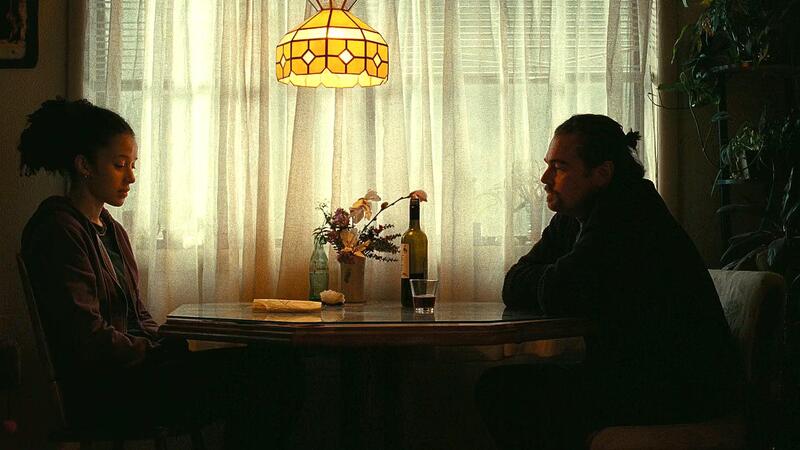
A Film Willing to Be Uncomfortable
Read Time:5 Minute, 15 Second
MOVIE REVIEW
One Battle After Another
 –
– 

Genre: Drama, Political Thriller
Year Released: 2025
Runtime: 2h 42m
Director(s): Paul Thomas Anderson
Writer(s): Paul Thomas Anderson
Cast: Leonardo DiCaprio, Sean Penn, Benicio Del Toro, Regina Hall, Teyana Taylor, Chase Infiniti
Where to Watch: available on digital, 4K UHD, Blu-ray™, and DVD now, order your copy here: www.amazon.com
RAVING REVIEW: What happens when the battles that defined you refuse to stay in the past? ONE BATTLE AFTER ANOTHER opens with that unease baked directly into its DNA, less interested in the romance of rebellion than in the emotional rubble left behind when ideology outlives usefulness. Paul Thomas Anderson doesn’t frame this story as a heroic return to purpose; he frames it as a reckoning, one that arrives whether the characters are ready for it or not.
Leonardo DiCaprio’s Bob isn’t the kind of protagonist who leans into the hero archetype. He’s tense, compromised, and exhausted by the weight of his own mythology. Anderson strips away any illusion that past radicalism grants moral authority in the present. Bob’s paranoia isn’t a quirk; it’s the result of a life spent waiting for consequences to catch up. DiCaprio plays him as someone constantly bracing for impact, even in moments of quiet, and that tension carries the film through its longest stretches.
The father-daughter relationship at the center of the film provides the film's most grounded emotional core. Chase Infiniti brings a sharp, self-possessed energy that prevents Willa from becoming a symbol or a plot device. She isn’t simply something Bob needs to rescue; she’s already living with the fallout of his choices. Anderson wisely avoids sentimental shorthand here. Their bond is functional, strained, and incomplete, shaped more by proximity than understanding. That restraint makes their separation feel earned rather than engineered.
Sean Penn’s antagonist doesn’t feel like a traditional villain so much as an embodiment of unresolved history. He represents the part of the past that never faded, never evolved, and never questioned itself. Penn plays the role with unsettling ease, projecting certainty where others show doubt. What makes the character effective isn’t menace alone, but clarity. He knows exactly who he is and what he wants, and that confidence becomes its own kind of threat in a film populated by people who no longer trust their own convictions.
Benicio Del Toro’s supporting role is where the film briefly allows itself a looseness that feels intentional rather than indulgent. His character injects a sense of warped perspective, someone who has survived long enough to stop pretending the world owes him coherence. Del Toro understands how to balance humor and weariness without undercutting the stakes, and his presence keeps the film from collapsing into self-seriousness.
Anderson’s direction is outward-facing, marking a clear evolution in his filmography. This isn’t an inward psychological study disguised as politics; it’s a film actively wrestling with consequences. The scope is large, but the focus remains stubbornly human. The runtime is demanding, but rarely careless. When the film slows, it does so to sit with discomfort rather than avoid it.
Where ONE BATTLE AFTER ANOTHER reaches slightly is in its balance. Certain moments are introduced with force, but not always given the same weight on the way out. Anderson seems more interested in accumulation than resolution, which can leave some characters feeling underexplored by design rather than oversight. That choice will frustrate viewers seeking symmetry, but it also reinforces the film’s central idea: lives shaped by ideology don’t wrap up the way everyone thinks they should.
The film's political magnitude is intentionally blunt, but not simplistic. Anderson isn’t interested in presenting a balanced debate or offering easy equivalencies. He’s interrogating the consequences of absolutism, regardless of where it originates. The film recognizes how movements toughen, how language becomes ritual, and how moral certainty can persist long after its context has disappeared. That examination feels timely without chasing thematic relevance.
What ultimately elevates ONE BATTLE AFTER ANOTHER is its refusal to romanticize endurance. Survival isn’t portrayed as victory, and persistence doesn’t equal growth. Characters carry forward not because they’ve learned the right lessons, but because stopping would require confronting what they’ve lost. Anderson doesn’t judge them, but he doesn’t absolve them either. He lets the weight sit.
ONE BATTLE AFTER ANOTHER earns its place as one of Paul Thomas Anderson’s most challenging works. It’s not as immediately accessible as some of his past films, and it doesn’t chase consensus. Instead, it commits to discomfort, to moral ambiguity, and to the idea that history doesn’t fade simply because we’re tired of it. It’s a film that understands how revolutions end not with triumph, but with people trying to live in what’s left behind.
Please visit https://linktr.ee/overlyhonestr for more reviews.
You can follow me on Letterboxd, Instagram, Twitter, and YouTube. My social media accounts can also be found on most platforms by searching for 'Overly Honest Reviews'.
I’m always happy to hear from my readers; please don't hesitate to say hello or send me any questions about movies.
[photo courtesy of WARNER BROS. HOME ENTERTAINMENT]
DISCLAIMER:
At Overly Honest Movie Reviews, we value honesty and transparency. Occasionally, we receive complimentary items for review, including DVDs, Blu-rays, CDs, Vinyl Records, Books, and more. We assure you that these arrangements do not influence our reviews, as we are committed to providing unbiased and sincere evaluations. We aim to help you make informed entertainment choices regardless of our relationship with distributors or producers.
Amazon Affiliate Links:
Additionally, this site contains Amazon affiliate links. If you purchase through these links, we may receive a commission. This affiliate arrangement does not affect our commitment to honest reviews and helps support our site. We appreciate your trust and support as you navigate these links.


Happy
0 %

Sad
0 %

Excited
0 %

Sleepy
0 %

Angry
0 %

Surprise
0 %
 0
0
 0
0


Average Rating