Vodou, Violence, and Visibility
Read Time:5 Minute, 34 Second
MOVIE REVIEWS
Black Zombie
 –
– 

Genre: Documentary, History, Horror
Year Released: 2026
Runtime: 1h 30m
Director(s): Maya Annik Bedward
Where to Watch: shown at the 2026 South by Southwest (SXSW) Film & TV Festival
RAVING REVIEW: The zombie you think you know isn’t even the beginning. That iconic imagery, cemented by Hollywood over decades, is only a drop in the bucket of the larger history that has, as per usual, been whitewashed and torn to pieces, becoming a shadow of its origins. The zombie doesn’t, and never has, belonged to Hollywood. That’s the quiet but powerful thesis at the heart of BLACK ZOMBIE, and Maya Annik Bedward wastes no time making that clear. This isn’t a nostalgic genre retrospective. It isn’t a love letter to gore. It’s a cultural excavation. And it digs deep.
At its core, BLACK ZOMBIE argues that what modern horror audiences treat as entertainment began as something far more intimate and painful. The film traces the zombies’ origins to Haiti, to the brutality of enslavement, to spiritual belief systems rooted in Vodou (yes, even this word has been reframed and shaped into something different, because that’s what pop culture does), and to a people who turned myth into metaphor for survival. Bedward reframes the zombie not as a mindless corpse, but as a symbol of dehumanization imposed by colonial violence. That shift in framing changes everything. It makes one of my favorite subgenres into something else entirely.
The documentary moves chronologically but never without thinking. It transitions from colonial Haiti to early exploitation cinema like WHITE ZOMBIE (an absolute underrated legend), then through NIGHT OF THE LIVING DEAD and THE SERPENT AND THE RAINBOW, showing how the myth was reshaped, diluted, monetized, and rebranded to the point where THE WALKING DEAD has become a machine churning out spinoffs regularly. But this isn’t just about film history. It’s about ownership.
The inclusion of voices like Tananarive Due adds intellectual clarity to the conversation. She doesn’t just contextualize horror; she grounds it in racial politics and cultural erasure. Erol Josué and Mambo Labelle Déese Botanica bring spiritual and historical authority, keeping the film anchored in lived experience rather than in academia. Even genre legends like Tom Savini and Slash aren’t there for novelty. They function as connective tissue between pop culture and its origins.
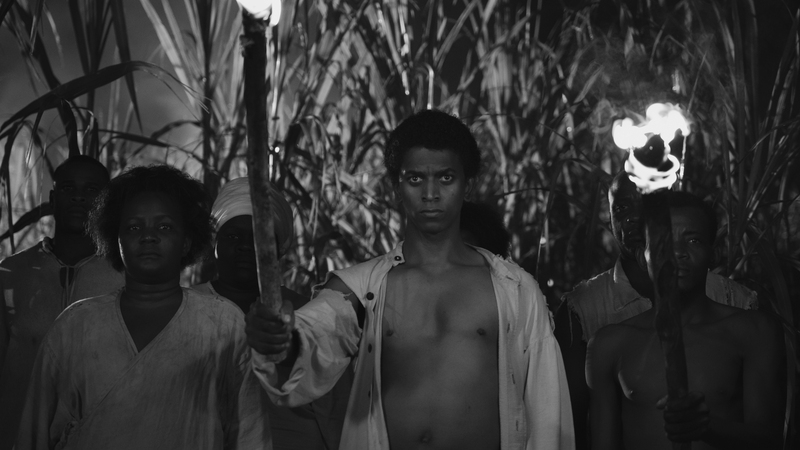
What enhances BLACK ZOMBIE beyond a cultural essay is its tone. Bedward doesn’t approach the material with anger alone. There’s grief here, yes. There’s a critique. But there’s also reclamation. The film insists that Haiti’s revolutionary history, the only successful slave uprising that led to an independent Black republic, isn’t a footnote. It’s foundational. And that context reframes the zombie entirely. Suddenly, the monster isn’t the horror. The system that created it is.
The documentary avoids sterile talking-head fatigue. Cinematography from Duraid Munajim and Ricardo Diaz gives the Haitian sequences texture and presence. Cane fields don’t just serve as historical reference points; they feel alive with memory. The use of archival imagery blends with modern footage, and the editing keeps momentum without feeling rushed. The score and music choices add subtle influence. They don’t manipulate emotion, but they underscore it. There’s restraint in the construction. Bedward trusts the material.
What stuck with me most is how BLACK ZOMBIE reframes horror fans. It doesn’t accuse viewers of complicity, but it does ask them to reconsider what they’re consuming. It forces the uncomfortable realization that one of the most profitable monsters in cinematic history was built from cultural trauma. As mentioned above, it takes what is probably my favorite subgenre of horror and makes me think about it in terms that I hadn’t before. The film doesn’t leave you in despair. It closes on reclamation. On resilience. On pride. By repositioning the zombie as a symbol of resistance rather than decay, Bedward shifts the genre’s axis. After watching this, it’s difficult to see undead hordes the same way again. They carry a deeper, more vital history.
What makes BLACK ZOMBIE so powerful is how it turns what could have been a dry historical lecture into something pressing and ironically alive. Bedward understands that history only sticks with you if you feel it, and she makes you feel it. The film balances knowledge with impulse, weaving archival analysis, cultural testimony, and horror history into something that never drags. It’s educational without being clinical. It’s entertaining without trivializing its subject. That’s a difficult balance to strike, especially when dealing with enslavement, appropriation, and generational trauma. But BLACK ZOMBIE manages to inform, unsettle, and inspire all at once. It doesn’t just teach you something new. It changes how you see something familiar.
BLACK ZOMBIE isn’t just informative. It’s corrective. It challenges horror culture to acknowledge its roots and gives Haiti its narrative back. This is exactly the kind of documentary that belongs in a spotlight section at a festival as prestigious as SXSW. It engages genre fans, historians, and general audiences without alienating any of them. The film is confident, grounded, and resonant. It doesn’t feel like a lecture. It feels like restoration.
Please visit https://linktr.ee/overlyhonestr for more reviews.
You can follow me on Letterboxd, Instagram, Twitter, and YouTube. My social media accounts can also be found on most platforms by searching for 'Overly Honest Reviews'.
I’m always happy to hear from my readers; please don't hesitate to say hello or send me any questions about movies.
[photo courtesy of MANUELA HIDALGO, THIRD CULTURE MEDIA, CBC DOCS]
DISCLAIMER:
At Overly Honest Movie Reviews, we value honesty and transparency. Occasionally, we receive complimentary items for review, including DVDs, Blu-rays, CDs, Vinyl Records, Books, and more. We assure you that these arrangements do not influence our reviews, as we are committed to providing unbiased and sincere evaluations. We aim to help you make informed entertainment choices regardless of our relationship with distributors or producers.
Amazon Affiliate Links:
Additionally, this site contains Amazon affiliate links. If you purchase through these links, we may receive a commission. This affiliate arrangement does not affect our commitment to honest reviews and helps support our site. We appreciate your trust and support as you navigate these links.


Happy
0 %

Sad
0 %

Excited
0 %

Sleepy
0 %

Angry
0 %

Surprise
0 %
 0
0
 0
0


Average Rating