History Isn’t Neutral, and This Film Knows It
Read Time:5 Minute, 55 Second
MOVIE REVIEW
təm kʷaθ nan – Namesake
 –
– 
Genre: Documentary
Year Released: 2026
Runtime: 1h 16m
Director(s): ƛɛsla Dr. Evan Adams, t̓agəm Eileen Francis
Where to Watch: shown at the 2026 Hot Docs Canadian International Documentary Festival
RAVING REVIEW: There’s a moment early on in this story where it becomes clear this isn’t about a name change on some surface level. It’s about who gets to define reality in a place that’s already been defined for lifetimes. That distinction reshapes everything that follows. What could have been a civic debate becomes something far more personal, rooted in memory, power, and the long shadow of decisions that were never meant to be questioned.
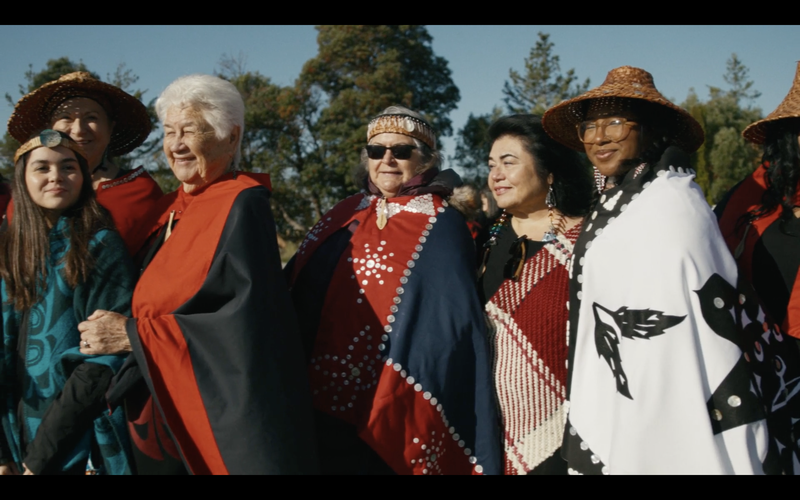
təm kʷaθ nan – NAMESAKE builds its cornerstone on a specific request from the Tla’amin Nation, but it doesn’t frame that request as the beginning of the story. It treats it as the continuation of an ongoing process that has lasted for generations. That approach matters because it shifts the perspective away from reaction and toward continuity for those who have called this area home for a time before time. The conversation unfolding on screen isn’t new, but what's happening is that it’s finally being heard in a way that can’t be ignored.
What the film does particularly well is resisting turning this into a binary. There are voices in favor, voices against, and plenty caught somewhere in between, but the film never reduces those positions into hatred. Instead, it lets people speak long enough for contradictions to surface. That patience pays off. You start to see how deeply embedded certain perspectives are, not because they’re inherently malicious, but because they’ve gone unchallenged for so long that they feel like fact. In the end, though, the reality is that this should never have become a debate. The whitewashing and colonialism that happened across this country was one of the most egregious “non-violent” acts that has occurred.
The use of archival material and oral history isn’t treated as supplemental. It’s central to the film's message. The documentary doesn’t present history as something distant or settled. It presents it as active, shaping the present moment in ways that are still being negotiated. That creates a constant tension between what is documented and what has been lived, especially when they don’t align. The result is a film that doesn’t just inform, it recalibrates how you interpret the information being presented.
There’s also a deliberate choice in how the filmmakers position themselves within the story. This isn’t an outside perspective trying to interpret a community from a distance. It’s embedded in the place it’s documenting, which gives it a level of specificity that can’t be faked. You feel that in the way conversations happen, in the discomfort that isn’t edited away, and in the refusal to smooth over moments that might challenge the audience.
Even if you’re not familiar with the specific history of the area of tiskʷat (Powell River) or the Tla’amin Nation, the broader questions still hit you hard. What does it mean to live in a place that carries a name tied to harm? What responsibility do current residents have to that history? And what does reconciliation actually look like when it moves beyond language and into action? Those questions extend far beyond this one community, which is why the film’s scope feels larger than its setting.
What makes that even more frustrating is the argument from some current residents that this is the only name they’ve ever known, as if familiarity somehow outweighs history. That perspective feels hollow when placed against the reality the film presents. A few decades of recognition cannot stand on equal footing with generations of identity, language, and lived experience that existed long before that name was imposed. The idea that comfort should take priority over correction exposes just how deeply normalized that erasure has become. A name isn’t just a label; it carries memory, meaning, and ownership. To insist on keeping a name tied to harm because it feels familiar is to choose convenience over truth. The film doesn’t need to argue that point aggressively, because the imbalance speaks for itself. What’s being asked isn’t a loss; it’s an acknowledgment. And the resistance to that acknowledgment reveals how difficult it still is for some to accept that the history they inherited is incomplete at best, and damaging at worst.
The structure leans into accumulation rather than escalation. There’s no single turning point that defines the film. Instead, it builds through conversations, meetings, and personal reflections that gradually reshape your understanding of what’s at stake. That approach mirrors the real-world process it’s documenting. Change doesn’t happen in one moment; it happens through repeated engagement, disagreement, and persistence.
What makes təm kʷaθ nan – NAMESAKE stand out is how it handles the weight of the reality that it presents. It doesn’t push for a specific emotional response, and it doesn’t try to package its ideas into something easily digestible. It presents the reality of the situation as it exists, with all its complexity, discomfort, and urgency intact.
By the end, the title itself takes on a different meaning. It’s not just about what a place is called. It’s about who gets to carry that name forward, and what they choose to do with it once they understand what it represents. This isn’t a film that tells you what to think. It makes it harder to avoid thinking about it at all.
Please visit https://linktr.ee/overlyhonestr for more reviews.
You can follow me on Letterboxd, Instagram, Twitter, and YouTube. My social media accounts can also be found on most platforms by searching for 'Overly Honest Reviews'.
I’m always happy to hear from my readers; please don't hesitate to say hello or send me any questions about movies.
[photo courtesy of TELUS ORIGINALS]
DISCLAIMER:
At Overly Honest Movie Reviews, we value honesty and transparency. Occasionally, we receive complimentary items for review, including DVDs, Blu-rays, CDs, Vinyl Records, Books, and more. We assure you that these arrangements do not influence our reviews, as we are committed to providing unbiased and sincere evaluations. We aim to help you make informed entertainment choices regardless of our relationship with distributors or producers.
Amazon Affiliate Links:
Additionally, this site contains Amazon affiliate links. If you purchase through these links, we may receive a commission. This affiliate arrangement does not affect our commitment to honest reviews and helps support our site. We appreciate your trust and support as you navigate these links.


Happy
0 %

Sad
0 %

Excited
0 %

Sleepy
0 %

Angry
0 %

Surprise
0 %
 0
0
 0
0

Average Rating