Kaiju Chaos Through a Different Lens
Read Time:5 Minute, 45 Second
TV SERIES REVIEW
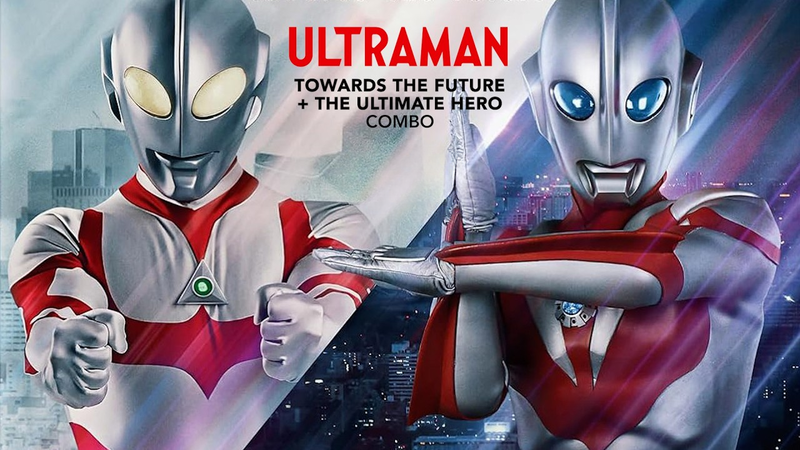
Ultraman: Towards the Future + Ultraman: The Ultimate Hero Complete Series Combo
 –
– 

Genre: Action, Adventure, Sci-Fi, Television
Year Released: 1990 / 1993, 2026 Blu-ray
Runtime: 10h 50m
Director(s): Andrew Prowse, various / King Wilder, various
Cast: Dore Kraus, Gia Carides, Ralph Cotterill / Kane Kosugi, Harrison Page, Robyn Bliley
Where to Watch: available now, order your copy here: www.moviesunlimited.com or www.amazon.com
RAVING REVIEW: There’s a strange… I’m not sure what to call it that runs through both of these series, and it’s not just tied to the monsters or the extravaganza. It comes from the sense that you’re watching a franchise redefine itself in real time, stepping outside its comfort zone and testing whether its identity can survive that shift. Sometimes it works. Sometimes it doesn’t. That push and pull ends up defining the entire experience.
ULTRAMAN: TOWARDS THE FUTURE feels like the more confident of the two, even when it struggles. There’s a clarity to its setup that gives it a stronger foundation. Jack Shindo’s connection to Ultraman Great isn’t treated as a gimmick but as a core element of the narrative, something the series returns to with purpose. The early focus on Gudis, a threat that operates as both a physical monster and a spreading virus, adds a layer of cohesion that carries the first half of the series. It gives the story something to build around instead of just reacting to whatever creature shows up next.
That structure matters, especially in a format that leans heavily on episodic storytelling. When the series eventually shifts away from that central conflict, the change is noticeable. The standalone encounters still deliver the expected elements, the fights, the transformations, the escalating stakes, but they don’t carry the same narrative significance. It becomes more familiar, more in line with what audiences expect from the franchise, but also less focused.
Even with that shift, there’s an underlying sense that the series understands what makes Ultraman work. The balance between human drama and larger-than-life conflict isn’t always perfect, but it’s present. The UMA team, while occasionally uneven in their writing, feels like more than just background support. There’s an attempt to ground their involvement, to make their actions feel connected to the broader situation rather than exist solely to set up the next battle.
The production itself reflects that ambition. Filmed in Australia, it has a distinct visual identity from its Japanese counterparts, yet it doesn’t abandon the core aesthetic. The practical effects, particularly the monster designs, still lean into the franchise's tactile, suit-based approach. They’re not flawless, and at times the limitations are obvious, but there’s a sincerity in how they’re presented that keeps them engaging.
ULTRAMAN: THE ULTIMATE HERO takes a different approach, and that difference is more than apparent. Where TOWARDS THE FUTURE feels like an adaptation, this one feels more like an attempt to translate the formula directly into a new context. The structure is more rigid, more episodic, and more reliant on the familiar. Each encounter follows a recognizable tempo, and while that consistency can be comforting, it also limits how much the series can evolve.
Kenichi Kai’s role as the host of Ultraman Powered doesn’t carry the same importance as Shindo’s. The connection is there, but it’s less examined. It functions as a mechanism rather than a relationship. That distinction affects how the series handles its emotions. They’re present, but they rarely land with the same impact because they’re not as deeply rooted in character development.
That’s not to say it lacks appeal. The monster designs are often impressive, with a level of detail that stands out even when the movement feels restricted. The visual effects, while dated, show an effort to push beyond what the series had done before. There’s a clear attempt to elevate the material, even if the execution doesn’t always match that ambition.
Watching both series together creates a contrast that’s hard to ignore. One leans into its adaptation, finding ways to reshape the formula while maintaining its core. The other sticks closer to tradition but struggles to translate it effectively into a different production environment. Neither approach fully succeeds, but both offer insight into the flexibility of the Ultraman concept.
The combined set itself benefits from that contrast. It doesn’t present a single, unified vision of Ultraman. Instead, it highlights two distinct attempts to expand the franchise’s reach. For longtime fans, that alone adds value. It’s a chance to see how the series evolved during a period where it was experimenting with its identity on a global scale.
That’s ultimately where this collection finds its place, not as a definitive version of the franchise, but as a snapshot of its willingness to take risks. Some of those risks paid off. Others didn’t. But the attempt itself is what makes these series worth revisiting. There’s a certain appreciation that comes with that context. Even when the execution falls short, the intent is clear. These were projects built on the idea that Ultraman could exist beyond its established boundaries, that its core elements could adapt to new audiences and storytelling styles. That idea doesn’t always come together here, but it’s close enough to leave an impression. The result is uneven, sometimes frustrating, but rarely without interest for a franchise built on transformation, which feels fitting.
Please visit https://linktr.ee/overlyhonestr for more reviews.
You can follow me on Letterboxd, Instagram, Twitter, and YouTube. My social media accounts can also be found on most platforms by searching for 'Overly Honest Reviews'.
I’m always happy to hear from my readers; please don't hesitate to say hello or send me any questions about movies.
[photo courtesy of MILL CREEK]
DISCLAIMER:
At Overly Honest Movie Reviews, we value honesty and transparency. Occasionally, we receive complimentary items for review, including DVDs, Blu-rays, CDs, Vinyl Records, Books, and more. We assure you that these arrangements do not influence our reviews, as we are committed to providing unbiased and sincere evaluations. We aim to help you make informed entertainment choices regardless of our relationship with distributors or producers.
Amazon Affiliate Links:
Additionally, this site contains Amazon affiliate links. If you purchase through these links, we may receive a commission. This affiliate arrangement does not affect our commitment to honest reviews and helps support our site. We appreciate your trust and support as you navigate these links.


Happy
0 %

Sad
0 %

Excited
0 %

Sleepy
0 %

Angry
0 %

Surprise
0 %
 0
0
 0
0


Average Rating