
Chicago Becomes an Audition
Read Time:6 Minute, 22 Second
MOVIE REVIEW
Hekla
 –
– 

Genre: Comedy, Drama
Year Released: 2026
Runtime: 1h 29m
Director: Michael Glover Smith
Writers: Michael Glover Smith, Elizabeth Stam
Cast: Elizabeth Stam, Mary Tilden, Brookelyn Hebert, Sadieh Rifai, Sadie Rogers, Grant Carriker, Conor Foley, Wendy Robie, Daryl Anisfeld, Susaan Jamshidi, Emily Lape, Harper McCoy, Sandy Gulliver
Where to Watch: West Coast premiere at the 2026 Dances with Films Los Angeles
RAVING REVIEW: Some careers ask people to be rejected over and over again and then call it persistence. HEKLA understands that humiliation, hope, and performance aren’t separate parts of an actor’s life so much as overlapping fronts, each one rolling in before the last has moved on. Michael Glover Smith’s film follows Hekla Gudmunsdottir across one hectic Chicago day, sending her through auditions, headshots, relationship fallout, old insecurities, new humiliations, and an evening performance of LADY MACBETH in a dive bar. The result is a funny, bruised, and deeply lived-in portrait of an artist trying to believe in herself while the world keeps offering maybe, later, no, and we’ll be in touch.
Elizabeth Stam plays Hekla with a presence that makes the film work. A one-day character study can become exhausting fast if the person at the center is only a bundle of quirks or a symbol of frustration. Stam gives Hekla something more interesting. Comic timing that keeps shifting into panic, confidence that arrives half a second before doubt, and a face that can turn an awkward pause into a private disaster. She’s not playing a glamorous version of the struggling actor. She’s playing someone who has built an entire identity around showing up, even when showing up has started to feel like a dare.
The film’s day-in-the-life format gives HEKLA its drive without making it feel forced. Hekla has four auditions, new headshots, a relationship she’s trying not to think about, and a Shakespeare performance waiting at the end of the night. That could easily become a stack of incidents instead of a story, but Smith keeps the film moving through emotional accumulation. Each stop leaves a mark. A bad audition doesn’t vanish when Hekla exits the room. A conversation doesn’t pause just because there’s another appointment. Every scene adds to the sense of someone trying to outrun an internal monologue that keeps catching up with her.
Chicago is more than scenery here, and the film has a refreshing sense of the city as something practical, frustrating, beautiful, and constantly in motion. The trains, sidewalks, bars, waiting rooms, and performance spaces aren’t arranged as a perfect background. They feel like places an actor would actually come across while spending a day chasing work and trying not to unravel. HEKLA captures the specific type of exhaustion of moving through a city with too much in your head and too little time between obligations.
The black-and-white imagery, broken by segments of color during dream and performance-driven moments, gives the movie one of its most effective formats. It works because it isn’t merely decorative. In the monochrome stretches, Hekla’s life has a raw, slightly drained immediacy. She’s hustling, waiting, adjusting, apologizing, pretending to be fine, and trying to calculate how much of herself each room wants. When color arrives, it doesn’t feel like escape. It feels like access. Those moments suggest that Hekla may be most alive when she’s performing, which is both thrilling and a little sad.
Smith and Stam’s script is especially sharp in the audition scenes because it understands the power imbalance of those rooms. Actors are asked to be vulnerable on command, adaptable without complaint, memorable without seeming needy, and resilient enough to accept indifference as part of the job. HEKLA finds comedy in that absurdity, but it doesn’t soften the fact that it's draining. One audition asks too much. Another offers too little guidance. Others force Hekla to shape herself around somebody else’s vague idea of what they want. The film lets those scenes be funny without reducing them to sketches.
Mary Tilden’s Tyler provides the movie a welcome counterpoint. Their relationship with Hekla isn’t treated as a side arc waiting to be resolved between auditions. It’s part of the same question the film keeps asking. What happens when someone’s pursuit of creativity begins to demand sacrifices they can’t measure? Tilden brings a steadiness that works well against Stam’s restlessness, and their scenes together avoid blame. HEKLA is honest enough to admit that ambition can be inspiring from a distance and exhausting up close.
The supporting cast adds flavor without overwhelming the film’s focus. Brookelyn Hebert, Sadieh Rifai, Sadie Rogers, Grant Carriker, Conor Foley, and the ensemble around Hekla’s professional life help create a world where every interaction has the potential to become a test. Wendy Robie’s narration adds an off-kilter theatrical quality that fits the movie’s interest in performance as both refuge and trap. The voiceover could have felt forced in a less confident film. Here, it gives the story an observant pulse, as though Hekla’s day is being watched by some amused theater ghost who knows exactly how difficult artists make their own lives.
The final stretch matters so much because HEKLA doesn’t treat performance as a cure. Hekla doesn’t get a single perfect speech that resolves her career, love life, insecurities, and artistic hunger. What she gets is the chance to stand in front of people and keep going. That may sound insignificant, but the film has spent nearly 90 minutes showing why it isn’t. By the time she reaches that Shakespeare performance, the act of continuing feels like a victory!
HEKLA works because it never loses sight of the person beneath the performer. The film is generous toward actors without romanticizing the grind, funny without turning struggle into a punchline, and playful without letting style overpower character. Stam is terrific, and Smith builds the film around her in a way that feels collaborative rather than ornamental. HEKLA is a Chicago artist with scraped knees, laughter, and a stubborn belief that chasing the work still matters, even when the work keeps making you prove it.
Please visit https://linktr.ee/overlyhonestr for more reviews.
You can follow me on Letterboxd, Instagram, Twitter, and YouTube. My social media accounts can also be found on most platforms by searching for 'Overly Honest Reviews'.
I’m always happy to hear from my readers; please don't hesitate to say hello or send me any questions about movies.
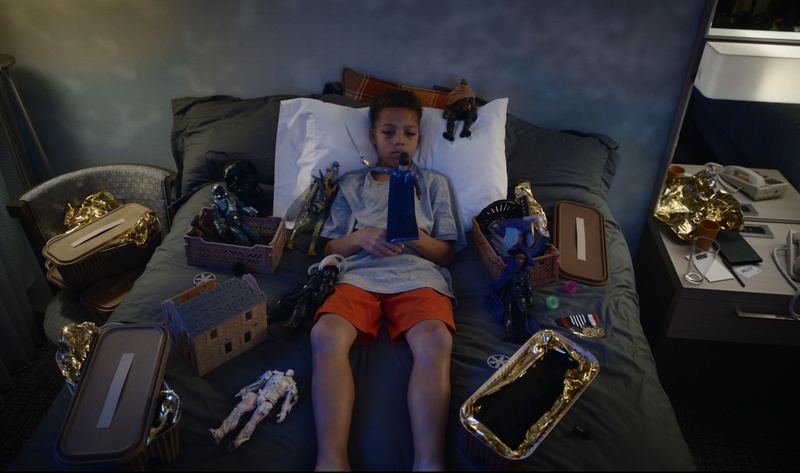
[photo courtesy of SWEET VOID CINEMA]
DISCLAIMER:
At Overly Honest Movie Reviews, we value honesty and transparency. Occasionally, we receive complimentary items for review, including DVDs, Blu-rays, CDs, Vinyl Records, Books, and more. We assure you that these arrangements do not influence our reviews, as we are committed to providing unbiased and sincere evaluations. We aim to help you make informed entertainment choices regardless of our relationship with distributors or producers.
Amazon Affiliate Links:
Additionally, this site contains Amazon affiliate links. If you purchase through these links, we may receive a commission. This affiliate arrangement does not affect our commitment to honest reviews and helps support our site. We appreciate your trust and support as you navigate these links.


Happy
0 %

Sad
0 %

Excited
0 %

Sleepy
0 %

Angry
0 %

Surprise
0 %
 0
0
 0
0


Average Rating