Pirate Radio Gets Its Due
Read Time:6 Minute, 27 Second
MOVIE REVIEW
40 Watts from Nowhere
 –
– 


Genre: Documentary
Year Released: 2026
Runtime: 1h 29m
Director: Sue Carpenter
Where to Watch: opens on July 17, 2026, at DCTV, followed by other cities with fall digital and physical releases
RAVING REVIEW: Radio used to feel like stepping into a different world, not the safe, algorithm-approved kind of discovery where a platform decides what you might tolerate next, but the version where a song could arrive without warning, from someone you’d never expect, through a signal that barely had permission to exist. 40 WATTS FROM NOWHERE understands that, and its best moments don’t just explain why a pirate radio station mattered; it explained how radio feels physical, messy, cramped, reckless, and alive.
Sue Carpenter’s documentary looks back at KBLT, the 40-watt pirate radio station she started in 1995 and ran out of her Silver Lake apartment closet in Los Angeles. Carpenter was 28, working as a secretary and trying to make her way as a journalist when frustration with commercial radio turned into action. Instead of complaining about what radio had become, she built her own station. She invited musicians, friends, eccentrics, and true believers into her home to play whatever they wanted. It was illegal, impractical, and probably exhausting. It also sounds like the kind of thing people spend the rest of their lives grateful they were foolish enough to try.
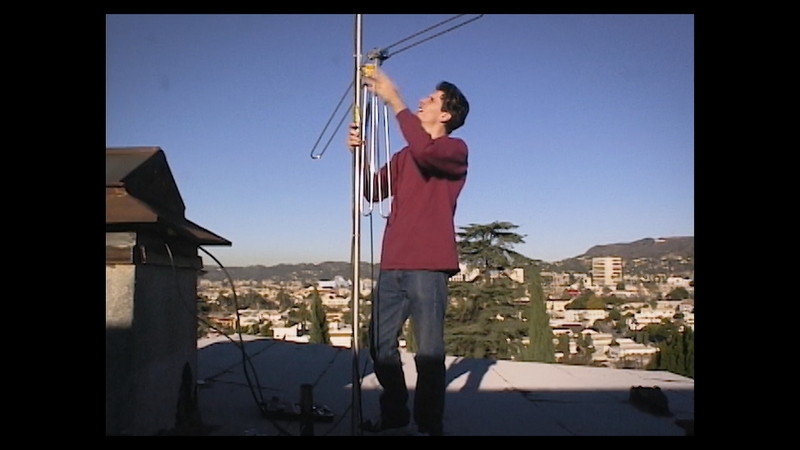
The documentary is built around 12 hours of 1998 footage that former KBLT DJ Robert Sullivan shot and later rediscovered. That gives 40 WATTS FROM NOWHERE its reason for being. Without that footage, this could’ve been a nostalgic talking-head documentary about a short-lived journey. With it, the film has a pulse. We see the apartment, the closet, the equipment, the records, the bodies squeezing through small spaces, the low-budget chaos of a community held together by cables, noise, and the belief that the airwaves shouldn’t belong only to whoever can afford them.
Carpenter and editor Amanda Laws don’t treat that footage like an archival extra. They let it carry the story. KBLT doesn’t look mythic in those images. It looks cluttered, overheated, and mildly unsafe in a way that makes the legend more appealing rather than less. The documentary captures how much of underground culture comes from people doing things before they’re prepared, funded, or given permission. KBLT wasn’t some polished countercultural institution. It was a closet with a reach.
The list of voices connected to the station gives the documentary obvious music-history appeal. Mike Watt, Keith Morris, Don Bolles, Bob Forrest, Tom Morello, and others help situate KBLT within a larger Los Angeles ecosystem of punk, alternative rock, underground art, and local resistance to corporate interests. The Red Hot Chili Peppers playing live in Carpenter’s living room and Mazzy Star headlining a benefit for the station’s legal defense are the kind of details that sound almost too good to be true. The film is smart enough not to lean only on celebrity-adjacent moments. The real story is less about famous people passing through and more about why a station like this could make both famous and unknown voices feel like they're on the same frequency.
40 WATTS FROM NOWHERE is strongest when it remembers that pirate radio was both a technical act and a political one. The film explains enough about low-power FM, micro radio, and the FCC to make the stakes clear without turning into a regulatory lecture. KBLT existed during a period when commercial radio was becoming more consolidated, more predictable, and less rooted in identity. Carpenter’s decision to take over a small piece of the dial wasn’t only a prank or a fantasy. It was a refusal to accept that public airwaves should sound like private property.
On one side is the romance of it all. The records, the bands, the homemade equipment, the late-night broadcasts, the handmade rebellion of people sneaking into an apartment to send songs into the city. On the other side is the pressure of getting caught, the reality of “strangers” constantly entering Carpenter’s home, and the knowledge that the station was always living on borrowed time. Carpenter doesn’t overplay herself as a rebel hero, which helps. She comes across as someone who did the thing first and understood the full cost later.
The film has affection built into every frame. It knows the people, the rooms, the mood, and the reasons this mattered. That intimacy keeps the documentary from feeling like an outsider’s history lesson. Movements like KBLT don’t survive in memory because they were organized efficiently. They survive because they gave people a feeling they couldn’t find anywhere else. The documentary gets that. It understands why someone would remember a tiny illegal station more vividly than a much larger, legal, professionally managed outlet. KBLT offered curation before curation became another marketing term. It offered a local connection before online platforms made everything available and, somehow, less personal.
The film could use a little more space for the music itself and for the DJs whose personalities seem ready-made for deeper exploration. At 89 minutes, it moves, but it also leaves the sense that a longer cut could’ve opened up more of the station’s deep cuts, the culture, and the listeners who found it by accident. Some documentaries feel too long because they mistake access for insight. This one has the opposite problem. Its world is interesting enough that leaving wanting more feels almost unavoidable.
40 WATTS FROM NOWHERE is a loving documentary about making space where none has been offered. It’s about pirate radio, but it’s also about the belief that culture gets worse when only the approved channels are allowed to speak. Carpenter’s film doesn’t argue that every act of rebellion changes the world in obvious ways. It argues something smaller and maybe more honest. Sometimes a signal from an apartment closet can reach exactly the people who need to hear it. That’s enough to make 40 WATTS FROM NOWHERE more than a music-scene documentary. It’s a reminder that DIY culture isn’t only about aesthetics or attitude. It’s about refusing to wait for permission from systems designed to ignore you. The station may have been temporary, but the signal still carries.
Please visit https://linktr.ee/overlyhonestr for more reviews.
You can follow me on Letterboxd, Instagram, Twitter, and YouTube. My social media accounts can also be found on most platforms by searching for 'Overly Honest Reviews'.
I’m always happy to hear from my readers; please don't hesitate to say hello or send me any questions about movies.
[photo courtesy of FACTORY 25, JOLLY ROGER PRODUCTIONS]
DISCLAIMER:
At Overly Honest Movie Reviews, we value honesty and transparency. Occasionally, we receive complimentary items for review, including DVDs, Blu-rays, CDs, Vinyl Records, Books, and more. We assure you that these arrangements do not influence our reviews, as we are committed to providing unbiased and sincere evaluations. We aim to help you make informed entertainment choices regardless of our relationship with distributors or producers.
Amazon Affiliate Links:
Additionally, this site contains Amazon affiliate links. If you purchase through these links, we may receive a commission. This affiliate arrangement does not affect our commitment to honest reviews and helps support our site. We appreciate your trust and support as you navigate these links.


Happy
0 %

Sad
0 %

Excited
0 %

Sleepy
0 %

Angry
0 %

Surprise
0 %
 0
0
 0
0

Average Rating