A Documentary About Love More Than Loss
Read Time:5 Minute, 54 Second
MOVIE REVIEWS
Birita
 –
– 

Genre: Documentary
Year Released: 2026
Runtime: 1h 29m
Director(s): Búi Dam
Where to Watch: shown at the 2026 Copenhagen International Documentary Festival (CPH:DOX)
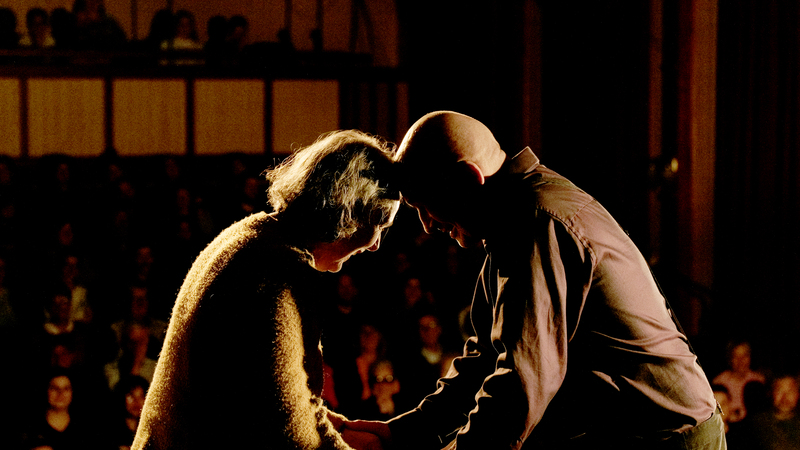
RAVING REVIEW: In the Faroe Islands, a remote archipelago where community and culture are deeply intertwined, the stage becomes something more than a place for performance. In BIRITA, it becomes a space where memory, identity, and family collide in deeply intimate and heartbreaking ways. Director Búi Dam turns the camera on his own family in a documentary that centers on an emotionally complex idea, the idea of staging Shakespeare’s KING LEAR with his mother, legendary Faroese actress Birita Mohr, even though she is living with advanced Alzheimer’s disease.
The premise alone carries enormous emotion at its heart, but BIRITA doesn’t approach the subject with the sort of sentimental manipulation that documentaries about illness sometimes fall into. Instead, the film moves with patience and curiosity, allowing the audience to sit with the contradictions of the situation. On one level, the project feels beautiful. A son wants to return his mother to the stage that once defined her life. On another level, the ethical questions surrounding that decision never really fade. Is this an act of love, or is it a risk that could expose her? Dam does not pretend to have the answers, and that uncertainty is what makes the documentary work.
Birita Mohr herself remains the center of the film even as the illness has taken so much from her. For decades, she was one of the most celebrated figures in Faroese theatre, performing roles that ranged from Greek tragedy to modern drama. Those memories linger throughout the documentary, both through archival glimpses of her past career and through the reverence with which the theatre community still speaks about her.
What makes BIRITA so powerful is the way it allows the audience to see the fragments of that artist still present. Even when remembering the dialogue fails her, there are moments when Mohr’s presence seems to ignite something in the room. A gesture, a smile, or a brief spark of recognition reminds everyone why she once commanded the stage. These flashes of connection feel almost extraordinary, not because the film exaggerates them but because they appear so unexpectedly within the reality of the disease.
Dam’s position as both filmmaker and son introduces a complicated dynamic that the film never tries to hide. His determination to move forward with the production becomes a recurring source of tension. He believes that his mother still longs to perform, even if she can no longer articulate that desire. That belief drives the entire project, but it also invites skepticism from those around him. His father, Egi Dam, becomes one of the documentary's most fascinating voices. As Birita’s husband and primary caregiver, he carries a quieter but equally powerful emotional burden. While Búi pushes forward with the artistic vision, Egi navigates the day-to-day realities of living with someone whose personality and memory are gradually slipping away. Their conversations reveal the delicate balance between honoring Birita’s legacy and protecting her dignity.
Shakespeare’s tragedy revolves around aging, family conflict, and the erosion of identity. Watching a family attempt to stage that story while confronting the realities of Alzheimer’s gives the entire process an almost surreal sense of reflection. The themes of the play begin to echo the situation unfolding in real life. What prevents the film from becoming unbearably heavy is the warmth that flows through many of the interactions. Birita Mohr’s personality still shines through in ways that feel joyful rather than tragic. There are moments of laughter, small gestures of affection, and even instances when the rehearsal process takes on a lighter, more playful energy. These scenes remind the viewer that while Alzheimer’s changes everything, it doesn’t erase the humanity of the person living with it.
One of the film’s most compelling achievements is its reframing of the conversation around Alzheimer’s and artistic identity. Many stories about the disease focus exclusively on decline. BIRITA acknowledges that loss, but it also asks whether creativity and expression can still exist even when memory begins to fade. The documentary doesn’t present a definitive answer, but it explores the question with honesty and compassion. The ethical tension surrounding the production becomes increasingly difficult to ignore as the premiere date approaches. Rehearsals grow more complicated, and the emotional stakes rise for everyone involved. Dam’s insistence that the project must continue forces the family to confront uncomfortable truths about intention and responsibility. Yet the film never turns those disagreements into a simplistic conflict. Instead, it treats them as part of the complicated love that binds this family together.
By the time the documentary reaches its final act, the audience understands that the production of KING LEAR is only part of the story. What BIRITA ultimately captures is a family trying to hold onto something that is slowly disappearing. Theatre becomes both a metaphor and a tool for that struggle. It offers a space where memory can briefly return, where identity can still be expressed even when language fails. The result is a documentary that feels personal but also relatable. BIRITA celebrates the enduring power of art, suggesting that performance and storytelling can create moments of connection even amid profound loss.
The documentary never feels exploitative, even when it confronts painful realities. Instead, it stands as a tribute to Birita Mohr’s life in the theatre and the complicated love that surrounds her. BIRITA may begin as a film about staging a play, but it becomes something far more moving. It’s a portrait of a family wrestling with memory, identity, and the fragile moments that remain when everything else begins to fade.
Please visit https://linktr.ee/overlyhonestr for more reviews.
You can follow me on Letterboxd, Instagram, Twitter, and YouTube. My social media accounts can also be found on most platforms by searching for 'Overly Honest Reviews'.
I’m always happy to hear from my readers; please don't hesitate to say hello or send me any questions about movies.
[photo courtesy of OUTLIER PROJECTS]
DISCLAIMER:
At Overly Honest Movie Reviews, we value honesty and transparency. Occasionally, we receive complimentary items for review, including DVDs, Blu-rays, CDs, Vinyl Records, Books, and more. We assure you that these arrangements do not influence our reviews, as we are committed to providing unbiased and sincere evaluations. We aim to help you make informed entertainment choices regardless of our relationship with distributors or producers.
Amazon Affiliate Links:
Additionally, this site contains Amazon affiliate links. If you purchase through these links, we may receive a commission. This affiliate arrangement does not affect our commitment to honest reviews and helps support our site. We appreciate your trust and support as you navigate these links.


Happy
0 %

Sad
0 %

Excited
0 %

Sleepy
0 %

Angry
0 %

Surprise
0 %
 0
0
 0
0

Average Rating