
A New Religion Built From Student Loans and Bad Ideas
Read Time:5 Minute, 52 Second
MOVIE REVIEW
How to Start a Cult in 5-Easy Steps
 –
– 


Genre: Thriller, Comedy, Satire
Year Released: 2025
Runtime: 1h 26m
Director(s): Wes Clark
Writer(s): Wes Clark
Cast: Lew Temple, Haulston Mann, Kathy A. Bates
Where to Watch: shown at the 2025 Art is Alive Film Festival
RAVING REVIEW: HOW TO START A CULT IN 5-EASY STEPS begins with a defeated college graduate examining the world for any sign that adulthood is supposed to feel better than survival. Instead of entering a career, he’s staring down a wall of debt that isn’t an abstract — it’s a direct reminder that he worked this hard and still ended up in the exact position he feared. That frustration becomes the spark for a strange plan: if confidence, charisma, and a pulpit lead to security, then why not build a pulpit of his own?
Wes Clark directs/writes the film with a combination of playfulness and social critique. The story uses satire to portray a young man trying to reinvent himself through a shortcut that seems logical from the inside of his desperation. There’s no maliciousness pushing him toward manipulation. He’s driven by fear, envy, and a very specific kind of loneliness — the version that comes from watching people around you succeed by following rules you simply can’t afford to respect anymore. The film isn’t interested in condemning him for taking this route toward stability. It’s more curious about what we call “reasonable” behavior once the economic ladder breaks beneath a generation.
Haulston Mann plays Tomas Varley with a specific brand of chaos. The performance clicks because he never treats Tomas like a con artist. He plays him as someone who truly believes he has no remaining options. That sincerity is what fuels the humor; he commits to absurdity with the same seriousness with which someone else would commit to a job application. As the story escalates, Mann keeps Tomas grounded, even when the situations stretch into sequences of recruitments, rituals, and clumsy moments.
Lew Temple’s presence adds a lived-in energy to the film. Temple doesn’t oversell his role. Instead, he leans into an unforced authority — a character who has seen this cycle of longing and ambition play out before. When he appears, the tone shifts. His scenes help anchor the film’s satire in something recognizable: how older generations view the decisions of young adults, and the strange way empathy can become buried beneath judgment and disbelief. He’s not the focus of a joke or the voice of reason. He watches the situation unfold the way an experienced traveler observes a road that used to be paved.
Clark frames the story as neo-Americana, blending a comedic sensibility with a visual style that mixes small-town sincerity and off-kilter eccentricity. Unlike some other cult comedies that use shock value or extremes, HOW TO START A CULT works through grounded stakes. Tomas isn’t willing to create an army out of thin air. He’s gathering the kind of people who also feel invisible — the uncertain, the hopeful, and the lonely. The satire lands because the followers don’t come across as gullible. They’re simply hungry for someone to promise that life can feel meaningful again.
Clark’s script works through contradictions. It criticizes institutional power structures while acknowledging their seductiveness. It mocks the idea of charisma as a ticket to redemption while recognizing how often it is rewarded over substance. When Tomas looks at a local priest and sees wealth instead of faith, the character isn’t making a theological argument — he’s seeing the American equation of value: confidence equals legitimacy. His attempt to reverse-engineer that structure becomes both the joke and the tragedy of the story.
The film's pace is intentionally uneven. Instead of building toward a traditionally explosive climax, the progression feels like a series of choices that aren’t dramatically weighted, but emotionally misguided. Tomas gains followers, not because he’s persuasive, but because his narrative reflects a familiar feeling: wanting a reset button for adulthood. That’s the cultural commentary that lifts the film above a simple concept. It’s not mocking faith. It’s about interrogating how desperation transforms admiration into imitation. The priest becomes a template for a life Tomas believes he can build if he performs well enough.
The film works because it recognizes humanity inside ridiculous decisions. When Tomas turns his fear into a belief system, it’s not meant as a critique of religion itself. It’s a commentary on the marketplace of identity — the strange truth that, in modern American life, confidence sells better than sincerity. HOW TO START A CULT tracks what happens when a person long denied success tries to manufacture importance. The comedy is not cruel. It’s empathy wrapped in absurdity.
Clark uses humor to examine economic exhaustion and the need for community, especially among young men who are told that individuality is the path to fulfillment. Tomas doesn’t know how to be himself in a world that judges worth by accomplishment. So he invents a self that looks powerful on paper. That might be foolish, but it’s also the emotional core of the story: wanting to matter so badly that you mistake performance for truth.
HOW TO START A CULT IN 5-EASY STEPS is a debut with ideas bigger than its budget, ambition bolder than its structure, and sincerity underneath the satire. It’s unpolished in places, but the imperfections align with the story it tells: dreams made from scraps, turned into belief because the alternative is giving up.
Please visit https://linktr.ee/overlyhonestr for more reviews.
You can follow me on Letterboxd, Instagram, Twitter, and YouTube. My social media accounts can also be found on most platforms by searching for 'Overly Honest Reviews'.
I’m always happy to hear from my readers; please don't hesitate to say hello or send me any questions about movies.
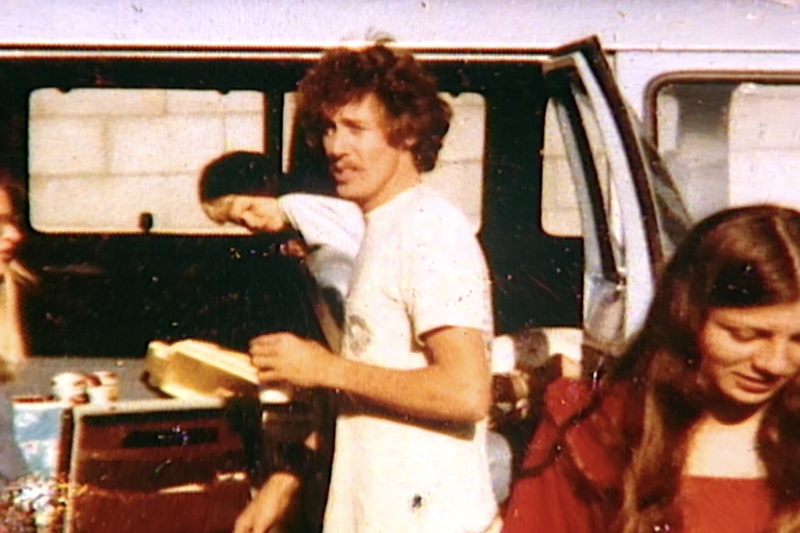
[photo courtesy of 741 FILMS, ODD MAN OUT CINEMA]
DISCLAIMER:
At Overly Honest Movie Reviews, we value honesty and transparency. Occasionally, we receive complimentary items for review, including DVDs, Blu-rays, CDs, Vinyl Records, Books, and more. We assure you that these arrangements do not influence our reviews, as we are committed to providing unbiased and sincere evaluations. We aim to help you make informed entertainment choices regardless of our relationship with distributors or producers.
Amazon Affiliate Links:
Additionally, this site contains Amazon affiliate links. If you purchase through these links, we may receive a commission. This affiliate arrangement does not affect our commitment to honest reviews and helps support our site. We appreciate your trust and support as you navigate these links.


Happy
0 %

Sad
0 %

Excited
0 %

Sleepy
0 %

Angry
0 %

Surprise
0 %
 0
0
 0
0


Average Rating