A Study in Restraint Over Sensation
Read Time:5 Minute, 45 Second
MOVIE REVIEW
Dan Curtis' Gothic Tales (Kino Cult #42) (Blu-ray)
TV-14 – 

Genre: Horror, Drama, Television
Year Released: 1973 / 1974
Runtime: 1h 51m / 2h
Director(s): Glenn Jordan / Dan Curtis
Writer(s): John Tomerlin, Oscar Wilde / William F. Nolan, Henry James
Cast: Shane Briant, Nigel Davenport, Charles Aidman / Lynn Redgrave, Megs Jenkins, James Laurenson
Where to Watch: available now, order here: www.kinolorber.com or www.amazon.com
RAVING REVIEW: DAN CURTIS’ GOTHIC TALES brings together two made-for-television literary adaptations that embody both the strengths and the limitations of 1970s broadcast horror. Produced for ABC’s Wide World of Mystery and shot on videotape, these works feel unmistakably bound to their era. Yet they also reflect a genuine seriousness about horror as a psychological and moral inquiry rather than a cheap chaos. This is not horror designed to startle. It’s horror meant to linger, to unsettle through implication, repression, and rot beneath polite surfaces.
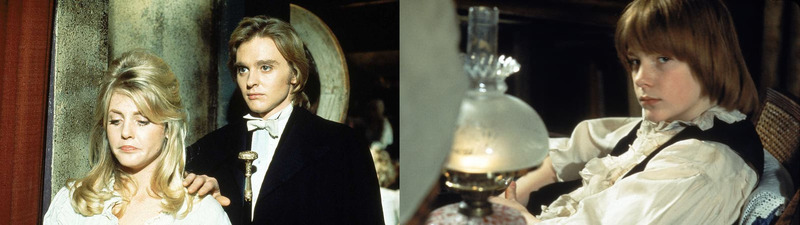
THE PICTURE OF DORIAN GRAY is the stronger and more engaging of the two. Curtis and director Glenn Jordan approach Oscar Wilde’s novel not as a morality play, but as a slow, corrosive character study. Shane Briant is cast very deliberately. His physical presence is not incidental; it is the entire thesis of the adaptation. Briant’s Dorian isn’t magnetic because of charisma or charm, but because of how blank and malleable he initially appears. He feels like someone onto whom others project desire, expectation, and corruption. That choice works remarkably well within the constraints of television, allowing the horror to develop internally rather than theatrically.
Nigel Davenport’s Lord Harry Wotton functions as both catalyst and corrupter, delivering Wilde’s philosophy with an edge that never tips into camp. There’s an undercurrent here, subtly present but never spelled out, that aligns closely with Wilde’s own coded queerness. The film doesn’t sensationalize it, but it doesn’t erase it either. That restraint gives the story weight, allowing Dorian’s collapse to feel like an erosion rather than a sudden transformation.
The portrait itself, despite technical limitations, becomes one of the film’s most effective aspects. Its gradual degradation is unsettling precisely because it isn’t overemphasized. Curtis trusts the audience to understand what’s happening without hammering the point home. The horror emerges not from imagery, but from the growing disconnect between Dorian’s outward appearance and his inner decay. When violence and cruelty surface, they feel all the more disturbing because the film has spent so much time cultivating a polite, repressed atmosphere.
Still, the production isn’t without its drawbacks. The videotape format, while adding a certain grimy intimacy, flattens the visuals. Period detail sometimes clashes with unmistakably 1970s hairstyles and blocking, pulling the viewer out of the Victorian setting. The pacing, too, can feel stretched, especially for viewers accustomed to a more aggressive narrative. Yet even when it drags, the film maintains focus, which keeps it from feeling indulgent.
THE TURN OF THE SCREW, directed by Curtis himself, is a more challenging watch. Henry James’ novella is famously ambiguous, and this adaptation leans heavily into that ambiguity, sometimes to its own detriment. Lynn Redgrave delivers a strong central performance as Miss Cubberly, grounding the story with sincerity. She plays the governess not as hysterical or fragile, but as someone slowly unraveling under pressure, isolation, and panic. Her restraint is one of the film’s greatest assets.
Where the film struggles is in its presentation; the aesthetic works against the story’s need for shadow and uncertainty. Ghostly figures appear too crisp (ironically), undermining the tension. Makeup and effects, particularly for the apparitions, feel inconsistent and occasionally distracting. The story wants to live in the gray area between supernatural and mental projection, but the visual execution sometimes pushes it too firmly in one direction.
That said, the performances—especially from the child actors—add an unsettling edge. Jasper Jacob’s Miles is disturbing not because of overt menace, but because of how calculated and knowing he appears. His interactions with Redgrave crackle with discomfort, tapping into the story’s themes of corruption, repression, and misplaced authority. The film’s length works both for and against it. The slow pace allows unease to build gradually, but it also risks exhausting the tension before reaching its conclusion.
DAN CURTIS’ GOTHIC TALES feels like a snapshot of a specific era in televised horror—one that valued literary pedigree, atmosphere, and moral complexity over shock value. These adaptations are made by people who respected the source material and believed horror could be something more. At the same time, they are limited by their medium, budget, and aesthetic constraints, which prevent them from reaching the full potential of their stories.
They still manage to be rewarding for viewers interested in classic literary horror, Dan Curtis’ legacy, or the evolution of genre storytelling on television. It won’t convert skeptics, but it offers something rarer: thoughtful, measured horror that trusts its audience to sit with discomfort rather than flee from it. For fans of gothic restraint and psychological unease, there’s plenty here to appreciate, even if it never quite ascends to greatness.
Product Extras:
Introductions by Jeff Thompson, Author of The Television Horrors of Dan Curtis
The Picture of Dorian Gray Audio Commentary by Film Historian David Del Valle
The Picture of Dorian Gray Audio Commentary by Film Historian Anthony Slide
The Turn of the Screw Promotional Short Featuring Interviews with Producer Dan Curtis and Actress Lynn Redgrave
The Turn of the Screw Audio Commentary by Film Historian Anthony Slide
Please visit https://linktr.ee/overlyhonestr for more reviews.
You can follow me on Letterboxd, Instagram, Twitter, and YouTube. My social media accounts can also be found on most platforms by searching for 'Overly Honest Reviews'.
I’m always happy to hear from my readers; please don't hesitate to say hello or send me any questions about movies.
[photo courtesy of KINO LORBER]
DISCLAIMER:
At Overly Honest Movie Reviews, we value honesty and transparency. Occasionally, we receive complimentary items for review, including DVDs, Blu-rays, CDs, Vinyl Records, Books, and more. We assure you that these arrangements do not influence our reviews, as we are committed to providing unbiased and sincere evaluations. We aim to help you make informed entertainment choices regardless of our relationship with distributors or producers.
Amazon Affiliate Links:
Additionally, this site contains Amazon affiliate links. If you purchase through these links, we may receive a commission. This affiliate arrangement does not affect our commitment to honest reviews and helps support our site. We appreciate your trust and support in navigating these links.


Happy
0 %

Sad
0 %

Excited
0 %

Sleepy
0 %

Angry
0 %

Surprise
0 %
 0
0
 0
0


Average Rating