The Invisible Networks Connecting Life on Earth
Read Time:5 Minute, 45 Second
MOVIE REVIEWS
Daughters of the Forest
 –
– 

Genre: Documentary, Experimental, Sci-Fi
Year Released: 2026
Runtime: 1h 35m
Director(s): Otilia Portillo Padua
Where to Watch: shown at the 2026 South by Southwest (SXSW) Film & TV Festival and Copenhagen International Documentary Festival (CPH:DOX)
RAVING REVIEW: The most powerful documentaries rarely feel the need to scream the message they’re sharing. They invite you to slow down, listen, and notice the connections shaping the world around you. DAUGHTERS OF THE FOREST operates in exactly that space, building an emotional and intellectual experience that feels both intimate and expansive. By the time the film reaches its final moments, it becomes clear that this isn’t simply a documentary about fungi or ecology. It’s about the fragile relationship between knowledge, culture, and survival.
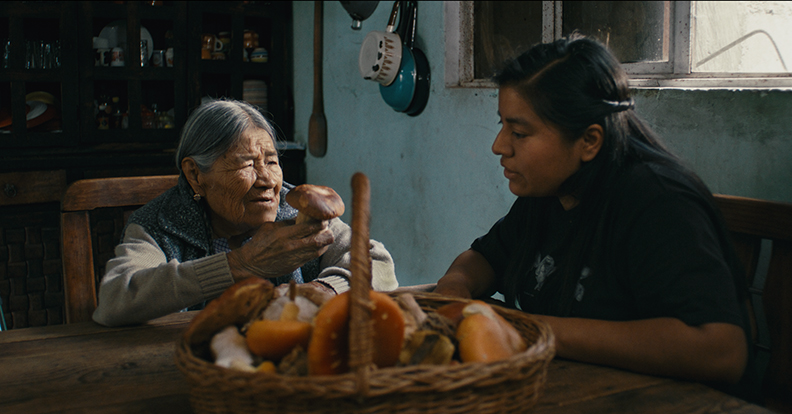
Director Otilia Portillo Padua approaches the subject with a perspective that feels deeply considered. The film centers on two Indigenous Mexican mycologists, Julieta Serafina Amaya Pérez and Eliseete Ramírez Carbajal, whose work exists at the intersection of modern scientific research and ancestral ecological knowledge. Their stories aren’t framed as opposing forces between tradition and progress. Instead, the documentary reveals how those perspectives can coexist and strengthen one another.
Both women come from communities that have long understood the importance of mushrooms, long before academic institutions began studying them through modern scientific frameworks. Julieta, a Zapotec biologist from Oaxaca, documented dozens of edible and medicinal mushroom species in her academic work, inspired in part by her family’s experiences with their healing properties. Eliseete, a Tlahuica-Pjiekakjoo mycologist from the State of Mexico, founded an organization promoting the cultural and nutritional significance of wild mushrooms within her community.
These histories form the emotional backbone of the film. DAUGHTERS OF THE FOREST understands that science is rarely a detached pursuit. For the people at its center, research is tied directly to identity, community responsibility, and cultural continuity. That connection gives the film a weight that extends far beyond academic curiosity. The documentary’s structure reflects the philosophy outlined in Portillo Padua’s own creative approach. Instead of relying on a single route, the film moves through a network of interconnected ideas, much like the fungal systems it explores. Stories branch out and circle back again, creating a sense that the film itself operates as a kind of narrative mycelium. The result feels less like a conventional documentary and more like a conversation unfolding across time, culture, and ecosystems.
Visually, the film embraces that idea of interconnectedness. The forests of Mexico are captured with remarkable patience. The camera lingers on soil, spores, roots, and organic textures that would normally exist in the background of most environmental films. Here, they feel essential. The documentary reminds viewers that beneath the forest floor exists an enormous network of fungal communication that scientists are only beginning to understand. What makes these sequences so effective is the way the film resists turning them into exhibition. The imagery is beautiful, but it never feels like empty nature photography. Instead, the visuals serve the larger idea that ecosystems function as collaborative systems rather than isolated entities. Every organism participates in a web of mutual survival.
This perspective feeds directly into the film’s speculative elements. DAUGHTERS OF THE FOREST occasionally leans into concepts that resemble science fiction, not because the story itself is fictional, but because it challenges audiences to imagine entirely different ways of understanding life on Earth. Mushrooms become a gateway to rethinking how intelligence, cooperation, and communication operate across species. The film treats these ideas with curiosity rather than certainty. Instead of presenting definitive answers, it opens doors to questions about coexistence, sustainability, and ecological responsibility. That sense of inquiry becomes one of the documentary’s most compelling qualities.
Another strength of the film lies in its refusal to separate environmental issues from human stories. Deforestation, economic instability, and cultural displacement all appear throughout the narrative, sometimes subtly and sometimes with heartbreaking clarity. These forces threaten not only ecosystems but also the knowledge systems that communities have developed over generations. Watching Julieta and Eliseete navigate these realities adds depth that anchors the film. Their determination to pursue scientific work while maintaining a connection to their communities creates moments that feel quietly inspiring. They aren’t portrayed as heroes in the traditional sense. Instead, they represent a different kind of leadership grounded in cooperation, education, and stewardship.
That approach echoes the ideas in the director’s statement, in which Portillo Padua describes moving away from traditional hero-driven storytelling toward a more collaborative and communal approach. The film draws inspiration from narrative philosophies that emphasize the gathering of knowledge rather than the conquest of obstacles. The result is a documentary that feels unusually hopeful without ignoring the challenges facing the world today. DAUGHTERS OF THE FOREST doesn’t pretend that ecological crises can be solved easily. Instead, it suggests that new possibilities emerge when science, tradition, and community knowledge begin to work together.
By the end, the film leaves viewers with an unexpected sense of optimism. The women at its center aren’t just studying fungi. They’re participating in a broader effort to reshape humanity's understanding of its place within the natural world.
Few documentaries manage to feel this thoughtful and resonant at the same time. DAUGHTERS OF THE FOREST succeeds because it treats its subjects with patience, respect, and curiosity. The film asks viewers to reconsider the invisible networks sustaining life on Earth and to imagine what might happen if we finally learned to listen to them. It’s an extraordinary piece of filmmaking, one that grows the longer you sit with its ideas.
Please visit https://linktr.ee/overlyhonestr for more reviews.
You can follow me on Letterboxd, Instagram, Twitter, and YouTube. My social media accounts can also be found on most platforms by searching for 'Overly Honest Reviews'.
I’m always happy to hear from my readers; please don't hesitate to say hello or send me any questions about movies.
[photo courtesy of SANDBOX FILMS]
DISCLAIMER:
At Overly Honest Movie Reviews, we value honesty and transparency. Occasionally, we receive complimentary items for review, including DVDs, Blu-rays, CDs, Vinyl Records, Books, and more. We assure you that these arrangements do not influence our reviews, as we are committed to providing unbiased and sincere evaluations. We aim to help you make informed entertainment choices regardless of our relationship with distributors or producers.
Amazon Affiliate Links:
Additionally, this site contains Amazon affiliate links. If you purchase through these links, we may receive a commission. This affiliate arrangement does not affect our commitment to honest reviews and helps support our site. We appreciate your trust and support as you navigate these links.


Happy
0 %

Sad
0 %

Excited
0 %

Sleepy
0 %

Angry
0 %

Surprise
0 %
 0
0
 0
0


Average Rating