The Long Drive Toward Understanding
Read Time:5 Minute, 26 Second
MOVIE REVIEWS
The Mechanics of Borders (La mécanique des frontières)
 –
– 


Genre: Drama
Year Released: 2025, 2026
Runtime: 1h 37m
Director(s): Hubert Caron-Guay
Writer(s): Hubert Caron-Guay, Sophie B. Sylvestre
Cast: Dylan Walsh, Sophie Fekete, Cat Lemieux, Robert Montcalm, Ben Peters
Where to Watch: shown at the Cinequest Film Festival 2026
RAVING REVIEW: THE MECHANICS OF BORDERS begins with a portrait of isolation. Mathieu, a nineteen-year-old living in rural Quebec, has built a life around routine and distance. His days are spent working in a slaughterhouse, a setting that reinforces the film’s bleak landscape. The work is repetitive, harsh, and strangely fitting for someone who appears to have sealed himself off from meaningful connection. Outside of work, his relationships rarely move beyond surface-level interactions.
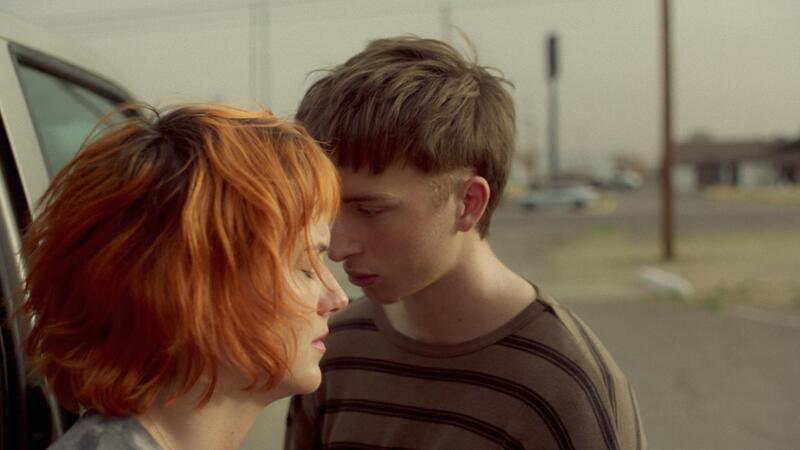
That fragile stability disappears the moment his sister Heidi reaches out. She left years earlier for the United States under circumstances that were never resolved. Her request that Mathieu travel south to pick her up immediately disrupts the fragile barriers he has built around himself. What follows isn’t just a road trip but a confrontation with the wounds of a shared childhood defined by abandonment and resentment.
Director Hubert Caron-Guay approaches the story with an eye for emotion and realism. The film doesn’t rush to lay out the siblings’ fractured history. Instead, their past emerges through fragments of conversation and uncomfortable silences. Every mile they travel together brings buried tensions closer to the surface.
Dylan Walsh delivers a remarkably restrained performance as Mathieu. The character communicates more through body language than dialogue. His posture, hesitations, and reactions to Heidi’s presence reveal a young man struggling with unresolved anger and confusion. Walsh gives the impression of someone who has spent years internalizing pain without ever articulating it.
Opposite him, Sophie Fekete portrays Heidi with vulnerability and restlessness. The role marks her first screen performance, yet she carries herself with the confidence of someone connected to the character like a pro who has been doing this for years. Heidi feels like a person who has been drifting through life, searching for something that might anchor her sense of identity. When she reconnects with Mathieu, it becomes clear that both siblings have been trying to outrun the same past.
Their dynamic drives the entire film. The conversations between them rarely follow the patterns of typical reconciliation. There are moments of awkward humor, flashes of resentment, and long stretches where neither character knows what to say. The film’s honesty comes from its willingness to allow those uncomfortable spaces to exist. The road movie structure gives the story its shape. As the siblings travel across unknown landscapes, their movement mirrors the emotions they must navigate. The open highways and empty towns they encounter emphasize the feeling that they are both far from home in more ways than one.
Caron-Guay’s background in documentary filmmaking influences the film’s style. The direction favors observation over manipulation. Scenes unfold with care, often allowing the camera to linger on the characters as they process difficult emotions. This approach creates an atmosphere that feels grounded rather than theatrical. The filmmaker’s earlier work explored themes of social marginalization and survival, and those concerns also shape this narrative. The screenplay draws inspiration from real experiences involving foster care systems, migration, and individuals living on society’s margins. Those influences aren’t presented as overt political statements but as emotional context for the characters’ experiences.
Mathieu and Heidi both carry the psychological effects of abandonment. Their childhood left them searching for validation and stability, and neither has been found. The film examines how those early fractures continue to shape their adult lives, even when they attempt to move forward. The authenticity of their relationship owes much to the chemistry between Walsh and Fekete. The casting process focused on finding performers who could embody the characters with sensitivity rather than perfected technique. That decision pays off in the film’s most intimate moments. Their interactions feel spontaneous and unpredictable, capturing the reality of siblings reconnecting after years apart.
THE MECHANICS OF BORDERS resonates so much, and that’s thanks to its understanding that reconciliation is rarely an easy road. The film doesn’t attempt to solve every conflict or deliver closure. Instead, it focuses on the possibility that acknowledging shared pain might be the first step toward rebuilding trust.
The title itself suggests that the story is about more than geography. Borders exist not only between nations but between people who have built emotional defenses to protect themselves. Mathieu and Heidi spend the film navigating those invisible boundaries, testing how far they can go before the past catches up with them.
By the end of their journey, the siblings haven’t erased their history. What changes is their willingness to face it together rather than alone. That shift carries the film. Instead of dramatic revelations or sentimental speeches, the story finds meaning in small gestures of understanding. THE MECHANICS OF BORDERS is a contemplative road movie that prioritizes truth over spectacle. Its power lies in the performances, the direction, and the recognition that healing often begins with the difficult act of listening to someone you once believed you had lost.
Please visit https://linktr.ee/overlyhonestr for more reviews.
You can follow me on Letterboxd, Instagram, Twitter, and YouTube. My social media accounts can also be found on most platforms by searching for 'Overly Honest Reviews'.
I’m always happy to hear from my readers; please don't hesitate to say hello or send me any questions about movies.
[photo courtesy of SECTEUR FILMS, MAISON 4:3]
DISCLAIMER:
At Overly Honest Movie Reviews, we value honesty and transparency. Occasionally, we receive complimentary items for review, including DVDs, Blu-rays, CDs, Vinyl Records, Books, and more. We assure you that these arrangements do not influence our reviews, as we are committed to providing unbiased and sincere evaluations. We aim to help you make informed entertainment choices regardless of our relationship with distributors or producers.
Amazon Affiliate Links:
Additionally, this site contains Amazon affiliate links. If you purchase through these links, we may receive a commission. This affiliate arrangement does not affect our commitment to honest reviews and helps support our site. We appreciate your trust and support as you navigate these links.


Happy
0 %

Sad
0 %

Excited
0 %

Sleepy
0 %

Angry
0 %

Surprise
0 %
 0
0
 0
0



Average Rating