The Quiet Cost of Holding the Line
Read Time:5 Minute, 1 Second
MOVIE REVIEW
The Last Puestero
 –
– 


Genre: Documentary, Biography
Year Released: 2025, 2026
Runtime: 27m
Director(s): Belle Casares
Where to Watch: shown at the 2026 Santa Barbara International Film Festival
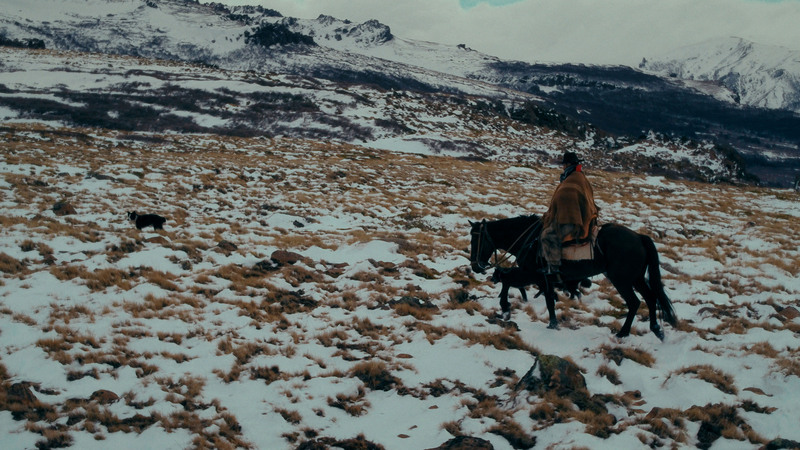
RAVING REVIEW: What happens when a way of life depends on being alone, but survival increasingly demands connection? THE LAST PUESTERO doesn’t try to frame that question as a philosophical exercise. It observes it unfolding in real time through the daily routines, silences, and contradictions embodied by Adonai Jara, a gaucho (a skilled, historically nomadic horseman and cattle herder of the South American pampas (grasslands)) stationed at a remote Patagonian outpost where tradition still holds, but only barely.
Director Belle Casares approaches Adonai’s story with restraint and clarity. This isn’t a documentary that mythologizes the puestero as a rugged fantasy figure. Instead, it presents his work as labor, demanding, skilled, and unglamorous. Protecting cattle from poachers and pumas isn’t framed as adventure, but as a responsibility carried largely alone, day after day, far from the family life he maintains at a distance.
Adonai is deeply proud of what he does, and the film allows that pride to exist without contradiction. He knows the land intimately, reads tracks, anticipates weather shifts, and moves through the environment with an ease earned through years of repetition. Casares captures this expertise without explanation-heavy narration. The camera lingers on process, trusting that the meaning will surface through observation rather than instruction.
At the same time, THE LAST PUESTERO never treats solitude as a romantic ideal. The emotional core of the film rests in what Adonai gives up to maintain this role. His separation from his wife and children isn’t dramatized, but it’s always present, felt in pauses, in conversations that circle absence rather than confront it directly. Loneliness here is not despairing, but it is constant, and the film respects that distinction.
The tension driving the documentary isn’t external conflict, but inevitability. Adonai hopes his son will continue the puestero tradition, yet he understands that hope may be unrealistic. Changing times, technology, and shifting values press in quietly but relentlessly. Casares resists framing this as a tragedy imposed from outside. Instead, it becomes a matter of choice, one generation deciding whether a life defined by isolation still holds meaning for them.
Visually, the film is composed with patience. The Patagonian landscape is expansive, but it is never presented as an exhibition for its own sake. Wide shots emphasize scale and distance, reinforcing how small one person is within this environment, and how much endurance is required simply to remain. When the film turns inward, it does so gently, letting Adonai speak for himself rather than shaping his words into thesis statements.
Casares’ direction shows particular sensitivity in how it balances intimacy with respect. Adonai isn’t positioned as an object of study or nostalgia. He is a man navigating the present while carrying the weight of a past that may not extend into the future. The film’s power comes from allowing him to exist fully within that uncertainty, without demanding resolution.
If there is a limitation, it lies in the documentary’s brevity. While the story is told, certain threads, particularly the relationship between Adonai and his son, could benefit from deeper exploration. However, this restraint also aligns with the film’s intent. THE LAST PUESTERO functions as a portrait, not a comprehensive account, and it understands that witnessing can be as valuable as explaining. There’s something to be said for a film that knows what it wants to say and allows that story to be told, unfiltered by a forced narrative.
What makes the film resonate is its refusal to simplify what is being lost. This is not just the disappearance of a job, but of an identity built around self-reliance, stewardship, and continuity. Casares does not argue that this way of life must be preserved at all costs. She simply insists that it deserves to be seen clearly before it fades. This may well be a historical artifact of a life we’ll never see again, while the universal truth may be viewed through the lens of a single man, the impact of this moment in time is important enough to be archived for future generations.
THE LAST PUESTERO is quiet, patient, and attentive. It doesn’t ask the audience to mourn prematurely, nor does it pretend the future will bend to tradition. Instead, it documents a life lived with purpose, even as the ground beneath it shifts. In doing so, it becomes less about nostalgia and more about recognition. Sometimes the quietest moments speak the loudest on screen, especially when they have generations of history to explain.
This documentary underscores the value of paying attention while there is still time.
Please visit https://linktr.ee/overlyhonestr for more reviews.
You can follow me on Letterboxd, Instagram, Twitter, and YouTube. My social media accounts can also be found on most platforms by searching for 'Overly Honest Reviews'.
I’m always happy to hear from my readers; please don't hesitate to say hello or send me any questions about movies.
[photo courtesy of PERSONAJE PICTURES]
DISCLAIMER:
At Overly Honest Movie Reviews, we value honesty and transparency. Occasionally, we receive complimentary items for review, including DVDs, Blu-rays, CDs, Vinyl Records, Books, and more. We assure you that these arrangements do not influence our reviews, as we are committed to providing unbiased and sincere evaluations. We aim to help you make informed entertainment choices regardless of our relationship with distributors or producers.
Amazon Affiliate Links:
Additionally, this site contains Amazon affiliate links. If you purchase through these links, we may receive a commission. This affiliate arrangement does not affect our commitment to honest reviews and helps support our site. We appreciate your trust and support as you navigate these links.


Happy
0 %

Sad
0 %

Excited
0 %

Sleepy
0 %

Angry
0 %

Surprise
0 %
 0
0
 0
0


Average Rating