
Why Maus Still Provokes Resistance
Read Time:5 Minute, 3 Second
MOVIE REVIEW
The Hell of Auschwitz: Maus by Art Spiegelman (Récit de l'enfer d'Auschwitz – Maus d'Art Spiegelman)
 –
– 

Genre: Documentary
Year Released: 2024, 2026
Runtime: 53m
Director(s): Pauline Horovitz
Where to Watch: available now, watch here: www.amazon.com
RAVING REVIEW: How do you revisit a work that already reshaped how history is told without diminishing its impact on the world? THE HELL OF AUSCHWITZ: MAUS BY ART SPIEGELMAN approaches this challenge carefully, refusing to position itself as a definitive statement on Maus and instead framing the graphic novel as a living object that continues to provoke, educate, and agitate select people decades after its publication.
Directed by Pauline Horovitz, the documentary isn’t an adaptation, summary, or visual translation of Spiegelman’s work. That distinction matters. Horovitz understands that Maus doesn't need to be re-explained so much as contextualized and situated within both personal and cultural memory. The film’s primary concern is not what Maus depicts, but why it mattered then, why it still matters, and why it continues to generate discomfort in spaces that claim to value historical education.
The documentary grounds itself in the radical nature of Spiegelman’s original choice. At the time of its creation, portraying Holocaust victims as mice and Nazis as cats wasn’t simply unconventional; it was viewed as deeply transgressive. Horovitz carefully traces how that decision was never an attempt to soften the horror, but to find a visual style capable of holding it. Maus refuses realism not to escape truth, but because realism alone had failed to reach the audience.
THE HELL OF AUSCHWITZ structures itself around reflection and inheritance. Horovitz positions herself within the narrative as a granddaughter of Holocaust survivors, someone whose relationship to the events is arbitrated through silence, stories, and emotional residue rather than firsthand testimony. This perspective gives the film its emotional backbone. It is not simply about remembering Auschwitz, but about inheriting its weight without direct experience.
The documentary makes a crucial distinction between memory and history. History can be documented, archived, and taught. Memory, especially inherited memory, is unstable, contradictory, and often unresolved. Maus, as Horovitz presents it, occupies the space between the two. It is both a historical account of Vladek Spiegelman’s survival and a deeply uncomfortable portrait of what that survival cost his family long after liberation.
Art Spiegelman’s presence in the film is purposeful and restrained. He isn’t treated as a distant cultural figure or elevated authority, but as someone still wrestling with the consequences of having turned trauma into public narrative. THE HELL OF AUSCHWITZ doesn’t shy away from the tensions embedded in Maus, particularly the fraught relationship between Art and his father, and the guilt that comes with shaping another person’s suffering into art.
One of the film’s strongest choices is its refusal to sanitize Maus’ reception. Horovitz addresses the backlash, the censorship debates, and the persistent discomfort surrounding its inclusion in educational spaces. The documentary doesn’t portray this resistance as ignorance, but as fear. Maus forces readers to confront the Holocaust not as a distant tragedy, but as intimate, generational, and unresolved. That is unsettling, especially when it disrupts simplified narratives of heroism or moral clarity.
The documentary engages with the idea of representation itself. Maus didn't just tell a story about Auschwitz; it challenged assumptions about what kinds of stories comics were allowed to show. Horovitz frames this as a double-edged sword, both in Holocaust representation and in the cultural legitimacy of comics as a serious artistic medium.
What makes THE HELL OF AUSCHWITZ especially effective is its awareness of time. It recognizes that Maus now exists in a world where firsthand survivors are disappearing, where historical distortion is increasingly normalized, and where memory is often politicized. The film positions Maus not as a relic, but as a warning, a reminder that the transmission of history is fragile and easily undermined.
THE HELL OF AUSCHWITZ ultimately functions less as an examination of a book and more as an argument for why uncomfortable art must be preserved, defended, and revisited. It insists that remembrance isn’t passive, that engaging with the Holocaust requires more than ritual acknowledgment. Maus endures because it refuses closure, and Horovitz’s film respects that refusal.
This is a thoughtful, measured documentary that understands its subject's responsibility. It neither canonizes Maus without question nor reduces it to a cultural milestone. Instead, it treats the work as an ongoing conversation about trauma, representation, and the moral obligation to remember honestly. In a time when memory is increasingly contested, THE HELL OF AUSCHWITZ: MAUS BY ART SPIEGELMAN feels less like a retrospective and more like a necessary reaffirmation of why truth, even when difficult, must be carried forward.
Please visit https://linktr.ee/overlyhonestr for more reviews.
You can follow me on Letterboxd, Instagram, Twitter, and YouTube. My social media accounts can also be found on most platforms by searching for 'Overly Honest Reviews'.
I’m always happy to hear from my readers; please don't hesitate to say hello or send me any questions about movies.
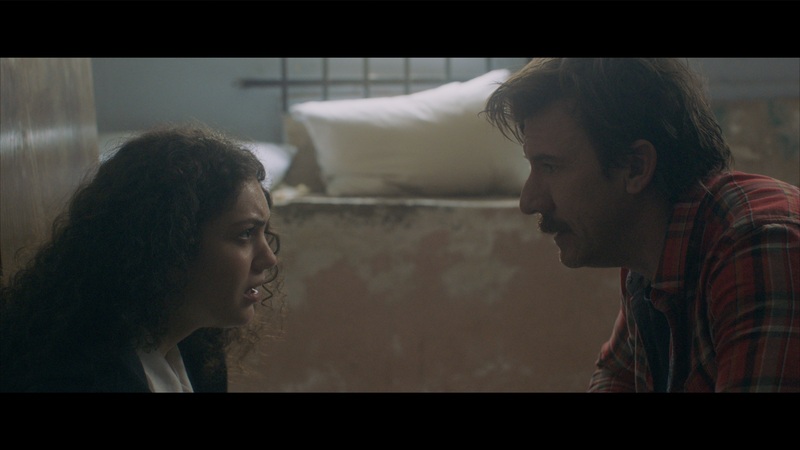
[photo courtesy of ICARUS FILMS]
DISCLAIMER:
At Overly Honest Movie Reviews, we value honesty and transparency. Occasionally, we receive complimentary items for review, including DVDs, Blu-rays, CDs, Vinyl Records, Books, and more. We assure you that these arrangements do not influence our reviews, as we are committed to providing unbiased and sincere evaluations. We aim to help you make informed entertainment choices regardless of our relationship with distributors or producers.
Amazon Affiliate Links:
Additionally, this site contains Amazon affiliate links. If you purchase through these links, we may receive a commission. This affiliate arrangement does not affect our commitment to honest reviews and helps support our site. We appreciate your trust and support as you navigate these links.


Happy
0 %

Sad
0 %

Excited
0 %

Sleepy
0 %

Angry
0 %

Surprise
0 %
 0
0
 0
0


Average Rating