A Reckoning That Doesn’t Let You Off the Hook
Read Time:5 Minute, 55 Second
MOVIE REVIEW
Kaishaku
 –
– 

Genre: Horror, Psychological Thriller, Supernatural Drama
Year Released: 2025, 2026
Runtime: 1h 44m
Director(s): Harry Locke IV
Writer(s): Mike Gerbino
Cast: Stefanie Estes, Alyshia Ochse, Rob Kirkland, Robbie Allen, Archer Anderson
Where to Watch: shown at the 2026 Dances with Films New York
RAVING REVIEW: What line do you cross when survival stops feeling optional? KAISHAKU plants that question at its core and refuses to let it go, using supernatural horror not as an escape from reality, but as a pressure chamber that magnifies every ethical crack already present in its characters. The film makes clear it’s not interested in shock-driven horror or easy moral binaries. Instead, it studies the quiet devastation of compromise and asks what kind of damage lingers when a choice is technically consensual but spiritually corrosive.
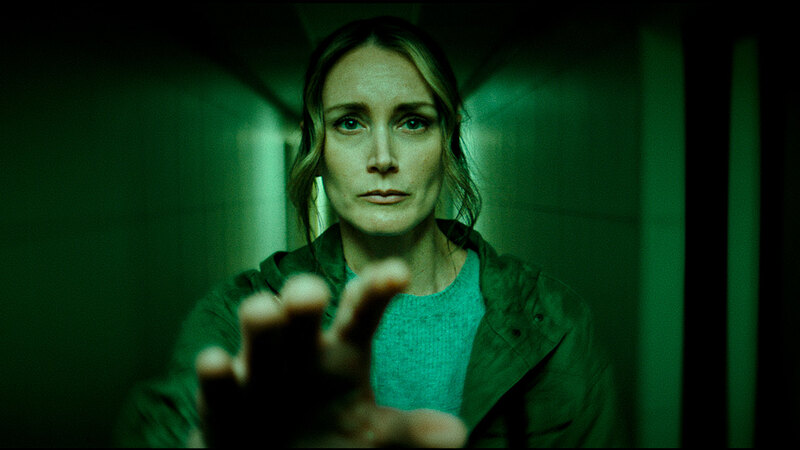
At the center of the film is Iris, a desperate mother struggling to keep her family afloat financially. Stefanie Estes plays her not as a genre archetype but as a woman worn thin by small, accumulating defeats. Bills pile up. Her son’s emotional instability weighs heavily. Her marriage is strained by exhaustion rather than conflict. KAISHAKU takes its time establishing this context, not to pad the runtime, but to ensure that when the moral dilemma at the center of it all arrives, it feels tragically plausible rather than sensationalized.
That predicament, agreeing to serve as a witness to a friend’s assisted suicide in exchange for financial relief, is presented without melodrama. The scene is restrained, deliberate, and deeply uncomfortable, mainly because it's presented to us so calmly. Alyshia Ochse’s Bridgette approaches the act with an unsettling composure that suggests long-considered resolve rather than impulsive despair. The film resists framing her as manipulative or villainous. Instead, it allows the audience to sit with the unsettling truth that desperation can be mutual, and harm doesn’t always arrive with malicious intent.
KAISHAKU refuses to compartmentalize that decision into a single narrative event and, in doing so, makes it one of the most contemplative experiences I’ve seen in film. The consequences don’t arrive as immediate punishment. There’s no instant collapse, no operatic reckoning. Instead, the aftermath settles in quietly. Iris experiences a brief, fragile sense of relief. She buys groceries without counting every dollar. She allows herself small gestures of normalcy. These moments matter because they underline the film’s tension. The choice worked, at least materially. And that success becomes its own form of horror.
As the supernatural elements begin to surface, they’re treated less as external threats and more as manifestations of unresolved guilt and suppressed trauma. KAISHAKU understands that the most effective horror often comes from ambiguity. Are these hauntings literal, psychological, or both? The film never rushes to clarify, and that restraint strengthens its impact. Nightmares bleed into the day. Familiar spaces feel wrong, but you don’t know why. The home, once a site of safety, becomes increasingly hostile without ever turning overtly monstrous.
Harry Locke IV’s direction favors emotional continuity over escalation. Scenes are allowed to breathe, sometimes uncomfortably so. The camera lingers on Iris’ face as she processes fear, denial, and self-justification. This approach trusts the audience to engage rather than wait for cues. It’s a choice that may test viewers expecting traditional horror, but it’s also what gives KAISHAKU its distinct identity.
The film’s use of this concept, drawn from historical practices associated with ritualized death, is handled with care. Rather than exploiting cultural symbolism for aesthetic flair, KAISHAKU integrates the idea. The concept becomes a lens through which the film examines responsibility, witnessing, and the illusion of mercy. It raises unsettling questions about where moral accountability ends. Is bearing witness an act of compassion, or does it make one complicit in the act itself?
Stefanie Estes carries the film with remarkable control. Her performance avoids extremes, which makes the character’s gradual unraveling all the more unsettling. Iris doesn’t spiral in any traditional sense. She tightens. She internalizes. Fear expresses itself through withdrawal, irritability, and desperation. Estes grounds every intrusion in emotional truth, ensuring the film never drifts into abstraction.
Alyshia Ochse delivers a performance that lingers long after her character’s role “concludes.” There’s an unnerving calm to her presence, even before the supernatural elements emerge. That emotion becomes a haunting echo throughout the film, reinforcing the idea that some decisions don’t end when the act itself does. Rob Kirkland and Robbie Allen provide grounded, supporting turns that anchor the story in a real world, preventing the film from floating too far into metaphor.
The film doesn’t frame resolution as forgiveness or absolution. Instead, it acknowledges that some choices permanently alter us, even if the world around us isn’t changed. The closing moments are devastating, leaving space for interpretation without undermining clarity. It’s a conclusion that respects the audience’s intelligence and investment.
KAISHAKU wears its limitations honestly. Its strengths lie not in scale or spectacle, but in intention and execution. The film understands what it can do well and commits to that vision. It uses horror as a tool for introspection rather than distraction, and that choice pays off.
KAISHAKU stands out not because it reinvents the genre, but because it refuses to dilute its moral inquiry. It treats desperation as a lived condition rather than a plot device, and it allows horror to emerge organically from human behavior. In doing so, it delivers a haunting experience that lingers not through imagery, but through implication. It’s a film that understands the scariest consequences aren’t always external. Sometimes, they’re the ones that follow you home and refuse to let you forget why they’re there.
Please visit https://linktr.ee/overlyhonestr for more reviews.
You can follow me on Letterboxd, Instagram, Twitter, and YouTube. My social media accounts can also be found on most platforms by searching for 'Overly Honest Reviews'.
I’m always happy to hear from my readers; please don't hesitate to say hello or send me any questions about movies.
[photo courtesy of AZOULAY PICTURES]
DISCLAIMER:
At Overly Honest Movie Reviews, we value honesty and transparency. Occasionally, we receive complimentary items for review, including DVDs, Blu-rays, CDs, Vinyl Records, Books, and more. We assure you that these arrangements do not influence our reviews, as we are committed to providing unbiased and sincere evaluations. We aim to help you make informed entertainment choices regardless of our relationship with distributors or producers.
Amazon Affiliate Links:
Additionally, this site contains Amazon affiliate links. If you purchase through these links, we may receive a commission. This affiliate arrangement does not affect our commitment to honest reviews and helps support our site. We appreciate your trust and support as you navigate these links.


Happy
0 %

Sad
0 %

Excited
0 %

Sleepy
0 %

Angry
0 %

Surprise
0 %
 1
1
 0
0

Average Rating