When Silence Carries the Heaviest Meaning
Read Time:5 Minute, 37 Second
MOVIE REVIEWS
The Summer Book
 –
– 

Genre: Drama
Year Released: 2024, Music Box Films DVD 2026
Runtime: 1h 30m
Director(s): Charlie McDowell
Writer(s): Robert Jones, Tove Jansson
Cast: Glenn Close, Emily Matthews, Anders Danielsen Lie
Where to Watch: available February 17, 2024, pre-order your copy here: www.amazon.com
RAVING REVIEW: What does it mean to grow up when the people around you are quietly falling apart? Charlie McDowell’s THE SUMMER BOOK doesn’t open by posing a question that needs to be solved, but rather by assuming a question is always there, and that we live inside of it. Unlike many films, THE SUMMER BOOK doesn’t seek to create dramatic turns or emotional releases. Rather, it takes the idea that grief, love, and understanding, and with that the act of understanding, can unfold at the pace of observation (or even non-action) rather than through action.
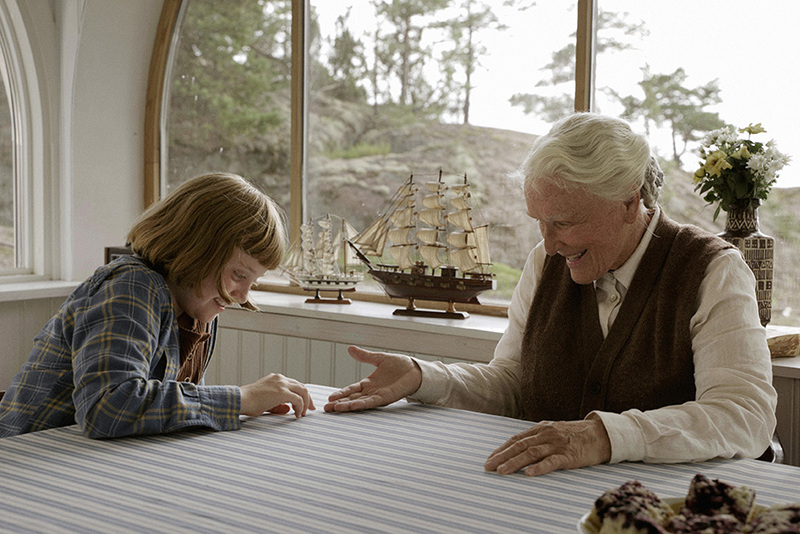
Most of THE SUMMER BOOK takes place on a very small, isolated island in the Gulf of Finland. Young Sophia, along with her father and her grandmother, spent one summer on this island together after losing something. The loss of Sophia’s mother is never posed as a device to drive the plot. She simply is and influences the actions, silences, and decisions of others. McDowell understands that grief doesn’t present itself to children in that way, and thus the film's structure reflects that restraint.
Sophia (played by Emily Matthews) bears an incredible weight of emotional responsibility throughout the film, and Matthews carries it well, avoiding the typical pitfalls of a performance like this and instead giving us a sense of genuine wonder rather than scripted curiosity. When Sophia asks questions, they aren’t to elicit a reaction, but to attempt to get a handle on a world that now seems less stable. The film trusts Matthews to give us emotional space rather than to provide explanations.
The grandmother (played by Glenn Close) is the expected anchor of the film. Yet Close never seeks to draw the audience's focus to her. She builds nearly all of the character's emotional content through posture, timing, and restraint. Close is never sentimental and avoids offering any grand summary of life. Instead, she simply presents the character's wisdom through blunt honesty, occasional mischievousness, and an acceptance of mortality that is neither noble nor tragic.
Anders Danielsen Lie's father is portrayed as emotionally frozen. Sure, he’s present, but distant. He goes through the motions of daily routines, attempting to connect with his family, but can’t. McDowell portrays him as a man surrounded by beautiful, intimate moments yet unable to tap into them. Lie portrays the father's journey as one of recognition rather than resolution. He slowly comes to realize that grief doesn’t mean he has to disengage from his family permanently.
Structurally, THE SUMMER BOOK is deliberately episodic. It unfolds as a series of loosely connected moments, conversations, and observations that refuse to follow a traditional arc. The film doesn’t build toward a specific moment and rarely offers the viewer a clear emotional cue about where it is headed. However, McDowell’s decision to adapt the novel in this way feels more deliberate than evasive. He isn’t merely translating the events of the novel, but translating its texture.
Sound and music help shape the viewing experience. Music is used sparingly and intentionally, often blending into the film's world. The result is an immersive experience without the film telling you how to feel. The film creates the conditions under which feeling is inevitable—treating silence as a legitimate emotional state rather than a space waiting to be filled.
Some viewers may struggle with THE SUMMER BOOK regarding the film’s refusal to dramatize the themes presented. In the film, the conversations about life, death, belief, and fear wind without providing resolution or conclusion. This approach to development reflects a child’s understanding of these topics rather than the typical adult’s approach to storytelling. The grandmother doesn’t provide resolutions or solutions. Instead, she provides presence.
Tove Jansson’s novel was notoriously difficult to translate to the screen because its power is rooted in the subtlety of the nuances and the accumulation rather than the plot of the novel. McDowell’s approach to the film recognizes this limitation; instead of overcompensating with invented conflict, it relies on its minimalist structure and trusts that patience will be rewarded. This trust won’t feel like a reward for all viewers. While there are moments when the film risks becoming a form of fantasy, viewers seeking to let their emotions run free through the narrative will likely lose themselves in the distance.
Ultimately, what sets the film apart is its clarity. Regardless of how restrained the film may appear, it’s never ambiguous about what it examines. The film explores childhood curiosity, aging, grief, and connections as overlapping states of existence, rather than as distinct stages of life. THE SUMMER BOOK isn’t attempting to leave you with a sense of hopefulness or devastation. The film wants you to reflect on the individuals who helped shape you, the locations where you store your memories, and the moments that only become meaningful in retrospect. The film values authenticity over satisfying your desire for a compelling narrative, and in doing so, earns its right as a thoughtful and deeply human adaptation.
Please visit https://linktr.ee/overlyhonestr for more reviews.
You can follow me on Letterboxd, Instagram, Twitter, and YouTube. My social media accounts can also be found on most platforms by searching for 'Overly Honest Reviews'.
I’m always happy to hear from my readers; please don't hesitate to say hello or send me any questions about movies.
[photo courtesy of MUSIC BOX FILMS]
DISCLAIMER:
At Overly Honest Movie Reviews, we value honesty and transparency. Occasionally, we receive complimentary items for review, including DVDs, Blu-rays, CDs, Vinyl Records, Books, and more. We assure you that these arrangements do not influence our reviews, as we are committed to providing unbiased and sincere evaluations. We aim to help you make informed entertainment choices regardless of our relationship with distributors or producers.
Amazon Affiliate Links:
Additionally, this site contains Amazon affiliate links. If you purchase through these links, we may receive a commission. This affiliate arrangement does not affect our commitment to honest reviews and helps support our site. We appreciate your trust and support as you navigate these links.


Happy
0 %

Sad
0 %

Excited
0 %

Sleepy
0 %

Angry
0 %

Surprise
0 %
 0
0
 0
0


Average Rating