A Spy Story Obsessed With Consequences
Read Time:5 Minute, 47 Second
BOOK REVIEW
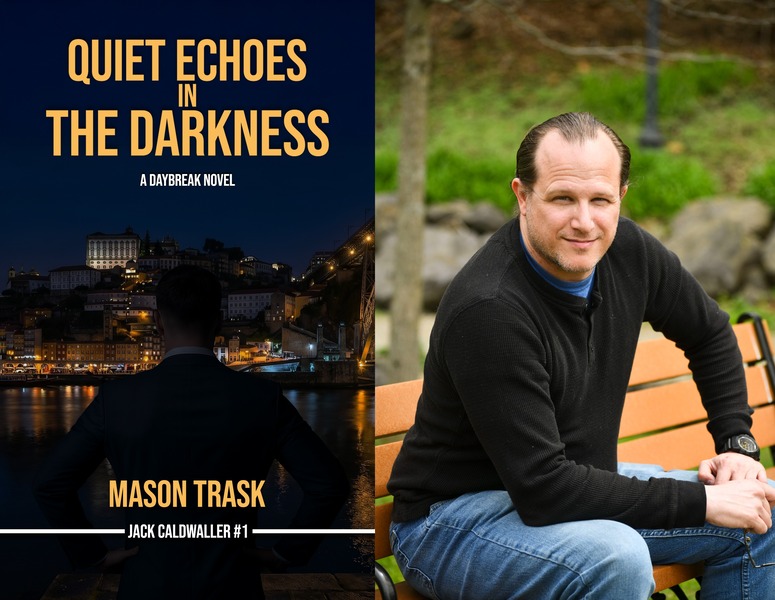
Quiet Echoes in the Darkness: A Daybreak Novel


Genre: Espionage, Thriller, Military Fiction
Year Released: 2026
Pages: 374 Pages
Author(s): Mason Trask
Where to Read: releases August 18, 2026, check here for information on ordering your copy: www.valenzapublishing.com
RAVING REVIEW: Spy fiction has spent decades teaching audiences to associate a certain level of competence with invincibility. The elite operative enters a room, reads everyone and everything in the room instantly, takes endless levels of punishment like it’s an inconvenience, and keeps moving forward like a machine. Even when those stories pretend to acknowledge trauma, the damage usually functions as just a twist in the story, rather than a true limitation. QUIET ECHOES IN THE DARKNESS pushes against that ideal almost immediately. Jack Caldwaller may be the most capable person in the room, but author Mason Trask never lets readers forget the physical and psychological cost attached to maintaining that reputation. A choice like that ends up defining the entire novel.
Jack is a black op for Daybreak, a secretive paramilitary organization tasked with handling threats that traditional government and military organizations can’t or won’t be able to handle. A new mission goes catastrophically wrong. There’s the blood-soaked stain of betrayal lurking somewhere inside the organization. Jack is then forced back into the field to uncover the truth while balancing shifting alliances, secret agendas, and enemies operating in increasingly dangerous territory. What sets the book apart from your more traditional spy thriller is the way it handles deterioration.
The novel spends surprising amounts of time inside the physical headspace of long-term exhaustion, lingering injuries, declining stamina, recurring trauma, and the panic of realizing age eventually catches even the best ops alive. An early section in which Jack tests his body during a run after recovering from injuries immediately reframes the character. He isn’t measuring himself against ordinary people. He’s measuring himself against the impossible standards he once maintained. Trask writes action well, but more importantly, he writes aftermath even better.
Injuries hurt. Recovery takes time. Adrenaline crashes hit hard. Sleep deprivation matters. Panic can arise from smells, sounds, environments, or even memories. The book repeatedly emphasizes how difficult it becomes to maintain stability while operating under constant pressure. Jack remains dangerous, but he’s no longer untouchable, and that vulnerability gives the entire story something most modern espionage fiction lacks. We can still see heroes as human, and that makes the stakes that much higher.
The relationship between Jack and Chelsea Simons also helps ground the novel. Chelsea could’ve easily become another generic handler existing solely to deliver mission briefings and exposition dumps. Trask gives their interactions enough familiarity and texture for the partnership to feel like it matters. The banter sounds like two people who’ve spent years balancing professionalism with trust. The novel becomes increasingly interested in emotional dependency beneath all the tactical maneuvering.
The pacing deserves credit as well. At nearly 400 pages, the book has enough room to let its world breathe without forcing any filler. Trask understands how to rotate between espionage vibes, character reflection, operational tension, and even the slower psychological moments without making the story feel stagnant. There’s a confidence in the structure that suggests a deeper familiarity with the genre rather than someone simply imitating a generic spy thriller.
The novel benefits from understanding that intelligence work often involves performance before violence. Some of the strongest chapters involve observation, manipulation, maintaining covert identities, and managing social interactions while quietly scanning for threats. Jack doesn’t bulldoze his way through problems. He studies people, even while his own body and mind threaten to betray him.
There are stretches where environmental detail and internal reflection slightly slow momentum during sections that could’ve benefited from tighter compression. Trask is clearly invested in grounding readers in Jack’s perspective, which usually works, but there are moments when the prose circles ideas longer than necessary before moving forward. As with almost every book, some supporting characters also feel more functional than developed. Jack, Chelsea, and a handful of central figures receive a lot of character bullying and attention. Yet, certain secondary individuals seem to exist more as operational players than distinct personalities. In a story this large and layered, that’s somewhat understandable, but I’m always wanting a deeper dive.
QUIET ECHOES IN THE DARKNESS continues to be so engaging, even with the length, because it never becomes infatuated with its protagonist. The novel respects Jack’s capabilities without worshipping him. He makes mistakes. He misses things. He struggles emotionally. His body betrays him. His trauma interferes with judgment. Yet none of that weakens the character growth. If anything, it makes him more compelling because his competence feels earned rather than assumed.
There’s also a melancholy running through the breadcrumbs of the novel that I appreciated. Beneath the betrayals, covert operations, threats, and violence sits a story about people who’ve sacrificed normalcy and no longer know how to exist outside the machine they helped build. Daybreak isn’t framed as the ultimate life; it feels consuming.
Mason Trask clearly loves espionage fiction, and he dives into what happens after years of surviving impossible situations. What does working at that level of perfection actually cost somebody physically and mentally? And how long can a person continue functioning once trust within the system itself begins to collapse? QUIET ECHOES IN THE DARKNESS contains all the covert operations, betrayals, and tactical maneuvering thriller fans want, but its strongest quality is much simpler than that. It remembers that even the best operatives are still human long after the myth surrounding them takes over.
Please visit https://linktr.ee/overlyhonestr for more reviews.
You can follow me on Letterboxd, Instagram, Twitter, and YouTube. My social media accounts can also be found on most platforms by searching for 'Overly Honest Reviews'.
I’m always happy to hear from my readers; please don't hesitate to say hello or send me any questions about movies.
[photo courtesy of VALENZA PUBLISHING]
DISCLAIMER:
At Overly Honest Movie Reviews, we value honesty and transparency. Occasionally, we receive complimentary items for review, including DVDs, Blu-rays, CDs, Vinyl Records, Books, and more. We assure you that these arrangements do not influence our reviews, as we are committed to providing unbiased and sincere evaluations. We aim to help you make informed entertainment choices regardless of our relationship with distributors or producers.
Amazon Affiliate Links:
Additionally, this site contains Amazon affiliate links. If you purchase through these links, we may receive a commission. This affiliate arrangement does not affect our commitment to honest reviews and helps support our site. We appreciate your trust and support as you navigate these links.


Happy
0 %

Sad
0 %

Excited
100 %

Sleepy
0 %

Angry
0 %

Surprise
0 %
 1
1
 0
0



Average Rating