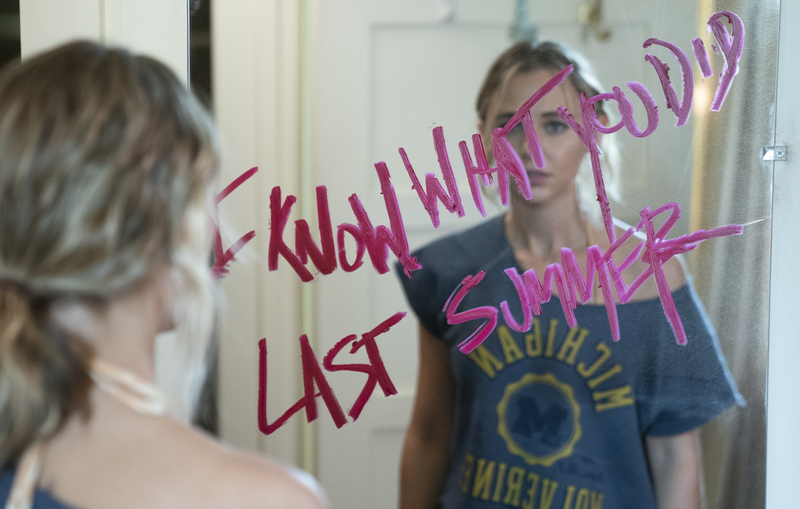
A Legacy Franchise Searching for Its Own Identity
Read Time:8 Minute, 2 Second
TV SERIES REVIEW
I Know What You Did Last Summer- The Complete Series
 –
– 

Genre: Mystery, Drama, Horror, Slasher, Queer
Year Released: 2021, 2026 Blu-ray
Runtime: 6h 20m
Director(s): Craig William Macneill, Logan Kibens, Benjamin Semanoff, Sylvain White
Writer(s): Sara Goodman, Lois Duncan, Kevin Williamson
Cast: Madison Iseman, Brianne Tju, Bill Heck, Ashley Moore, Ezekiel Goodman
Where to Watch: available June 23, 2026, pre-order your copy here: www.moviezyng.com or www.amazon.com
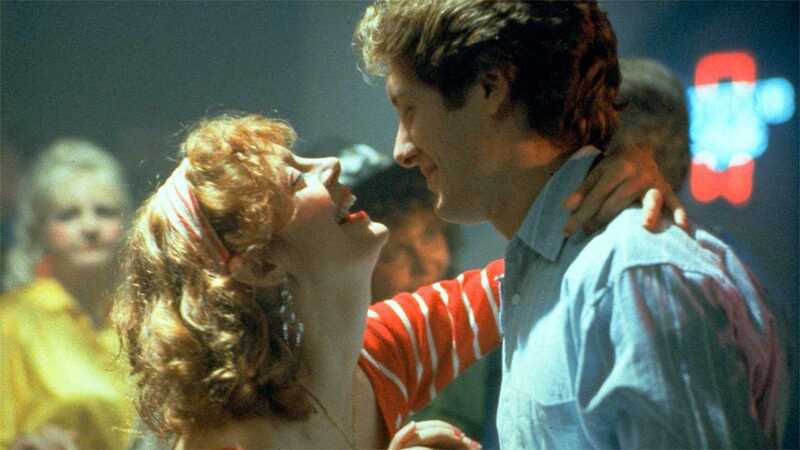
RAVING REVIEW: By the time the 2021 version of I KNOW WHAT YOU DID LAST SUMMER ended up coming out, the franchise had already had a long history. The original 1997 film never reached the same level as SCREAM, but it still became one of the defining teen slashers of that era. Jennifer Love Hewitt running down the street, screaming, Freddie Prinze Jr. trying to keep everyone together while falling apart himself, Sarah Michelle Gellar getting one of the genre’s most memorable sequences, the fisherman with the hook, the rain-soaked atmosphere, all of it cemented the movie into late-90s horror history, (oh and my uncredited cameo in the parade scene!) whether critics embraced it or not. Then came I STILL KNOW WHAT YOU DID LAST SUMMER, which leaned harder into camp and slasher insanity, followed by the mostly forgotten direct-to-video reboot attempt I'LL ALWAYS KNOW WHAT YOU DID LAST SUMMER.
That’s what makes this series fascinating. It exists inside a franchise people recognize, but one that’s never universally beloved. Every sequel, reboot, or revival has struggled with the same problem. Nobody seems entirely sure what I KNOW WHAT YOU DID LAST SUMMER is supposed to be outside the basic premise itself. An accident. A shared cover-up. And then guilt catches up to you. Beyond that, every version keeps reshaping the same ideas. This series does the same thing, sometimes in ways that genuinely work, and sometimes in ways that make it feel like the show is revisiting its own slasher roots. And that’s what makes it so intriguing: it knew what it wanted to be and, for the most part, worked.
Setting the story in Hawaii turns out to be one of the best decisions. Slashers usually rely on darkness, isolation, and a dreary atmosphere. This series decides to trap its characters in the sunlight, expensive homes, beaches, social media culture, and the ideal of perfection. The setting gives the show a personality that separates it from the 1997 film. There’s an ugliness underneath the beauty that the series keeps circling back to, especially once the lies start piling up and the paranoia settles in.
The biggest swing comes through Madison Iseman’s dual role as twins Allison and Lennon. The series builds itself around the relationship between the twins far more than around the murders themselves, and honestly, that’s a call that ends up working. The actual slasher storyline isn’t strong enough to carry eight episodes on its own. What keeps the series watchable is the psychological mess sitting underneath the hook-killer framework. Allison, living in the shadow of her sister, creates the kind of identity confusion the franchise has never really explored before. Sometimes the show pushes that drama too far into melodrama, but Iseman commits hard enough to keep most of it grounded.
What’s interesting is how aggressively this adaptation tries to modernize the material. The original film belonged to the post-SCREAM era, in which teenagers talked like one-dimensional movie characters and existed within a sleek thriller universe. This series moves closer to the energy of EUPHORIA, PRETTY LITTLE LIARS, and CRUEL SUMMER. Sex, addiction, influencers, trauma, performative personalities, and emotional self-destruction become just as important as the murders. Whether that works probably depends entirely on what someone wants from this franchise.
If somebody walks into this expecting a straightforward slasher continuation with a fisherman stalking teenagers every episode, they’re probably going to hate this. The series barely functions as a traditional slasher for long stretches. Entire episodes drift into interpersonal drama, family trauma, identity crises, and relationship troubles. Sometimes it feels less interested in horror than in watching emotionally damaged people slowly implode under pressure. That gives the show more depth than parts of the film ever had, but it also creates major pacing issues.
The structure becomes shaky in the middle stretch. Eight episodes are simply too long for material that keeps circling the same conflicts. Characters repeat mistakes. Secrets get stretched past their breaking point. Reveals land with less impact because the audience has already been sitting with them for too long. The show also struggles to balance mystery with credibility. People behave irrationally not because panic demands it, but because the script needs the mystery alive for another episode. It definitely would have worked better as a six-episode season.
There’s something oddly compelling about how disheveled the series becomes. Unlike many legacy horror revivals that desperately try to recreate nostalgia beat-for-beat, this version seems almost uninterested in pleasing longtime fans. The fisherman imagery exists, but the series doesn’t cling to it. The hook isn’t treated like sacred iconography the way Ghostface became for SCREAM. Instead, the show uses the franchise title more as a framework for guilt and self-destruction than as a promise of an iconic slasher.
Brianne Tju probably understands the assignment better than anybody else in the cast. Margot could’ve easily become unbearable, especially because the writing occasionally pushes her into that over-the-top influencer satire. Tju gives the character enough self-awareness and volatility to make her entertaining even at her worst. Ashley Moore’s Riley also proves more emotionally effective than expected. Some of the side characters remain underdeveloped, but the central cast mostly succeeds in making the friendships feel toxic in real ways.
The violence itself is a mixed bag. When the series commits to the horror, some of the kills hit hard. There’s more brutality than the original films ever attempted, and a few sequences genuinely capture the panic a slasher needs. The problem is consistency. The show repeatedly abandons suspense for extended stretches of emotional arguing and flashbacks. The tension never builds momentum because the series keeps interrupting itself.
One thing the show deserves a lot of credit for is understanding that the franchise was always secretly about selfishness more than morality. The original film presented guilt as something uncomfortably corrosive but treated the group sympathetically. This adaptation takes a much harsher view of its characters. These people don’t just make one bad decision. Many of them are already reckless long before the accident happens. The cover-up simply exposes what was already underneath them.
The series spends so much time layering twists, misdirection, hidden motives, and secret identities that the ending eventually collapses under its own weight. Instead of feeling like a shock, parts of it feel overcomplicated simply for the sake of surprise. You can sense the writers trying to engineer a conversation-starting reveal rather than earning emotional payoff naturally. It doesn’t ruin the season, but it does leave it a little less satisfying than it should be.
Even with all those problems, I can’t dismiss this version of I KNOW WHAT YOU DID LAST SUMMER. It’s uneven, occasionally frustrating, bloated at times, and often far more interested in dysfunction than the slasher bones. But honestly, it’s one of the few legacy horror adaptations willing to reinterpret its source material instead of endlessly recreating old imagery. Sometimes that ambition works against it. Sometimes it’s the reason the series remains so interesting.
Within the larger history of this franchise, the show feels more like another evolutionary branch than a definitive reboot. The original film remains the version most people will remember. The sequels chased diminishing returns. The 2025 film revival tried to reconnect directly to the original continuity. This series sits somewhere off to the side, experimenting with what happens when a late-90s slasher property is filtered through modern prestige teen-drama sensibilities. The results are chaotic, but at least they’re trying something beyond pure nostalgia. And honestly, that might be the most surprising thing about the entire show. For all its flaws, it never feels lazy.
Please visit https://linktr.ee/overlyhonestr for more reviews.
You can follow me on Letterboxd, Instagram, Twitter, and YouTube. My social media accounts can also be found on most platforms by searching for 'Overly Honest Reviews'.
I’m always happy to hear from my readers; please don't hesitate to say hello or send me any questions about movies.
[photo courtesy of MOVIE ZYNG, AMAZON STUDIOS, ATOMIC MONSTER, ORIGINAL FILM, SONY PICTURES TELEVISION]
DISCLAIMER:
At Overly Honest Movie Reviews, we value honesty and transparency. Occasionally, we receive complimentary items for review, including DVDs, Blu-rays, CDs, Vinyl Records, Books, and more. We assure you that these arrangements do not influence our reviews, as we are committed to providing unbiased and sincere evaluations. We aim to help you make informed entertainment choices regardless of our relationship with distributors or producers.
Amazon Affiliate Links:
Additionally, this site contains Amazon affiliate links. If you purchase through these links, we may receive a commission. This affiliate arrangement does not affect our commitment to honest reviews and helps support our site. We appreciate your trust and support as you navigate these links.


Happy
0 %

Sad
0 %

Excited
0 %

Sleepy
0 %

Angry
0 %

Surprise
0 %
 0
0
 0
0

Average Rating