Fairy Tales With Teeth
Read Time:8 Minute, 3 Second
MOVIE REVIEW
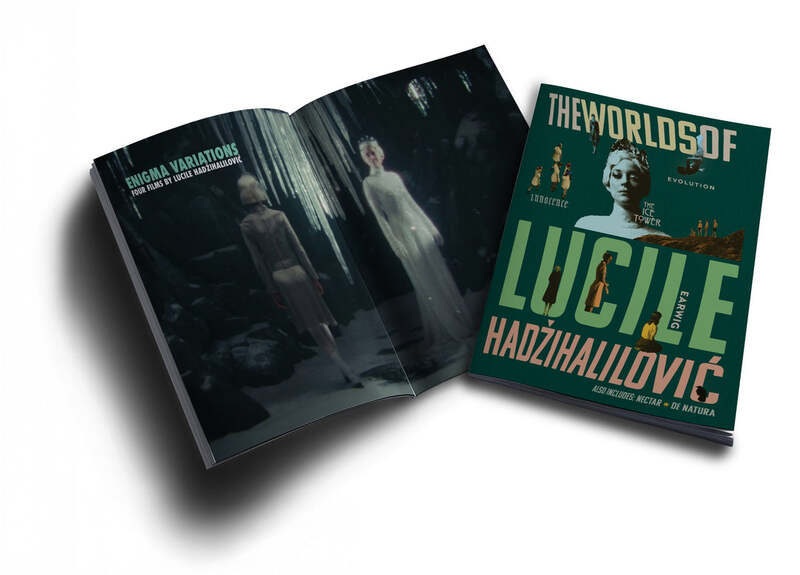
The Worlds of Lucile Hadžihalilović [4-Disc Blu-ray Box Set + Book]
 –
– 


Genre: Fantasy / Horror / Drama / Surrealism
Year Released: 2004–2025, 2026 Severin Films Blu-ray box set
Runtime: 7h 14m
Director(s): Lucile Hadžihalilović
Writer(s): Lucile Hadžihalilović, Alantė Kavaitė, Geoff Cox, based in part on works by Frank Wedekind, Brian Catling, and Hans Christian Andersen
Cast: Marion Cotillard, Zoé Auclair, Bérangère Haubruge, Hélène de Fougerolles, Max Brebant, Roxane Duran, Julie-Marie Parmentier, Paul Hilton, Romola Garai, Alex Lawther, Clara Pacini, August Diehl, Gaspar Noé
Where to Watch: available June 30, 2026, pre-order your copy here: www.severinfilms.com or www.amazon.com
RAVING REVIEW: Lucile Hadžihalilović’s films don’t have any desire to explain themselves so much as seal the viewer inside a room and change the temperature, degree by degree. THE WORLDS OF LUCILE HADŽIHALILOVIĆ gathers four features that feel connected by instinct rather than formula: INNOCENCE, EVOLUTION, EARWIG, and THE ICE TOWER. Each one has its own rules, rituals, and textures, though all of them expand on childhood, control, desire, fear, and transformation without turning those ideas into easy resolutions. This Severin collection works because it understands that Hadžihalilović isn’t a filmmaker working strictly with plot mechanics. She’s a filmmaker of environments, thresholds, and things left unsaid.
INNOCENCE remains the obvious gateway and maybe the most disarming film here because its surface is so soft. A secluded girls’ school, wooded paths, costumes, dance lessons, coffins, whispers, and strange routines are arranged with the calm of a bedtime story told by someone who refuses to reassure you. The film doesn’t shove horror into the frame. It lets unease grow from repetition, from authority, from the girls’ limited knowledge of the world outside the school’s walls. Marion Cotillard appears in a supporting role, though the film belongs less to any individual performance than to a collective sense of girlhood being observed, shaped, and guarded by forces that never need to let their intentions be known.
That restraint is both Hadžihalilović’s gift and the first barrier some viewers will hit. INNOCENCE can feel hypnotic if you settle in, but punishingly opaque if you’re waiting for a conventional payoff. The film is a mystery, but it isn’t built like a puzzle. It’s closer to a memory someone doesn’t trust, one where the truth survives even if the explanation stays out of reach. Severin’s inclusion of Hadžihalilović’s shorts DE NATURA and NECTAR with this disc is perfect, because they help frame INNOCENCE as part of a longer fascination with nature, ritual, and the disturbing quiet around adolescence.
EVOLUTION makes the box set feel less like a career sample and more like a map of obsession. The girls’ school gives way to a seaside village populated by boys, mothers, nurses, and procedures that seem to belong to a dream of reproductive terror. Hadžihalilović and cinematographer Manu Dacosse create a world of sickly whites, oceanic views, clinics, bandages, and skin. The film is often described as body horror, which is accurate enough, though its horror doesn’t come from gore as much as the dread of being manipulated, studied, prepared, and altered without consent.
The genius of EVOLUTION is how little it says. Dialogue becomes secondary to breathing, water, footsteps, glances, and the movement of bodies through spaces that feel both natural and contaminated. It’s more unsettling than INNOCENCE because its imagery has a biological charge, but it’s also strangely mournful. The boys aren’t adventure heroes trying to escape a monster. They’re children sensing that the adults around them have already decided what their bodies are for. That uneasy feeling gives the film a cruelty, and the ending refuses the comfort of escape as a simple solution.
EARWIG is the most severe and difficult film in the collection, and it may be the one that divides viewers the most. Hadžihalilović’s English-language debut adapts Brian Catling’s novel into a slow, gothic, postwar nightmare about a caretaker named Albert, a young girl named Mia, and a routine involving teeth made of ice. That detail sounds almost ridiculously peculiar when reduced to a plot description, but the film treats it with a bleak sense of seriousness. The result is colder, more airless, and more deliberately frustrating than the earlier features.
Paul Hilton gives Albert a hollowed-out quality that keeps the character from becoming just a “villain,” while Romola Garai and Alex Lawther drift through the film like figures from another story, damaged and broken. EARWIG has moments of extraordinary atmosphere, especially in the way rooms seem to trap people in their own. It’s also the film where Hadžihalilović’s refusal to clarify can tip from seductive ambiguity into emotional alienation. The imagery lingers, the mood is controlled, and the idea of care as captivity is powerful.
THE ICE TOWER gives the set a fascinating endpoint because it’s Hadžihalilović’s most accessible feature without feeling like a compromise. Inspired by Hans Christian Andersen’s The Snow Queen (but an entirely separate experience from FROZEN), it reunites the director with Marion Cotillard. It folds fairy tale, cinema, obsession, and performance into one frosty chamber of mirrors. Clara Pacini plays Jeanne, an orphan drawn into the pull of Cotillard’s Cristina, an actress playing the Snow Queen in a film-within-a-film. That setup lets Hadžihalilović explore fantasy not as escape, but as a seductive system that can swallow identity whole.
Cotillard is perfectly cast because the role needs glamour, danger, theatricality, and sadness without requiring the character to be deciphered. Cristina becomes an image before she becomes a person, and Jeanne’s fascination with her carries the anxious pull of worship, hunger, and self-erasure. THE ICE TOWER also benefits from Hadžihalilović’s increased willingness to let the dream be shaped. It’s still elliptical, still slow, still committed to atmosphere, but there’s more dramatic movement than in EARWIG and more emotional access than in EVOLUTION. The film doesn’t abandon mystery. It gives it a stage, a costume, and a spotlight.
THE WORLDS OF LUCILE HADŽIHALILOVIĆ is the kind of collection that justifies the box set format. INNOCENCE and EARWIG receiving North American Blu-ray premieres is meaningful in its own right, especially for a filmmaker whose work has often been easier to read about than actually to see in English-subtitled editions. The four-disc structure also allows the films to speak to one another. Seen together, they reveal a body of work that keeps returning to children at the mercy of systems. Schools, islands, film sets, families, myths, and institutions.
The special features are especially valuable because Hadžihalilović’s cinema benefits from context, not because it needs to be explained (although it certainly does), but because her images grow in detail when placed beside discussions of craft, adaptation, cinematography, collaboration, and recurring motifs. The 60-page companion book is also more than a collector’s addition here. For a filmmaker, this singular, written criticism and essays can become part of the viewing experience, giving audiences a way back into films that often resist interpretation.
What makes this set essential isn’t that every film is equally satisfying. They’re not. They’re different animals. INNOCENCE is mesmerizing, EVOLUTION is the most unnerving, EARWIG is the most alienating, and THE ICE TOWER may be the strongest bridge between Hadžihalilović’s obsessions and a wider audience. Together, though, they form one of modern cinema’s strangest coming-of-age lenses.
Hadžihalilović has made only four features across more than two decades, which makes this collection feel less like a catch-up release and more like an argument for patience. Her films ask for a viewer willing to sit with discomfort, ambiguity, and beauty that curdles the longer you look. THE WORLDS OF LUCILE HADŽIHALILOVIĆ isn’t casual comfort viewing, and it’s not designed for anyone who needs every detail pinned down. It’s a haunted little library of poisoned fairy tales, and Severin has given it the kind of home that makes the work feel collected, preserved, and ready to unsettle whoever opens the door.
Please visit https://linktr.ee/overlyhonestr for more reviews.
You can follow me on Letterboxd, Instagram, Twitter, and YouTube. My social media accounts can also be found on most platforms by searching for 'Overly Honest Reviews'.
I’m always happy to hear from my readers; please don't hesitate to say hello or send me any questions about movies.
[photo courtesy of SEVERIN FILMS]
DISCLAIMER:
At Overly Honest Movie Reviews, we value honesty and transparency. Occasionally, we receive complimentary items for review, including DVDs, Blu-rays, CDs, Vinyl Records, Books, and more. We assure you that these arrangements do not influence our reviews, as we are committed to providing unbiased and sincere evaluations. We aim to help you make informed entertainment choices regardless of our relationship with distributors or producers.
Amazon Affiliate Links:
Additionally, this site contains Amazon affiliate links. If you purchase through these links, we may receive a commission. This affiliate arrangement does not affect our commitment to honest reviews and helps support our site. We appreciate your trust and support as you navigate these links.


Happy
0 %

Sad
0 %

Excited
0 %

Sleepy
0 %

Angry
0 %

Surprise
0 %
 0
0
 0
0

Average Rating